

X-Ray Foreign Object Inspection Machines : 6 Proven Benefits for Food Plants
Introduction
Foreign body contamination remains one of the most common causes of food recalls worldwide, and every single recall carries costs far beyond the affected batch: product withdrawal, retailer penalties, audit failure, and — most expensive of all — lasting damage to the brand. At the same time, retailers and certification schemes such as BRCGS, IFS and SQF increasingly require food producers to implement effective foreign object detection as a critical control point in their HACCP plans.
This is why the X-ray foreign object inspection machine has moved from “optional equipment” to standard configuration on food production lines around the world. Unlike a traditional metal detector, an X-ray foreign object inspection machine can see much more than metal — and it can see through the packaging.
In this guide, we break down the six proven benefits of the X-ray foreign object inspection machine, explain what exactly it can detect, show where it fits on a production line, and share real application cases from different food sectors — so you can decide whether your plant needs one.
1. What Is a Food X-Ray Foreign Object Inspection Machine?
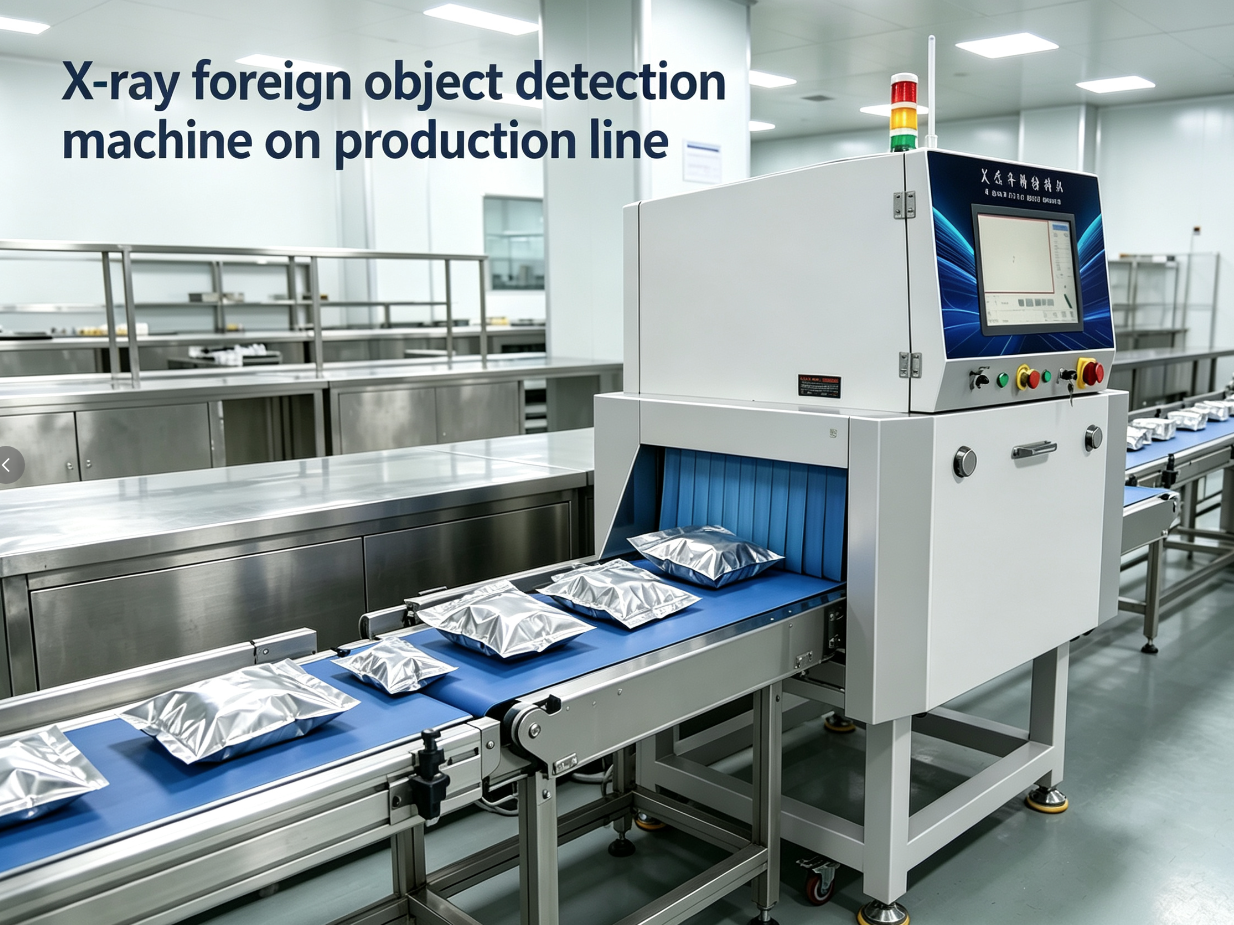
A food X-ray foreign object inspection machine passes products through a low-dose X-ray beam on a conveyor. A detector array on the other side captures the X-ray image, and built-in software analyzes the density differences inside the product and its packaging in real time.
Because foreign objects almost always have a different density than the food itself — metal, glass, stone, bone and hard plastics are all denser — the X-ray foreign object inspection machine can highlight and reject contaminated products automatically. Suspect products are removed by an air blast, pusher, or drop-flap reject system at the end of the conveyor.
Modern X-ray foreign object inspection machines do more than find foreign objects. The same X-ray image can be used to detect missing or incomplete products, broken pieces, incorrect count, and mass/fill-level deviations — making one machine do the work of an inspection system and part of a checkweigher.
2. 6 Proven Benefits of X-Ray Foreign Object Inspection Machines in Food Plants
2.1 One Machine Covers Many Contaminant Types
A metal detector only detects metal. An X-ray foreign object inspection machine detects ferrous and non-ferrous metals, stainless steel (the most common metal in food plants, and the hardest for some detectors to find), glass, stones, calcified bones, and high-density plastics and rubber. For most food producers, this single capability is the main reason to choose an X-ray foreign object inspection machine.
2.2 It Works After Packaging — Final-Line Control
X-ray foreign object inspection machines are not affected by metallized film or aluminum foil packaging, which is a known blind spot for metal detectors. That means the machine can be placed at the very end of the line, after the product is sealed — the last possible checkpoint before the product leaves the factory. Catching contamination after packaging also prevents re-contamination between inspection and packing.
2.3 It Supports HACCP, FDA and GFSI Audit Requirements
Under HACCP, foreign object detection is typically identified as a Critical Control Point (CCP). An X-ray foreign object inspection machine provides exactly what auditors want to see: continuous 100% online inspection, automatic rejection, and complete records — batch reports, reject logs, and event data that can be exported and reviewed during BRCGS, IFS or FDA/FSMA audits.
2.4 It Protects the Brand, Not Just the Batch
The cost of a recall is measured in millions once logistics, legal liability and lost shelf space are counted. For a comparatively small investment, an X-ray foreign object inspection machine reduces the probability of a foreign body complaint reaching the consumer to a very low level. Many exporters also install X-ray foreign object inspection machines simply because overseas supermarket chains demand them in their supplier specifications.
2.5 It Adds Quality Control Beyond Safety
Because an X-ray foreign object inspection machine already “sees” every product, the same machine can check for missing products in a multipack, incomplete filling, product shape breakage, and even mass estimation. A biscuit producer, for example, can use one X-ray foreign object inspection machine to catch both a stainless steel fragment and a multipack with two missing packs.
2.6 High Throughput Without Damaging the Product
A modern X-ray foreign object inspection machine is non-contact and non-destructive. Products pass through the tunnel at full production speed, are not touched, heated, or stressed, and the radiation dose is extremely low — it does not change the taste, texture or safety of the food.
3. What Contaminants Can a Food X-Ray Foreign Object Inspection Machine Detect?
|
Contaminant |
Typical Examples |
Detectability |
|
Metals (Fe / non-Fe / stainless steel) |
Screen wire, machine fragments, blades, shavings |
Excellent — even inside foil packaging |
|
Glass |
Broken jar glass, glass-in-glass foreign objects |
Good, depends on size and density |
|
Stones / mineral |
Grit from raw materials |
Good |
|
Bone (calcified) |
Bone fragments in meat, poultry and fish |
Good — a key advantage in meat and seafood |
|
High-density plastic / rubber |
Gasket pieces, hard plastic, PTFE |
Good when thick or dense |
|
Low-density items |
Wood, hair, thin soft plastic, insects |
Limited — better controlled upstream |
◆ The exact sensitivity of an X-ray foreign object inspection machine depends on the product, the package and the machine configuration. Typical values on dry, packaged foods: stainless steel from approx. 0.3–0.5 mm, glass from approx. 1.0–1.5 mm — always confirm with a free sample test on the real machine.
4. Where Does the X-Ray Foreign Object Inspection Machine Fit on the Food Production Line?
The most common position for an X-ray foreign object inspection machine is at the end of the line, after packaging and before case packing:
- Packaged food (flow pack, pillow bag, tray): after the packaging machine and metal detector, or replacing the metal detector as the final CCP.
- Rigid packaging (cans, tins, glass jars, bottles): after sealing/lidding, where the X-ray foreign object inspection machine can also check fill level and missing components such as a scoop or desiccant.
- Bulk / unpackaged lines (IQF, fresh produce): mid-line inspection before freezing or packing, often with washdown-rated IP65/IP66 machines.
Because every plant is different — available floor space, line height, product size and reject requirements — the conveyor length and height, reject system and machine footprint normally need to be customized to the line rather than the other way around. This is standard practice: the X-ray foreign object inspection machine should adapt to your production line, not the opposite.
5. Real Application Cases from the Food Industry
Case 1 — Snack Foods: Stainless Steel Wire in Foil-Packaged Nuts
A nut roasting and packing plant used metallized film bags. Their metal detector frequently missed fine stainless steel sieve wire because the packaging affected detection. After installing an X-ray foreign object inspection machine at the end of the line, stainless steel wire fragments down to fractions of a millimeter were reliably detected and rejected — and the retailer audit finding on foreign body control was closed.
Case 2 — Bakery: Missing Packs in Multipacks Plus Metal from Tooling
An industrial bakery producing multipack biscuits needed two controls: metal fragments from mixer paddles and scraper blades, and multipacks with one or two packs missing due to a misaligned wrapping machine. One X-ray foreign object inspection machine solved both — detecting thin metal fragments and rejecting multipacks with missing or incomplete packs, without slowing the line.
Case 3 — Meat and Poultry: Bone Fragments in Deboned Products
A deboned poultry processor faced periodic customer complaints about small bone fragments in fillets — a risk that metal detectors cannot address at all. An X-ray foreign object inspection machine tuned for bone detection in fresh and frozen meat now rejects products containing calcified bone fragments before vacuum packing, and the processor uses the reject statistics as evidence during customer audits.
Case 4 — Frozen Seafood: Fish Bones in Fillets
For frozen fish fillets, bone detection is one of the strongest arguments for X-ray. A seafood exporter processing frozen fillets installed X-ray foreign object inspection machines before cartoning; the machines detect pin bones and cartilage remnants in frozen blocks, where visual inspection is slow and unreliable. Exporters serving supermarket chains in Europe and North America often find X-ray foreign object inspection written directly into their supplier contracts.
Case 5 — Milk Powder: Metal Plus Missing Scoop Detection
A dairy plant packing milk powder in tins used an X-ray foreign object inspection machine for two purposes: detecting metal and rubber fragments (from seals and gaskets) and verifying that every tin contains the plastic scoop and desiccant bag. Missing-component rejection alone paid back the inspection line quickly, because one shipped tin without a scoop means a consumer complaint and a retailer chargeback.
Case 6 — Bottled and Canned Drinks: Glass-in-Glass and Fill Level
A beverage producer using glass bottles installed an X-ray foreign object inspection machine after filling and capping. The system detects glass shards that may fall into the bottle during capping — something a metal detector physically cannot do — and simultaneously monitors fill level, rejecting under-filled bottles automatically.
*(Note for JINDUN: replace or supplement these typical industry cases with real customer project data — product, market, machine model and results — to strengthen first-hand experience.)*
6. X-Ray Inspection vs Metal Detector: Which One Does Your Line Need?
Both technologies still have their place, and many food factories use both:
- Choose a metal detector when the only risk is metal, packaging is non-metallic, and budget is tight.
- Choose an X-ray foreign object inspection machine when packaging contains foil or metallized film, when the product risk includes glass, stone or bone, when you need missing-product or fill-level checks, or when retailer specifications demand the strongest possible CCP evidence.
If you are comparing both systems, read our guide: *X Ray Inspection vs Metal Detector: Which Is Right for Your Production Line?*
7. How to Choose the Right X-Ray Foreign Object Inspection Machine
Before requesting a quotation, prepare answers to these questions:
- Product and packaging — dimensions, weight, package material (foil? metallized film?), and whether products are fresh, frozen, hot or dusty.
- Line data — belt speed, line height, available length, direction of flow, and space restrictions around the inspection point.
- Risk profile — which contaminants are realistic for your process (stainless steel from tooling? glass? bones?), based on your HACCP analysis.
- Environment — washdown requirements (IP65/IP66), temperature, and humidity.
- Reject system — air blast for light packages, pusher for rigid packs, drop flap for small items; rejected-product bin with lock for traceability.
- Data and connectivity — reject logs, batch reports, optional integration with your MES/SCADA.
- Customization requirements — conveyor dimensions, machine height, control system, software language, alarm and vision systems.
A reliable manufacturer will always offer a free sample test with your real product before you buy — sensitivity on paper means nothing until your actual product, in its actual packaging, runs through the X-ray foreign object inspection machine.
8. JINDUN: X-Ray Foreign Object Inspection Machines Built for Your Line
JINDUN designs and manufactures X-ray foreign object inspection machines and metal detection systems for the food industry — from compact single-lane machines for packaged snacks to long-conveyor inspection lines for high-capacity food plants.
We support full customization for your production line, including:
- Conveyor length, width and height matched to your line layout
- Different reject systems (air blast / pusher / drop flap) and sealed rejection bins
- IP65/IP66 washdown design for wet or frozen food environments
- Multi-language HMI, remote diagnostics and data export options
- Special configurations for large products, high-speed lines or limited space
Every X-ray foreign object inspection machine is tested with your real product samples before delivery, so you know exactly what sensitivity you will get on your line — not on a demo line.
Not sure which inspection system fits your production line? Send us your product details and get a free feasibility test and quotation.
💬 WhatsApp: [+86 135 2853 5975](https://api.whatsapp.com/send?phone=8613528535975) — our engineers reply directly, and customized drawings can be provided for your line.
FAQ
Q1: Does X-ray inspection make food radioactive or affect food quality?
No. The radiation dose used in food X-ray inspection is extremely low and the X-rays switch off with the product — there is no residual radioactivity, and no measurable effect on taste, texture, nutrition or shelf life.
Q2: Can an X-ray foreign object inspection machine inspect products inside aluminum foil or metallized packaging?
Yes. Unlike metal detectors, an X-ray foreign object inspection machine can inspect through foil and metallized film — one of the main reasons food producers upgrade to X-ray.
Q3: Is the machine safe for operators working nearby?
Yes. The X-ray generator is installed inside a fully shielded cabinet with lead-lined walls and safety interlocks; radiation leakage outside the cabinet complies with international radiation safety limits.
Q4: What detection sensitivity can I expect from an X-ray foreign object inspection machine?
It depends on your product, package and machine configuration. As a reference ◆, stainless steel detection from approx. 0.3–0.5 mm is achievable on dry packaged foods. The only reliable answer comes from a free sample test with your actual product.
Q5: Can one machine also check weight, missing products or fill level?
Yes. The same X-ray image supports missing/multipack count checks, broken product detection, fill-level monitoring and mass estimation, reducing the need for separate equipment.
Q6: How difficult is cleaning and maintenance?
Food-grade machines are designed for daily washdown (IP65/IP66 options) with hygienic open-frame conveyors. Routine maintenance is limited to belt checks, detector cleaning and periodic calibration, all documented in the manual we provide.
Conclusion
X-ray foreign object inspection machines are now standard equipment in the food industry for clear reasons: they detect more contaminant types than any single alternative, they work through any packaging including foil, they generate the audit evidence that HACCP and GFSI schemes demand, and they add quality checks — missing products, fill level, breakage — at no extra cost per unit.
If you are planning a new line, upgrading your CCP, or answering a retailer requirement, the fastest next step is a sample test with your own product.
Get a Quick Quote
FROM THE JINDUN BLOG
Latest articles.
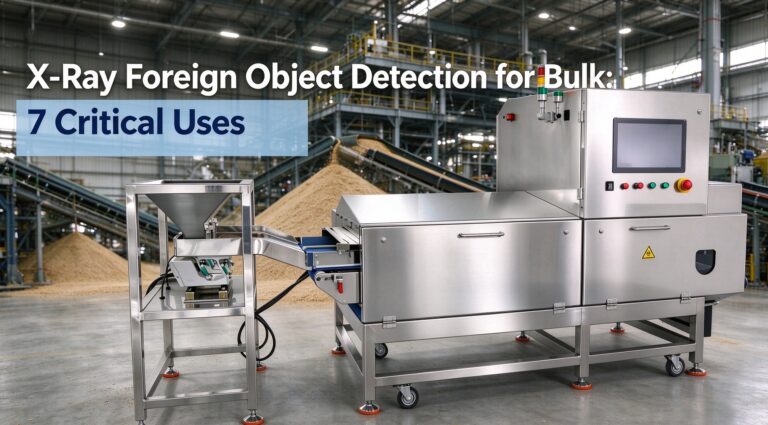
X-Ray Foreign Object Detection for Bulk: 7 Critical Uses
Explore seven uses of X-ray foreign object detection for bulk materials and the factors to consider when selecting inspection equipment.
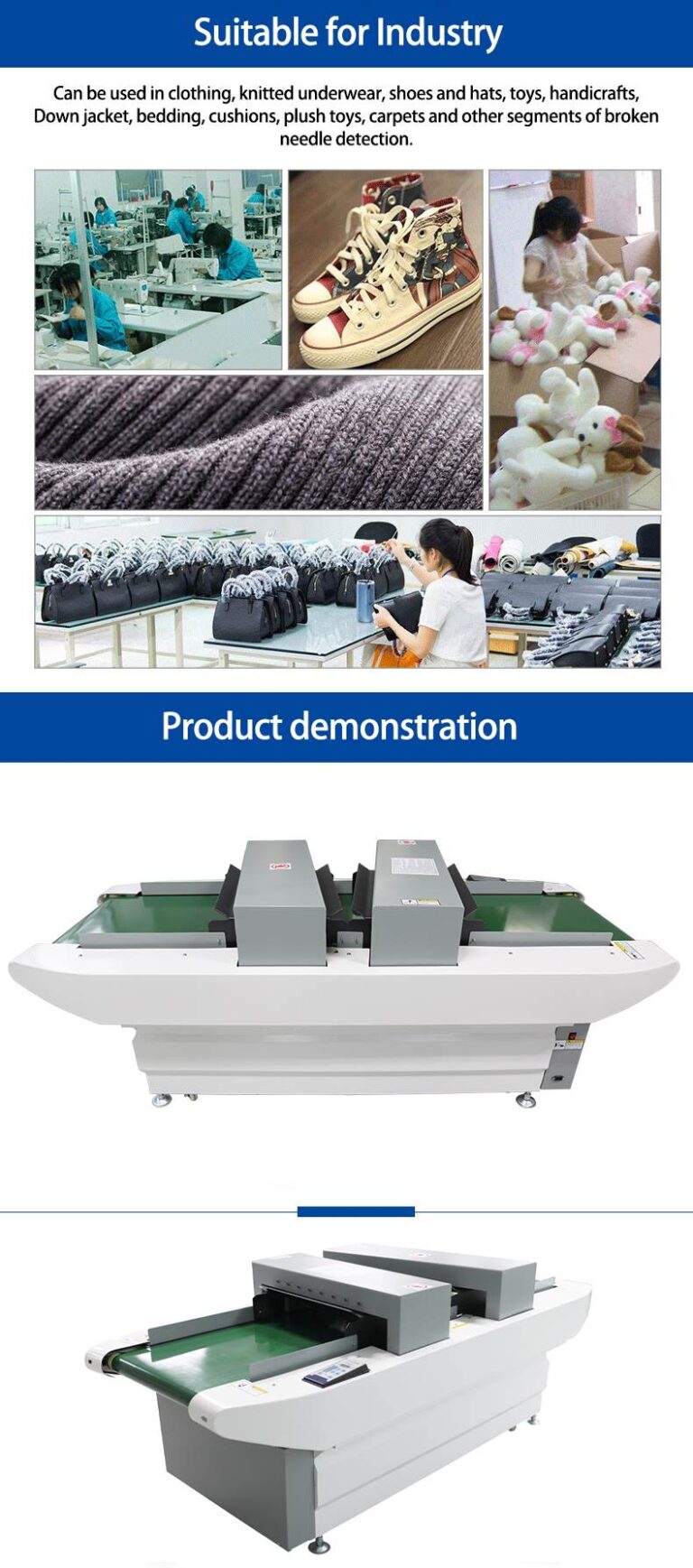
Needle Detectors for Garment and Textile Manufacturing: How to Prevent Broken Needles from Reaching Consumers
Learn how needle detection supports garment and textile inspection, helping manufacturers address the risk of broken needles in finished products.
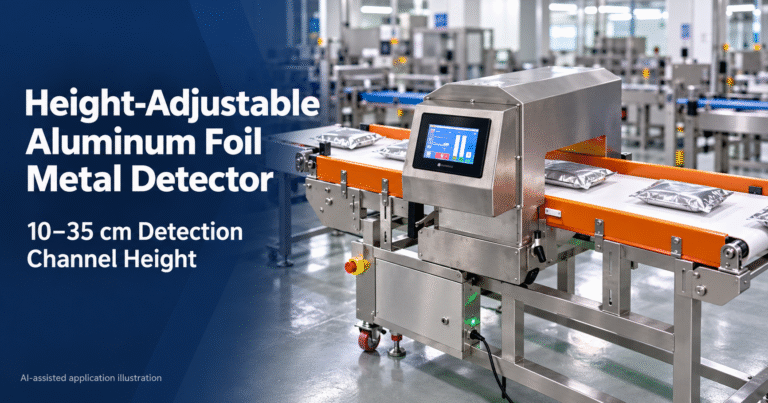
Height-Adjustable Aluminum Foil Metal Detector
Explore height-adjustable metal detection for aluminum foil packaging and the practical factors involved in matching equipment to your production line.
LET’S TALK ABOUT YOUR APPLICATION
Your product. Your line.
Let’s find the right solution.
Share your inspection needs with the JINDUN team.