
Introduction
Needle detectors are essential quality control machines in the garment, textile, and toy manufacturing industries. Their job is simple but critical: ensure that no broken needle fragments, pins, or stray metal pieces remain in finished products before they are shipped to customers.
In apparel manufacturing, a broken sewing needle can shatter without warning. If those tiny metal fragments remain embedded in fabric, they can cause skin injuries to consumers—especially infants and children—triggering severe legal liabilities, costly product recalls, and irreversible brand damage.
This is why major global retailers and brands mandate needle detection as a core part of their supplier compliance programs. This article explores how needle detectors work, why they matter, and how JINDUN’s solutions help factories guarantee product safety.
What Is a Needle Detector and How Does It Work?
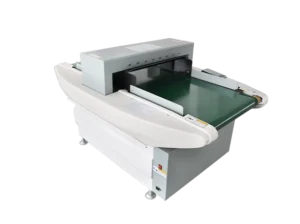
A needle detector is a specialized metal detection system designed to find tiny ferrous (magnetic) metal particles in textiles, garments, toys, and footwear.
Unlike food metal detectors that handle wet or conductive products, needle detectors are optimized for dry, non-conductive materials like fabric. They use a strong magnetic field; when a small piece of iron or steel passes through the detection tunnel, it disrupts the field and triggers an alarm.
Core Components
Conveyor Belt: Transports garments through the detection tunnel.
Magnetic Sensor: Highly sensitive coils that detect tiny metal particles.
Alarm System: Audible buzzer and visual light to alert the operator.
Control Panel: Allows operators to set sensitivity levels and test modes.
Why Needle Detection Is Critical in Garment Manufacturing
1. Consumer Safety and Liability
Broken needles can cause puncture wounds. For children’s clothing, the risk is amplified. A single reported injury can lead to massive lawsuits and regulatory action.
2. Retailer Compliance Requirements
Global brands (like Nike, Adidas, Zara, H&M, etc.) and retailers enforce strict “Needle Policy” rules. Suppliers who fail needle audits risk losing contracts. Needle detection is a mandatory checkpoint before packing.
3. Brand Reputation Protection
A recall due to embedded needles can destroy consumer trust overnight. A reliable needle detector is the final firewall protecting your brand’s reputation.
4. Reducing Waste and Rework
Detecting a broken needle early prevents entire batches from being contaminated. Operators can isolate the affected garment rather than scrapping an entire production lot.
Key Applications of Needle Detectors
While primarily associated with apparel, needle detectors are used across multiple industries:
Garment & Apparel
Detecting broken needle tips, pins, and staples in shirts, pants, jackets, and underwear before folding and packing.
Children’s Clothing & Toys
Ensuring absolute safety for infants and toddlers by inspecting plush toys, baby clothes, and accessories.
Footwear & Leather Goods
Inspecting shoes, boots, and leather bags for staples, nails, or broken machinery parts.
Home Textiles
Checking bedding, towels, and curtains for metal fragments from weaving or cutting machinery.
Non-Woven Fabrics & Medical PPE
Ensuring masks, surgical gowns, and diapers are free from metal shards during high-speed production.
Key Features to Look for in a Needle Detector
1. High Sensitivity
The ability to detect the smallest needle fragment. Standard requirements often mandate detecting a Φ1.0mm iron ball or smaller.
2. Conveyor Stability
Vibration can cause false alarms. Look for machines with sturdy construction and stable conveyor belts to ensure consistent detection.
3. Multiple Detection Zones (Optional)
Advanced models may feature multi-channel detection to cover wider conveyor belts without losing sensitivity.
4. Alarm and Auto-Stop Functions
The machine must immediately stop the belt and sound an alarm when a contaminant is detected, allowing the operator to locate and remove the fragment.
5. User-Friendly Operation
Touch screens and simple sensitivity adjustments make it easy for operators to use, reducing human error.
JINDUN Needle Detector: The Guardian of Your Quality Line
JINDUN offers high-performance needle detection machines designed specifically for the rigorous demands of the garment and textile industry. Built with industrial-grade components, our machines deliver stable, accurate, and continuous detection performance.
Key Features of JINDUN Needle Detectors
| Feature | Benefit |
|---|---|
| High Sensitivity | Detects tiny iron particles down to Φ0.8mm or Φ1.0mm, meeting strict retail standards. |
| Durable Construction | Industrial frame ensures stability and prevents vibration interference during operation. |
| Food-Grade Conveyor Belt | Durable, non-toxic belt suitable for various textile materials. |
| Intuitive Control Panel | Easy-to-use interface for quick sensitivity adjustments and daily testing. |
| Audible & Visual Alarm | Instant alert and auto-stop feature when metal is detected. |
| Wide Application | Suitable for garments, textiles, toys, footwear, and non-woven products. |
How to Use a Needle Detector Effectively
Test Before Every Shift: Use standardized test cards (usually containing a Φ1.0mm iron ball) to verify sensitivity before starting production.
Ensure Proper Belt Tension: A loose belt can cause vibration and false alarms.
Avoid Metal Interference: Keep the machine away from large metal structures or high-frequency machines that may cause electromagnetic interference.
Train Operators: Ensure staff understand how to adjust sensitivity and what to do when the alarm sounds.
Maintain Records: Log daily tests and calibration for audit compliance
Conclusion
In the garment industry, a broken needle isn’t just an inconvenience—it’s a safety hazard and a compliance risk. A reliable needle detector is your last line of defense before products leave the factory.
JINDUN Needle Detectors combine high sensitivity, robust construction, and ease of use, helping manufacturers ensure that no dangerous metal fragments reach consumers.
Looking for a reliable needle detection solution for your garment or textile factory?
What size of needle can a needle detector find?
Most standard needle detectors can detect an iron ball of Φ0.8mm to Φ1.0mm. The exact sensitivity depends on the model and the distance from the sensor.
Can a needle detector find non-ferrous metals (like copper or aluminum)?
Standard needle detectors are primarily designed for ferrous (magnetic) metals, because broken needles are typically made of iron/steel. However, specialized metal detectors can detect non-ferrous metals if required.
Why does my needle detector keep giving false alarms?
False alarms are usually caused by:
Metal parts nearby (like trolleys, scissors, or tables).
High-frequency interference from sewing machines or lighting.
The conveyor belt tension being too loose.
The product containing metallic zippers, buttons, or threads with metallic fibers.
Solution: Keep the machine isolated, adjust belt tension, and ensure the product is free of metallic accessories during testing.
How often should I test the needle detector?
Testing should be done at the beginning of every shift and after any sensitivity adjustments. Documentation of these tests is required for most brand audits.