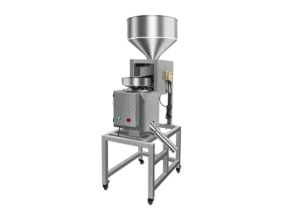
How Does a Color Sorter Work and How Do You Choose the Right Machine?

Manual inspection may be suitable for small quantities, but it becomes difficult to maintain stable quality as production volume increases. An optical sorting system provides faster and more consistent inspection by combining controlled feeding, cameras, lighting, image-processing software, and high-speed air ejectors.
However, choosing the right color sorter machine requires more than comparing the number of channels or the quoted processing capacity. Buyers should also consider the material characteristics, defect types, required purity, product loss, compressed-air supply, and actual sample-testing results.
This guide explains how a color sorter machine works and presents seven practical factors to consider before selecting a system.
What Is a Color Sorter Machine?
A color sorter is an optical separation machine that identifies and removes particles with unwanted colors or visible surface characteristics.
During operation, the material is distributed into a controlled flow and passes through an inspection area. Cameras capture images of the material, while the machine’s processing system compares each particle with the sorting criteria configured by the operator.
When the system identifies a defective particle or foreign material, a high-speed ejector releases a short pulse of compressed air. This air jet changes the particle’s trajectory and separates it from the accepted product stream.
Unlike screening equipment, which separates materials mainly by size, a color sorter makes decisions based on visible differences such as:
Color
Brightness
Surface defects
Shape
Size
Texture
Certain types of foreign material
The actual sorting capability depends on the camera system, lighting, software, material presentation, and the visual difference between accepted and rejected products.
How Does a Color Sorter Work?
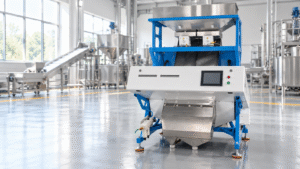
The color sorting process normally includes five main stages.A color sorter machine combines controlled feeding, optical inspection, image processing, and compressed-air ejection in one automated sorting process.
1. Material Feeding
The product is loaded into the feeding hopper. A vibrating feeder then distributes the material evenly and transfers it toward the sorting channels.
Stable feeding is essential. If too much material enters the inspection area at the same time, particles may overlap and hide defects. If the feeding rate is unstable, sorting performance may also fluctuate.
The feeding system should therefore be adjusted according to the size, shape, flowability, and bulk density of the material.
2. Material Presentation
After leaving the feeder, the material moves through chutes or free-fall channels.
The purpose of this section is to create a thin and consistent product stream. Ideally, individual particles should remain visible to the optical system rather than forming thick layers.
Clean, smooth, and correctly adjusted channels help the material move at a predictable speed before it reaches the inspection zone.
3. Optical Inspection
In the inspection zone, cameras observe the passing material under controlled lighting.
The lighting system provides stable illumination so that the cameras can distinguish subtle differences between acceptable and defective particles. Depending on the machine configuration, the material may be inspected from both the front and rear sides.
The captured images are sent to the processing system, which evaluates characteristics such as color, brightness, shape, size, and surface appearance.
Before production begins, the operator normally uses sample materials to define the acceptance and rejection criteria.
4. Defect Recognition
The image-processing software compares the detected particles with the selected sorting settings.
For example, when sorting rice, the machine may be configured to remove yellow grains, black grains, discolored grains, stones, or other visible impurities. In coffee processing, the target may include dark beans, pale beans, broken beans, or foreign matter.
Recognition accuracy depends on whether the target defect has a detectable optical difference from the good product. For this reason, material samples and sorting tests are important before confirming a machine configuration.
5. Air-Jet Ejection
When an unwanted particle is detected, the control system calculates its position and activates the corresponding ejector.
A short pulse of compressed air changes the path of the defective particle and directs it into the reject outlet. The accepted material continues along its original path into the good-product outlet.
The timing of this process must be precise because the inspection and ejection take place while the material is moving at high speed.
What Materials Can Be Sorted?
Modern optical color sorters can be used for many dry, free-flowing materials.A color sorter machine can process rice, wheat, beans, seeds, coffee, nuts, plastic flakes, minerals, and other dry, free-flowing materials.
Rice and Grains
Common applications include:
White rice
Brown rice
Wheat
Corn
Barley
Oats
Millet
Depending on the material and system configuration, the sorter may remove discolored grains, mold-damaged particles, black spots, stones, husks, and other visible impurities.
Beans and Pulses
Color sorters can process:
Soybeans
Mung beans
Red beans
Black beans
Lentils
Chickpeas
Peas
The machine can help separate beans with abnormal colors, damaged surfaces, mold, insect damage, or mixed varieties.
Seeds and Nuts
Typical materials include:
Sunflower seeds
Pumpkin seeds
Sesame
Peanuts
Almonds
Cashews
Sorting can improve product uniformity and remove discolored kernels, shells, foreign materials, or visibly damaged pieces.
Coffee
Optical sorting can be used for both green and roasted coffee beans.
Possible sorting targets include:
Black beans
Sour or pale beans
Insect-damaged beans
Broken beans
Foreign materials
Unevenly roasted beans
Because coffee defects can vary considerably, testing with representative samples is particularly important.
Plastics and Industrial Materials
Color sorters are also used for certain non-food products, including:
Recycled plastic flakes
Plastic pellets
Minerals
Quartz
Salt
Chemical granules
For recycled plastics, the system can separate flakes according to color and remove visually different contaminants. The correct optical configuration depends on the plastic type, particle size, cleanliness, and required purity.

What Are the Main Components of a Color Sorter?
Understanding the main components makes it easier to compare different machines.
Feeding System
The feeding system controls how much material enters the machine and how evenly it is distributed.
A good feeding system should provide stable flow without creating excessive overlap, blockage, or product damage.
Chutes or Sorting Channels
The chutes guide the material through the inspection area. Their surface condition, angle, width, and cleanliness directly affect material movement.
Different materials may require different chute designs or feeding adjustments.
Camera System
The cameras capture images of the product as it passes through the inspection zone.
Camera resolution is important, but it should not be considered alone. Lighting stability, image-processing software, viewing angle, and material presentation also influence the final sorting result.
Lighting System
Controlled illumination helps the cameras distinguish small color and brightness differences.
The correct lighting arrangement depends on the material and the defects that need to be detected. A system designed for light-colored rice may require different settings from one processing dark beans or colored plastic flakes.The lighting and camera configuration of a color sorter machine must be selected according to the material color, particle size, and target defects.
Processing and Control System
The processing system analyzes the camera data and determines which particles should be rejected.
A practical control interface should allow operators to:
Create and save sorting programs
Adjust sensitivity
Define acceptable color ranges
Control the feeding rate
Monitor sorting performance
Switch between different products
Ejector System
The ejector system uses compressed air to remove defective particles.
Fast response, accurate timing, and consistent air pressure are important. Poor compressed-air quality or unstable pressure may reduce sorting consistency.
Dust Removal and Air Management
Dust can affect camera visibility, lighting performance, and mechanical reliability.
When processing dusty materials, suitable dust extraction and regular cleaning are necessary to maintain stable operation.
How Do You Choose the Right Color Sorter?
A machine should be selected according to the real application rather than only by the number of channels or a general capacity figure.
1. Identify the Material
Provide the supplier with clear information about the product:
Material name
Particle size
Particle shape
Bulk density
Moisture level
Surface condition
Flowability
Two products with similar names may behave differently inside the machine. For example, polished rice and paddy have different feeding and sorting requirements.
2. Define the Defects
Specify exactly what needs to be removed.
Examples include:
Yellow particles
Black particles
Mold-damaged product
Broken pieces
Shells
Stones
Glass
Plastic fragments
Different varieties
Foreign seeds
Photographs are useful, but physical samples provide more reliable information for testing.
3. Set Realistic Quality Targets
The buyer should define:
Incoming impurity level
Required final purity
Acceptable product loss
Required throughput
Number of sorting passes
Higher purity requirements may require a slower feeding rate, additional sorting passes, or a different machine configuration.
Capacity and sorting accuracy should therefore be evaluated together rather than as separate specifications.
4. Confirm the Required Capacity
Color sorter capacity is influenced by many factors, including:
Material type
Particle size
Initial contamination level
Required final purity
Feeding uniformity
Number of channels
Sorting sensitivity
Number of passes
A capacity figure without defined test conditions may be misleading. Ask the supplier to explain the material and quality conditions used for the capacity estimate.
5. Arrange a Sample Test
A sorting test is one of the most useful steps before purchasing a machine.
Send a representative sample containing both normal product and the defects that need to be removed. The test should evaluate:
Accepted-product quality
Reject-material composition
Good-product carryover
Sorting stability
Suitable operating settings
Estimated processing capacity
Whenever possible, the buyer should review both the accepted and rejected samples.
6. Check Utility Requirements
Before installation, confirm:
Electrical supply
Installed power
Compressed-air pressure
Air consumption
Compressor requirements
Dust extraction requirements
Operating temperature
Installation space
Maintenance access
Feeding and discharge height
The compressor, air dryer, filters, conveyors, elevators, and dust collection equipment may not be included in the basic machine supply.
7. Evaluate Maintenance and Support
A color sorter combines optical, pneumatic, mechanical, and electronic systems. Long-term performance depends on proper maintenance and technical support.
Before purchasing, ask about:
Operator training
Remote technical support
Spare ejectors
Recommended spare parts
Software updates
Troubleshooting procedures
Warranty coverage
Availability of technical documents
A machine that is easy to clean, inspect, and service can reduce production interruptions.
What Information Should You Send to a Color Sorter Supplier?
To receive a useful machine recommendation, prepare the following information:
Material to be sorted
Photographs and videos of the material
Samples of accepted and defective products
Particle size range
Initial impurity percentage
Required final product quality
Expected processing capacity
Available voltage and frequency
Factory layout and available installation space
Required feeding, conveying, and packing connections
The more complete the information, the easier it is for the supplier to recommend an appropriate sorting configuration.
Common Mistakes When Buying a Color Sorter
Choosing Only by Price
A low initial price may not represent the lowest operating cost. Sorting performance, product loss, compressed-air consumption, maintenance, and after-sales support should also be considered.
Comparing Capacity Without Test Conditions
Capacity depends heavily on the product and required purity. Two suppliers may quote different capacities because they are using different materials or acceptance standards.
Ignoring the Reject Stream
A machine may produce a clean accepted stream while ejecting too much good product. Always examine both outputs during testing.
Using Unrepresentative Samples
A small sample containing only easy-to-detect defects may not represent real production conditions. Test material should reflect normal variations in the incoming product.
Overlooking Auxiliary Equipment
Stable sorting often depends on elevators, feeders, air compressors, dryers, filters, dust collectors, platforms, and discharge connections. These items should be considered when planning the complete line.
Final Thoughts
A color sorter is more than a camera and an air-ejection system. Its performance depends on how evenly the material is presented, how clearly the defects can be recognized, how accurately the ejectors respond, and how well the machine is configured for the actual product. The right color sorter machine should be selected according to the actual material, target defects, production capacity, utility conditions, and sample-testing results.
Before choosing a machine, define the material, defect types, quality target, and required capacity. Then arrange a sample test using representative material.
This process provides a more reliable basis for equipment selection than comparing general specifications alone.
If you are planning a color sorting project, send us your material photographs, defect samples, required capacity, and target product quality. We can evaluate the application and recommend a suitable sorting configuration.For more information about our industrial inspection and sorting solutions, visit our product and application overview.
Frequently Asked Questions
Can one color sorter process different materials?
In many cases, yes. Different sorting programs can be saved for different products. However, the feeding system, chute design, optical configuration, and machine size must still be suitable for each material.
Can a color sorter remove stones and foreign materials?
It can remove foreign materials that have a detectable optical difference from the accepted product. Some contaminants may require additional technologies or pre-cleaning equipment. Sample testing is recommended.
Does higher camera resolution always mean better sorting?
Not necessarily. Resolution is only one factor. Lighting, software, material presentation, viewing angle, ejector accuracy, and operating settings also affect performance.
How many sorting passes are required?
This depends on the incoming impurity level and the required final purity. Some products can meet the target in one pass, while more demanding applications may require resorting.
What affects color sorter capacity?
Important factors include the material type, particle size, impurity level, sorting sensitivity, feeding rate, number of channels, required purity, and number of sorting passes.