What Is X Ray Inspection Equipment and How Does It Work in Industry?
Modern production lines are facing increasing pressure to deliver safer, more consistent products while meeting stringent regulatory requirements. Traditional inspection methods alone are no longer enough. This is why more manufacturers are turning to X Ray Inspection Equipment as a core part of their quality control strategy.
Understanding what this technology is—and how it works in real industrial environments—helps decision-makers build more reliable and future-proof production systems.
Why X Ray Inspection Equipment Is Becoming Essential in Modern Industry
As product safety standards rise and supply chains become more complex, the risks associated with contamination and hidden defects grow significantly. Industries such as food, pharmaceuticals, and packaged goods are under constant scrutiny from regulators and consumers alike.
Traditional inspection tools, including visual checks and basic detection methods, struggle with non-metal contaminants and internal product defects. This gap has accelerated the shift toward X-ray-based inspection, which provides deeper visibility inside products and packaging.
X Ray Inspection Equipment fills this role by enabling manufacturers to detect a wider range of hazards and defects without interrupting production, making it an essential upgrade for modern factories.
What Is Industrial X Ray Inspection Equipment?
To understand its value, it is important to distinguish industrial X-ray systems from other types of imaging technology.
How Industrial X-Ray Systems Differ from Medical X-Ray
Medical X-ray focuses on diagnosing human health conditions. Industrial X-ray, by contrast, is designed for continuous operation on production lines. It must withstand dust, vibration, moisture, and temperature variations while delivering real-time inspection at high speeds.
Industrial systems are built for:
- 24/7 operation
- Inline integration
- Automated decision-making
- High-throughput environments
They are not diagnostic tools for people—they are precision instruments for product integrity.
Core Components of an X Ray Inspection System
A typical industrial X-ray system consists of:
- X-ray source
- Detector array
- Image processing unit
- Reject mechanism
- Control interface and data system
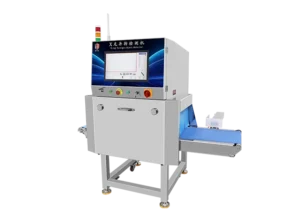
Together, these components form a complete X Ray Inspection Equipment solution capable of scanning every product on a moving line and making instant pass-or-reject decisions.
How Does X Ray Inspection Equipment Work on a Production Line?
Once installed, the system operates continuously without slowing down production.
The Physics Behind X-Ray Detection
Different materials absorb X-rays at different rates depending on their density and atomic structure. When a product passes through the inspection tunnel:
- Denser materials absorb more radiation
- Less dense materials allow more X-rays to pass through
- The detector converts these differences into grayscale images
This contrast makes foreign objects and internal defects visible—even when they are hidden inside sealed packaging.
From Image to Decision: How Defects Are Identified
The system processes each image in milliseconds:
- Capture the product image
- Analyse density patterns
- Compare against preset thresholds
- Trigger a reject signal if anomalies are detected
The result is automatic, consistent inspection without human fatigue or subjectivity.
What Can Industrial X Ray Inspection Detect?
X-ray inspection extends far beyond metal detection. It can identify:
- Metal fragments
- Glass shards
- Stones and ceramics
- Bones in meat or fish
- Product breakage
- Missing components
- Packaging defects
Compared with a Food Metal Detector, which focuses solely on metal contamination, X-ray systems provide broader protection against multiple hazard types.
Typical Industries Using X Ray Inspection Equipment
This technology is widely adopted in:
- Food and beverage processing
- Pharmaceutical manufacturing
- Packaged consumer goods
- Agricultural product handling
- Industrial component production
Each sector applies X-ray inspection differently, but all share the same goal: reducing risk while maintaining high throughput.
X Ray Inspection vs Traditional Detection Technologies
Choosing the right inspection method depends on production risks and product characteristics.
X-Ray vs Metal Detection
Metal detectors are highly effective for metallic contaminants and remain essential in many lines. However, they cannot detect non-metal hazards or internal defects.
X-ray inspection:
- Detects metal and non-metal contaminants
- Works through foil and metallised packaging
- Identifies structural defects
When X-Ray Is the Better Choice
X-ray becomes the preferred solution when:
- Products face multiple contamination risks
- Packaging blocks electromagnetic detection
- Quality requirements extend beyond metal safety
- Product value justifies higher protection
How X Ray Inspection Fits into a Complete Quality Control System
X-ray inspection delivers maximum value when combined with other technologies.
- Metal Separator units remove contaminants before processing
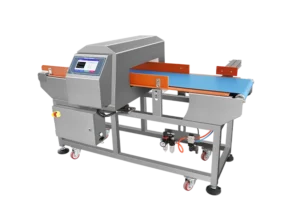
- Food Metal Detector systems verify metal-free products
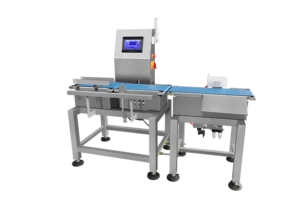
- Weight Sorting Machine systems ensure packaging accuracy
Together, these layers create a comprehensive contamination control strategy. This integrated approach reflects how Jindun Elec designs industrial inspection solutions—focusing on system reliability rather than standalone machines.
Choosing the Right X Ray Inspection Equipment for Your Line
Selecting the right system depends on:
- Product dimensions and density
- Production speed
- Packaging materials
- Target contaminants
- Environmental conditions
X-ray systems are not plug-and-play commodities. Proper configuration and engineering support are essential for reliable long-term performance.
Conclusion: Why X Ray Inspection Is More Than Just Detection
X-ray inspection is not simply about finding defects—it is about building a resilient production system. By revealing hidden risks and ensuring every unit meets quality standards, X Ray Inspection Equipment transforms inspection from a reactive checkpoint into a proactive safeguard.
It enables manufacturers to protect brand reputation, reduce recalls, and operate with confidence in increasingly regulated markets.
For factories seeking a tailored inspection strategy that reflects real production conditions, Contact Jindun Elec to explore how X-ray technology can be integrated into a complete contamination control system.
FAQs
Is X-ray inspection safe for food products?
Yes. Industrial X-ray systems operate at extremely low radiation levels and comply with international safety standards. The exposure is far below thresholds that could affect food quality or safety.
Can X Ray inspection replace metal detectors completely?
Not always. Metal detectors remain cost-effective and efficient for many applications. X-ray systems are often used alongside them to provide broader protection.
What product types benefit most from X Ray inspection?
High-value products, complex packaging, and items at risk of non-metal contamination—such as meat, baked goods, and ready meals—benefit most.
Does packaging material affect X-ray performance?
X-ray systems work through most packaging materials, including foil and metallised films, making them ideal for modern packaging formats.
How accurate is industrial X Ray inspection equipment?
Accuracy depends on product density, system configuration, and calibration. Properly engineered systems achieve highly reliable detection in demanding production environments.
Share With
Related Articles



Hot Products