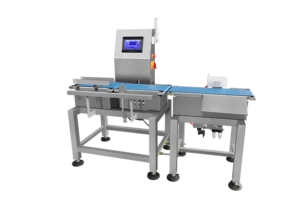
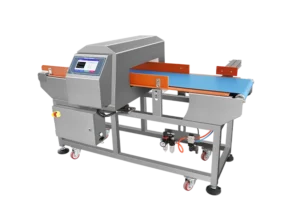
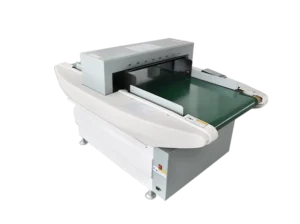
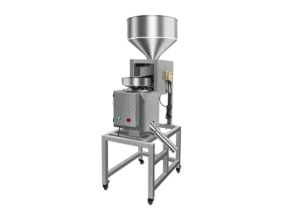
In modern food and packaging plants, contamination control is no longer a single checkpoint—it is a system. Many manufacturers start with metal detection, but as products become more complex and regulations tighten, the question inevitably arises: When do you really need X-ray instead of, or in addition to, metal detection?
For many factories, the turning point is when traditional detection can no longer cover all risks. This is where X-Ray Inspection Equipment becomes a strategic upgrade rather than an optional add-on. The decision is not about choosing a “better” technology—it is about matching inspection capability to real production risks, product structure, and long-term operating goals.
Why Metal Detectors Are Still the First Line of Defence
Before comparing technologies, it is important to recognise why metal detection remains so widely adopted.
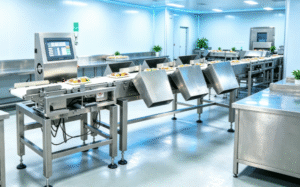
Metal detectors are highly effective at identifying ferrous, non-ferrous, and stainless-steel contaminants in most homogeneous food products. They are fast, cost-efficient, and easy to integrate into existing lines. For products like flour, sugar, snacks, or liquids in uniform packaging, a Food Metal Detector offers reliable protection with minimal complexity.
This is why metal detection continues to serve as the baseline layer in contamination control strategies across the food industry.
However, this first line of defence has physical limits. Metal detectors respond to conductivity and magnetic properties. They cannot “see” non-metal contaminants, and their sensitivity can be reduced by product effect in moist or salty foods. As product structures become more complex, these limitations become more visible.
What X-Ray Inspection Equipment Adds Beyond Metal Detection
Once metal detection reaches its practical limits, X-ray becomes relevant.
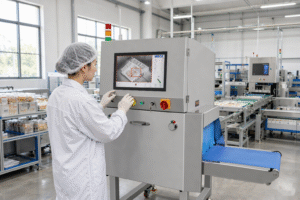
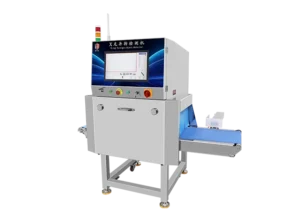
X-Ray Inspection Equipment works on density differences rather than electromagnetic response. This allows it to identify a much broader range of foreign bodies and internal defects.
With X-ray systems, manufacturers can detect:
- Glass, stone, ceramics, and bone fragments
- Dense plastics and rubber
- Missing components or broken pieces inside sealed packages
- Product deformation, voids, or underfills
- Internal damage that cannot be seen externally
This capability makes X-ray indispensable for:
- Multi-component products such as ready meals or filled bakery items
- Packaged foods with complex internal structures
- High-value products where internal defects are costly
- Lines where brand risk outweighs inspection cost
X-ray is not just about contamination—it is about product integrity.
How the Two Technologies Compare in Real Production
To make the distinction practical, it helps to view both systems side by side:
This comparison highlights a key truth:
Metal detection protects processes. X-ray protects products and brands.
When X-Ray Becomes a Real Requirement
Rather than replacing metal detection, X-ray is typically introduced when production conditions exceed what metal detection can reliably handle.
You should strongly consider an X-ray if:
- Your product contains multiple components or layers
- You need to detect non-metal contaminants
- Your line produces sealed packages where internal defects matter
- Product effect limits metal detector sensitivity
- Brand protection is critical in your market
In these environments, metal detection alone leaves blind spots.
Designing a Layered Inspection Strategy
In real production environments, choosing the right inspection strategy is not only a technical decision but a systems-level one. At Jindun Elec, contamination control is approached as an integrated engineering problem—balancing risk, product characteristics, line layout, and long-term operating cost.
This is why modern factories are no longer choosing between metal detection and X-ray. Instead, they design layered systems:
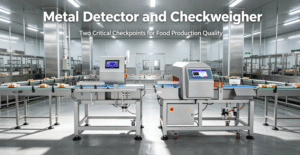
- Early-stage metal separation or a Food Metal Detector to protect equipment
- End-of-line X-Ray Inspection Equipment for final product verification
- Data integration to track trends and prevent recurrence
This structure reduces mechanical risk, minimises waste, and ensures that what leaves the factory truly meets safety and quality expectations.
Why “X-Ray or Metal Detector” Is the Wrong Question
The real question is not which is better, but what level of risk is acceptable.
- If your product is simple and uniform, metal detection is often sufficient.
- If your product is complex, high-value, or brand-sensitive, X-ray becomes essential.
- In many plants, both are required—each solving a different layer of risk.
Thinking in terms of system design rather than device selection leads to better long-term outcomes.
Conclusion: Choosing the Right Tool for the Right Risk
Metal detection remains the foundation of industrial food inspection. But as products evolve, X-Ray Inspection Equipment becomes the technology that closes the remaining gaps—seeing what metal detectors cannot.
The most effective plants do not replace one with the other. They combine both into a structured, risk-driven contamination control strategy.
If you are evaluating how to design or upgrade your inspection system, Contact Jindun Elec to discuss solutions that match your product structure, production reality, and long-term quality goals.
FAQs