Table of Contents
What do food retailers and certifiers expect in audits?
Documented testing, stable detection, and traceable records — exactly what JINDUN X‑ray provides.
X-ray foreign object detection is widely adopted in food and pharmaceutical production lines. Every production line faces the risk of foreign object contamination.Whether you are processing meat, bakery goods, seafood, or packaged foods, contaminants can enter your products at any stage—from raw ingredients to packaging. Metal fragments from broken machinery, glass shards from filling equipment, stones from agricultural materials, calcified bones in meat, and even dense plastics or rubber can all find their way into finished products.
The question is not whether contamination can happen—it is whether your production line is equipped to detect it before products reach consumers.
X-ray foreign object inspection systems have evolved from a supplementary technology to a cornerstone of quality control in the food and manufacturing industries. They are no longer a luxury or optional upgrade; they are a strategic investment for any production line that prioritizes safety, quality, and brand protection.
What Is X-ray Foreign Object Detection Inspection?
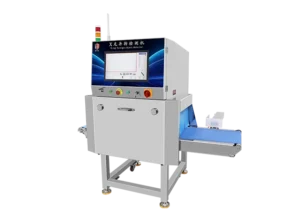
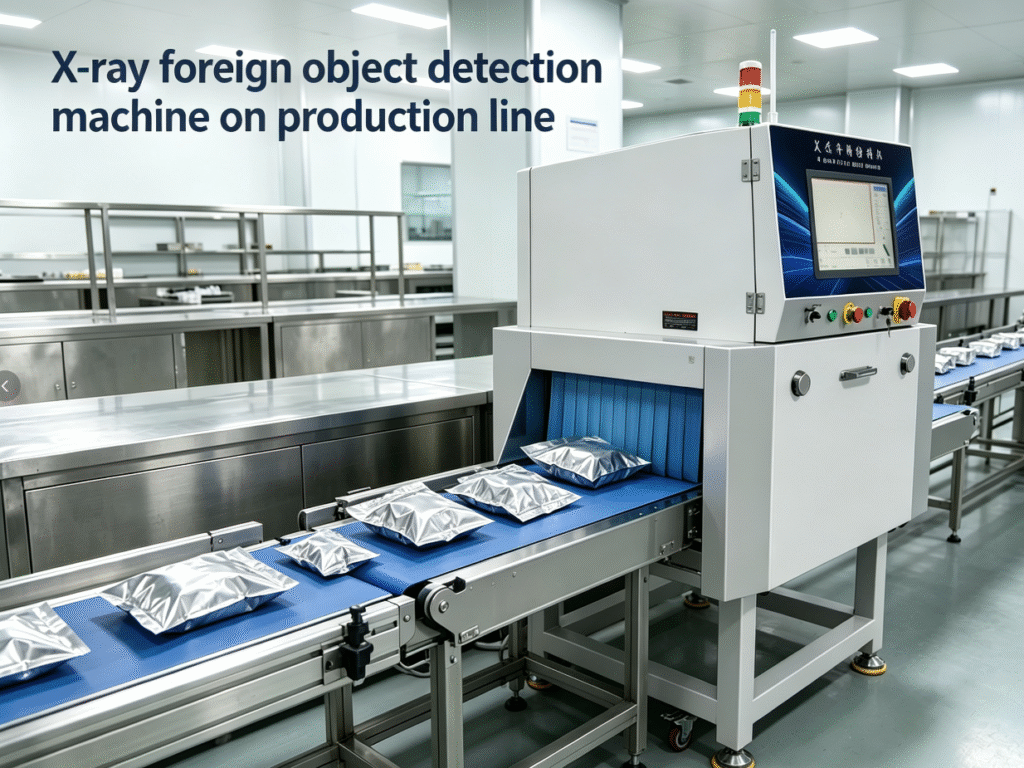
X-ray foreign object detection offers a higher detection rate than traditional metal detectors.X-ray inspection technology works by passing products through an X-ray beam generated by a source, which then hits a detector on the other side to create an image of what is inside the product. The system measures differences in the absorption of X-rays as they pass through materials—denser objects absorb more radiation and appear darker in the image.
This principle allows X-ray systems to detect any contaminant that is denser than the surrounding product mass—whether it is metal, glass, stone, calcified bone, or dense plastic.
Why Every Production Line Needs X-ray Foreign Object Detection
1. Regulatory Compliance Is Non-Negotiable
Food processors operating under HACCP and FSMA Preventive Controls frameworks face increasing pressure to demonstrate consistent foreign material detection at designated critical control points (CCPs). X-ray inspection systems are specifically designed to support documented HACCP verification requirements, delivering stable, repeatable inspection results that reduce operator-dependent variability.
Regulatory bodies and retailers alike require documented proof that contaminants are being effectively controlled. Without an X-ray system in place, meeting these compliance standards becomes significantly more difficult—if not impossible.
2. Metal Detectors Are No Longer Enough
Many production lines rely solely on metal detectors. But here is the reality: metal detectors can only detect metals and conductive objects. They cannot detect glass, stone, bone, rubber, or dense plastics. Yet these non-metallic contaminants are among the most common causes of physical contamination recalls.
Furthermore, metal detectors struggle with the “product effect”—high moisture, salt, or fat content can impact their sensitivity and cause false readings. They also fail when inspecting products in metallized packaging such as foil or cans. X-ray systems, by contrast, work with all packaging types and are unaffected by product composition, temperature, moisture, or salinity.
3. X-ray Foreign Object Detection Does More Than Detect Contaminants
One of the most common mistakes is limiting the value of X-ray inspection to contaminant detection alone. In practice, X-ray systems perform multiple quality control functions simultaneously in a single pass:
-
Fill level verification – ensuring containers are filled to the correct level
-
Mass measurement – checking that each product has the correct weight
-
Component count – verifying that the correct number of items are in each package
-
Seal integrity – checking for product trapped in seals
-
Completeness checks – identifying missing, broken, or misshaped products
This transforms the X-ray system from a simple inspection device into a comprehensive quality control node that provides critical data for real-time decision-making.
4. Brand Protection and Cost Avoidance
The financial impact of a product recall can be devastating. A recall costs millions in direct expenses—not to mention the damage to consumer trust that is difficult, if not impossible, to recover. According to BRCGS data, metal was the number one cause of physical recalls across major markets including the USA (36%), UK (45%), and Germany (52%). The UK’s Food Standards Agency reported a 10% increase in food recalls during 2024, with foreign body contamination being one of the main drivers.
X-ray inspection acts as a shield, detecting contaminated products before they leave the factory. By catching bad products early in the process, X-ray systems prevent costly slowdowns, stoppages, and recalls that can cascade down the line. This means fewer jams, reduced downtime, higher throughput, and ultimately, protected profitability.
5. Compatibility with All Production Environments
Modern X-ray inspection systems are designed for seamless integration into existing production lines. They can be installed directly over existing conveyors with no need for line redesigns or extra space. As non-contact solutions, they pose zero risk of slowing or interfering with product flow.
X-ray foreign object detection support high-speed production lines—some capable of processing up to 90 meters per minute or more. They can be configured for single or multi-lane inspection, accommodating the same or dissimilar products simultaneously. This flexibility makes X-ray inspection suitable for virtually any production environment, from small-scale operations to high-volume industrial lines.
X-ray Foreign Object Detection Inspection vs. Metal Detection: A Quick Comparison
| Feature | X-Ray Inspection | Metal Detection |
|---|---|---|
| Contaminants detected | Metal, glass, stone, bone, dense plastic, rubber | Metal only (ferrous, non-ferrous, stainless steel) |
| Packaging compatibility | All packaging types including foil, cans, metallized film | Struggles with metallized packaging |
| Product effect | Unaffected by moisture, salt, fat, or temperature | Significantly affected by product composition |
| Additional capabilities | Fill level, mass, component count, seal integrity | Detection only |
| Regulatory compliance | Supports HACCP, FSMA, GFSI, BRCGS verification | Limited to metal detection requirements |
International Certification Audits
HACCP (Hazard Analysis and Critical Control Points)
Foreign body inspection is a mandatory Critical Control Point (CCP) in every food factory. HACCP requires written Food Safety Plans including hazard analysis, preventive controls, monitoring, corrective actions, verification, and recordkeeping. For HACCP-certified food businesses, the combined metal detector-checkweigher is the preferred choice.
GMP (Good Manufacturing Practices)
Strict requirements on equipment materials, cleanliness, and maintenance. GMP-certified pharmaceutical and food companies also prefer integrated metal detector-checkweigher systems.
FDA (U.S. Food and Drug Administration)
All domestic and foreign facilities engaged in food processing, packaging, or storage must register with the FDA. FDA requires food manufacturers to comply with hazard analysis and preventive controls regulations, current Good Manufacturing Practices (cGMP), and supplier verification requirements.
BRC / FSSC 22000 / IFS
Third-party certifications widely required by international retailers and food service chains.
Why Are Inspection Equipment the “Must-Test” Item in Factory Audits?
Auditors prioritize inspection equipment for the following reasons:
1. Foreign Material Contamination Is the #2 Cause of Food Recalls
Foreign materials (metal, plastic, glass, stone, wood, bone, insects) are the second leading driver of Class II food recalls in the United States. Without effective inspection equipment, this risk cannot be controlled at the source.
2. Foreign Body Inspection Is a Mandatory HACCP Critical Control Point (CCP)
In the HACCP plan of any food factory, foreign body inspection is a mandatory Critical Control Point, involving either metal detection or X-ray foreign object detection inspection in the vast majority of cases. Auditors will focus on:
-
Whether Critical Limits are established for each CCP
-
Whether monitoring procedures are effectively implemented
-
Whether corrective actions and verification records are complete
3. Equipment and Facilities Carry the Highest Weight in Food Production License Audits
In on-site Food Production License audits, equipment and facilities account for 36 points out of 100—the highest-weighted category. Auditors check not only whether equipment exists, but also whether its materials, performance, accuracy, and quantity match production capacity.
4. Retailers Are Raising Inspection Standards
Many major retailers now explicitly require suppliers to use X-ray inspection systems, not just metal detectors. If your factory fails to keep pace with inspection technology upgrades, you may be excluded from major retail channels.
What Inspection Equipment Do Factory Audits Require?
Depending on the audit standard and product type, food processing plants typically need to configure one or more of the following inspection equipment types:
| Equipment Type | Primary Function | Applicable Audit Standards | Key Requirements |
|---|---|---|---|
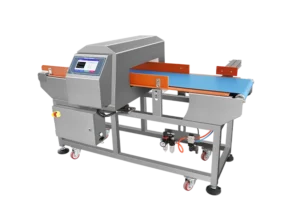
| Metal Detector | Detects ferrous, stainless steel, copper, aluminum and other metal contaminants | HACCP, GMP, BRC, FDA | Regular sensitivity verification with retained records |
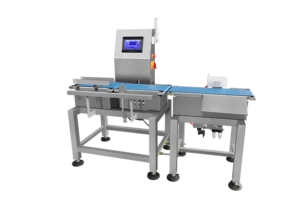
| Checkweigher | Checks product weight within set range, rejects over/under weight products | GMP, ISO, Retailer Standards | Regular calibration with retained records |
| Metal Detector + Checkweigher Combo | Simultaneous metal detection and weight checking | HACCP, GMP (preferred configuration) | Space-saving, efficient, audit bonus |
| X-Ray Inspection System | Detects non-metallic contaminants: glass, stone, bone, hard plastic, etc. | BRC, High Retailer Standards | Can detect contaminants that metal detectors cannot identify |
| Vision Inspection System | Detects labels, package integrity, appearance defects | BRC, Retailer Standards | 3-in-1 systems (metal detection + checkweighing + vision) are increasingly popular |
When Should You Choose X-Ray Inspection?
X-ray inspection is the right choice when:
-
Your products may contain non-metallic contaminants such as glass, stone, bone, or dense plastic
-
You use metallized packaging (foil, cans, metallized film)
-
Your products have high moisture, salt, or fat content that affects metal detector performance
-
You need multiple quality checks (fill level, mass, component count) in a single pass
-
You must meet stringent regulatory and retailer requirements for CCP verification
-
You want to protect your brand from the devastating financial and reputational impact of recalls
JINDUN X-ray foreign object detection Inspection Solutions
At JINDUN, we understand that every production line is unique. That is why we offer X-ray inspection equipment designed to meet the specific needs of your industry and application. Our systems deliver high detection sensitivity, low false rejection rates, and reliable performance across a wide range of products and packaging formats.
Whether you are in food, plastic, medical, packaging, electronic, or garment manufacturing, JINDUN has an X-ray inspection solution tailored to your production requirements. Our equipment supports seamless integration into existing lines, intuitive operation to reduce human error, and compliance with international safety standards including HACCP, BRC, IFS, and GFSI.
Conclusion
Contamination can occur at any point in production. The question is not if it will happen, but whether your production line is prepared to detect and remove contaminants before they reach consumers. X-ray foreign object inspection systems provide the most comprehensive, reliable, and versatile solution available today.
They detect what metal detectors cannot. They perform quality checks that go far beyond simple contamination detection. They protect your brand, your consumers, and your bottom line. And they help you meet the regulatory and retailer standards that are increasingly non-negotiable in today’s market.
Investing in X-ray inspection is not an expense—it is a strategic investment in safety, quality, and long-term business success.Regular maintenance of X-ray foreign object detection systems ensures consistent performance.
If You Are Interested, Please Feel Free To Contact Me:
Phone / WhatsApp: Cathy +8613662905005
WeChat: Cathy 13662905005
Email: sales05@jindunmachinery.com
FAQ
What types of contaminants can an X-ray system detect?
X-ray systems can detect metal, glass, mineral stone, calcified bones, dense plastics, and rubber. In short, any contaminant that is denser than the surrounding product mass.
Is X-ray inspection safe for food products?
Yes. X-ray inspection uses very low radiation doses—significantly lower than medical X-rays—and does not leave any residual radiation in the product.
Can X-ray inspection replace metal detection?
Not necessarily. X-ray inspection offers broader detection capabilities, but metal detectors remain effective for specific applications. The two technologies are tools for different jobs. Many production lines use both for layered protection.
How fast can X-ray foreign object detection inspection systems operate?
Modern X-ray systems support high-speed production lines, with some capable of processing up to 90 meters per minute or more. They are designed to keep pace with the fastest production environments without compromising detection accuracy.
Does X-ray foreign object detection inspection work with all packaging types?
Yes. Unlike metal detectors, X-ray systems work with all packaging types including foil, cans, metallized film, and glass containers.
How does X-ray inspection support HACCP compliance?
X-ray systems can be installed at designated critical control points (CCPs) to provide documented, verifiable inspection results that support HACCP and FSMA requirements.
Not sure which inspection solution fits your production line? Contact JINDUN for expert equipment selection support.
Share With
Related Articles



Hot Products