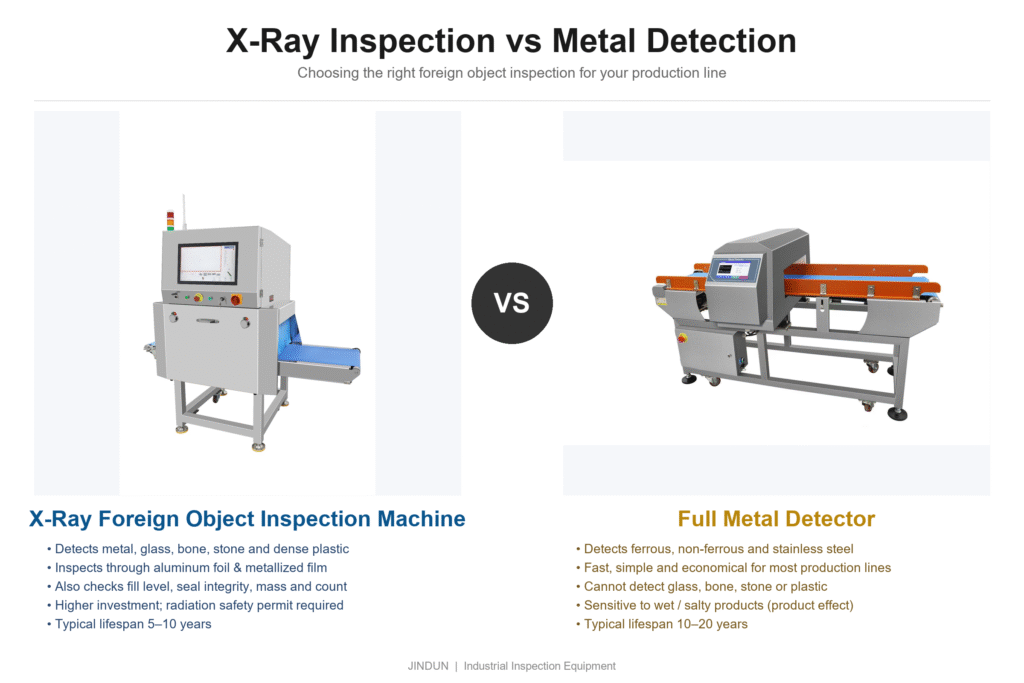

Choosing between an X-Ray Foreign Metal Detector Machine and a Metal Detector Machine is one of the most critical decisions for any food production line. Both technologies serve the same ultimate purpose—protecting consumers from physical contaminants and safeguarding your brand reputation—but they achieve this through fundamentally different principles. This comparison breaks down 7 key differences in detection capabilities, product compatibility, packaging limitations, and overall cost, so you can confidently select the right inspection system for your specific production needs.
What is a Full Metal Detector?
When looking at x-ray inspection vs metal detector, it helps to start with the basics of each technology.
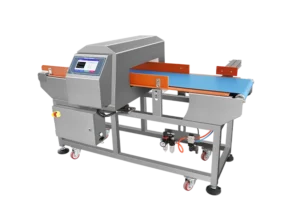
A full metal detector (also called an industrial metal detector or food metal detector) uses electromagnetic induction to find metal contamination. A balanced coil system generates a magnetic field inside the detector aperture. When a metal particle passes through, it disturbs that field, the receiver coil picks up the change, and the control unit triggers an automatic reject.
“Full metal” means it detects all three metal categories:
- Ferrous metals (iron, steel) — the easiest to detect
- Non-ferrous metals (copper, aluminum, brass)
- Stainless steel (SUS) — the hardest, because of its low electrical conductivity
Common configurations include:
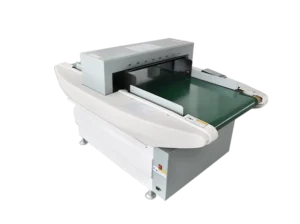
- Conveyor / tunnel detectors — for packaged or unpackaged products on a belt
- Pipeline detectors — for liquid, paste and sausage meat
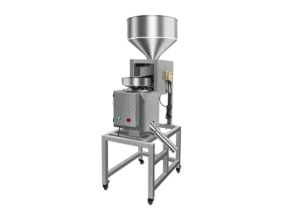
- Free-fall / gravity detectors — for powders and granules
What Is an X-Ray Foreign Metal Detector Machine?
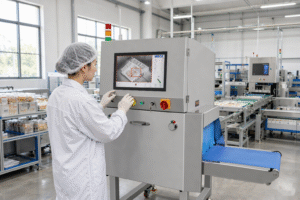
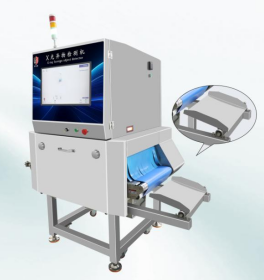
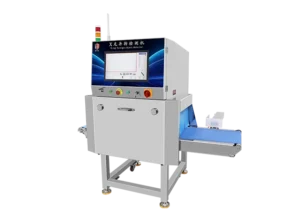
An X-ray foreign Metal Detector machine uses density imaging. A low-energy X-ray beam passes through the product onto a diode sensor array. Dense objects absorb more radiation than the surrounding product and appear as darker areas in the image. Software analyzes the image in real time and rejects the product when a foreign object is found.
Because X-ray reads density rather than conductivity, it detects metal and non-metal contaminants alike, including:
- Ferrous and non-ferrous metals, stainless steel
- Glass and ceramics
- Bone (calcified and fish bones)
- Stone and mineral fragments
- High-density plastics and rubber
Many modern systems can also check fill level, missing or broken components, seal integrity, and product mass in the same pass — functions a metal detector cannot perform.
X-Ray Inspection vs Metal Detector: Key Differences
| Comparison | Full Metal Detector | X-Ray Foreign Metal Detector Machine |
| Working principle | Electromagnetic induction | Density imaging |
| Metal (Fe / non-Fe / SUS) | Excellent | Excellent |
| Glass, bone, stone, dense plastic | Not detected | Detected |
| Aluminum foil / metallized packaging | Interference reduces reliability | Inspects through it |
| Wet, salty, high-mineral products | Product effect lowers sensitivity | Unaffected by product effect |
| Extra quality checks (fill, seal, count) | No | Yes |
| Initial investment | Lower | Higher |
| Running & maintenance cost | Low, simple | Higher; X-ray tube replacement every 5–10 years |
| Typical lifespan | 10–20 years | 5–10 years |
| Radiation safety license needed | No | Yes (local requirements apply) |
| Speed on standard lines | Very high | High, adequate for most lines |
What Contaminants Can Each System Detect?
Metal detector: metal only. It does not matter how advanced the machine is — a metal detector physically cannot find glass, bone, stone or plastic, because those materials do not disturb an electromagnetic field.
X-ray: any material with a density different from the product. This is the decisive advantage when your raw material or process can introduce non-metallic hazards:
- Seafood and poultry — fish bones and calcified bone fragments are a constant risk; metal detectors miss them entirely
- Glass-packed products (jars, bottles) — glass-in-glass contamination during filling
- Bakery and snack lines — stones and dense shells from raw materials
- Recycled ingredients — mineral and plastic fragments
Detection Sensitivity: What Does It Really Mean?
Sensitivity is not a single number. It depends on the aperture size, the product itself, and the detection frequency.
For metal detectors, typical factory-test values are in the range of Fe ≥ 0.5–0.8 mm, non-ferrous ≥ 1.0–1.2 mm, and stainless steel ≥ 1.5–2.0 mm for a standard conveyor head, depending on aperture and product conditions. Wet, salty or conductive products force sensitivity down because of the “product effect” — the product itself generates a signal that can mask small metal particles.
X-ray sensitivity is defined by density contrast and pixel resolution, not conductivity. X-ray can often find sub-millimeter dense particles (metal, glass, bone) even inside thick or metalized packaging, and it keeps that sensitivity on wet, salty and high-mineral products.
Note: exact sensitivity always depends on your specific product, aperture size and line conditions. JINDUN runs free sample tests to confirm real-world sensitivity before you order.
Product and Packaging Compatibility
Packaging decides the technology more than any other factor.
- Metal detector works perfectly with plastic film, paper, cardboard and most non-metal packaging — but fails reliably with aluminum foil, metalized film and metal cans, because the packaging itself triggers the electromagnetic field.
- X-ray Detector Machine inspects through aluminum foil, metalized bags, cans, jars and bottles without loss of performance. This is why X-ray is the standard solution for foil-wrapped confectionery, canned food and premium ready meals.
Product composition matters too. High salt, moisture or acid content (fresh meat, cheese, pickles, wet dough) weakens metal detector sensitivity. X-ray is essentially immune to product effect.
Cost, Maintenance and Safety
Full metal detector:
- Lower purchase price, small footprint, easy installation
- Simple maintenance: cleaning, belt and seal checks; no consumables
- Long service life (often 10–20 years)
- No radiation safety requirements
X-ray foreign object machine:
- Higher initial investment and larger footprint
- Periodic X-ray tube replacement (typically every 5–10 years) and regular preventive maintenance
- Requires a radiation safety permit and operator training in most countries, plus safety interlocks and shielding
The higher cost of X-ray is justified when it prevents expensive recalls, opens access to retailers that demand X-ray inspection (for example large US retail chains and private-label programs), or replaces several inspection stations with one multi-function system.
When Should You Choose a Full Metal Detector?
Choose a metal detector when:
- Your main contamination risk is metal (worn screens, broken blades, machinery wear)
- Your packaging is metal-free (film, paper, cartons)
- Your products are dry or low-salt — minimal product effect
- Budget, floor space and simplicity are priorities
- You need fast, high-throughput screening at every line
For most bakery, snack, dry goods, pharmaceutical and garment lines, a full metal detector is the cost-effective first line of defense — and often fully sufficient.
When Should You Choose an X-Ray Foreign Object Machine?
Choose X-ray inspection when:
- You need to detect glass, bone, stone, ceramic or dense plastic
- You use aluminum foil, metalized film or rigid containers
- Your products are wet, salty or high-mineral (meat, seafood, cheese, pickles)
- You want additional quality checks — fill level, missing components, seal integrity
- Retailers or buyers require X-ray inspection, or you are working toward BRCGS, IFS, SQF or FSMA preventive-controls programs
How to Choose the Right System for Your Production Line
Follow these five steps:
- List your real contamination risks. What foreign objects can actually enter your product? If the answer is “metal only”, start with a metal detector.
- Check your packaging. Any aluminum foil, metalized film or metal container → X-ray is the reliable choice.
- Review your product composition. Wet, salty or conductive products push you toward X-ray unless sensitivity loss is acceptable.
- Add up the total cost. Not just the machine — installation, maintenance, consumables, compliance and the cost of a potential recall.
- Plan for the future. Many plants start with metal detection on raw materials and add X-ray on finished products, covering different risks at different points of the line.
Still not sure? JINDUN’s engineers will review your product and packaging and recommend the right configuration — that is what free sample testing is for.
JINDUN Solution: Both Technologies, One Partner
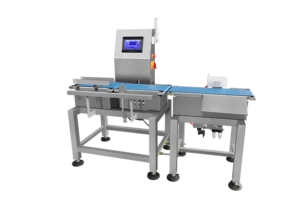
JINDUN manufactures both full metal detectors and X-ray foreign object inspection machines, plus complementary inspection equipment such as checkweighers and metal separators. That means you get honest, unbiased selection advice instead of being pushed toward a single technology.
What JINDUN provides beyond the machine:
- Free sample testing — real sensitivity results on your actual product before you order
- Production line integration — conveyor, reject system, and connection to your existing line
- Installation, calibration and operator training — including HACCP documentation support
- Application experience across food, plastic, medical, packaging, electronic and garment industries
FAQ
Can an X-ray machine detect all types of metal?
Yes. X-ray detects ferrous, non-ferrous and stainless steel — and it does so even inside aluminum foil or metal packaging, which a metal detector cannot inspect.
Can a metal detector detect glass or bone?
No. Metal detectors only respond to metal. Glass, bone, stone and plastic are invisible to an electromagnetic field.
Which is better: metal detector or X-ray?
Neither is universally better. If your only risk is metal and your packaging is metal-free, a metal detector is the economical choice. If you face non-metal contaminants, metal packaging or wet/salty products, X-ray is the right tool.
Can X-ray inspection work with aluminum foil packaging?
Yes. This is one of the main reasons plants choose X-ray — it inspects through foil, metalized film, cans and jars with no loss of sensitivity.
Do X-ray machines require special licenses?
In most countries, yes. X-ray inspection equipment requires radiation safety compliance, shielding, interlocks and operator training. JINDUN can guide you through the local requirements.
What is typical metal detector sensitivity?
Under standard test conditions, typical values are roughly Fe ≥ 0.5–0.8 mm, non-ferrous ≥ 1.0–1.2 mm and stainless steel ≥ 1.5–2.0 mm, depending on aperture and product. Exact figures depend on your product — always confirm with a sample test.
Can I use both a metal detector and an X-ray machine on the same line?
Absolutely, and many plants do. A common setup is metal detection on incoming raw materials and X-ray inspection on finished products — two layers of protection at different points.
Conclusion: Start With Your Product, Not the Machine
The choice between a full metal detector and an X-ray foreign object machine comes down to three questions: what contaminant are you trying to catch, what is your packaging, and what is your product made of. Metal detection is fast, simple and economical for metal-only risks in non-metal packaging. X-ray inspection catches a far wider range of contaminants, works through metal packaging, and adds quality checks — at a higher cost.
If you are weighing these options for a new line or an upgrade, JINDUN can help you decide with real sample testing and honest advice.
Not sure which inspection system fits your production line? Contact JINDUN for equipment selection support — we will test your product and recommend the right solution.