How to Choose a Color Sorter for Reliable Production
A color sorter can improve the appearance, consistency, and commercial value of rice, wheat, corn, coffee beans, seeds, nuts, and many other free-flowing products. However, the machine should never be selected from channel count, camera resolution, or a catalogue capacity alone. A specification may look impressive and still be unsuitable for the material entering a real production line.
The right choice begins with a practical question: can the machine separate the actual defects in your product at the required production rate while keeping valuable good material out of the reject stream? That question connects everything that matters—material presentation, optical contrast, sensor selection, compressed air, feed stability, sorting settings, yield, cleaning, and service support. When buyers evaluate these factors as one production system, the conversation becomes much more useful than a comparison of isolated brochure numbers.
Start With the Product, Not the Machine
Describe the Incoming Material Clearly
The same color sorter can behave very differently when the incoming material changes. Milled rice, paddy, green coffee beans, roasted coffee beans, sesame, quinoa, peanuts, and plastic granules do not flow in the same way. Their size, shape, surface, moisture, bulk density, fragility, dust level, and defect pattern influence how evenly they move through the feeder and chute, how clearly the cameras can inspect them, and how accurately the ejectors can separate them.
A buyer should therefore describe the product precisely. “Coffee” is not enough if the factory processes green beans at one stage and roasted beans at another. “Rice” should identify whether the material is paddy, brown rice, or milled rice. The supplier also needs to understand whether the incoming product is dry and free-flowing, dusty, fragile, oily, sticky, or mixed with light husks and broken pieces. This information determines whether chute sorting is suitable and whether the feeding system needs special attention.
Define the Reject Target
The reject target must be equally clear. A request to “remove impurities” can refer to discolored kernels, mold-like spots, burnt pieces, immature beans, broken product, husks, stems, stones, plastic fragments, glass, or material that is simply outside a desired color grade. These targets do not all produce the same visual or spectral contrast. The best quotation begins with photos and representative samples of acceptable product and each reject category, together with an explanation of the final quality the buyer expects.
Understand What a Color Sorter Can Actually See
Visible Color and Shape Differences
A color sorter feeds material into a controlled inspection zone, illuminates it, captures images or sensor data, classifies each passing object, and activates an air ejector when the object falls outside the approved product profile. The basic process sounds simple, but reliable separation depends on the stability of the entire chain. If material overlaps, dust covers the inspection window, lighting is inconsistent, air pressure fluctuates, or the product moves unpredictably, even capable cameras and software cannot deliver a stable production result.
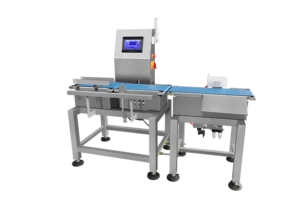
Visible-light RGB cameras are well suited to defects that differ clearly in color, shade, shape, or surface appearance. They may identify yellowed rice, dark kernels, off-color seeds, underdeveloped coffee beans, scorched roasted beans, and pieces that do not match the selected grade. Shape and size analysis can also help classify broken or misshapen pieces when the material is presented clearly enough. This is optical classification rather than weight grading; where a specification requires actual mass categories, a dedicated weight sorting machine is the more direct solution.
When Complementary Inspection Is Needed
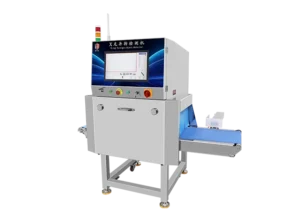
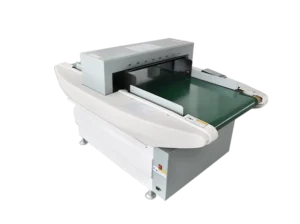
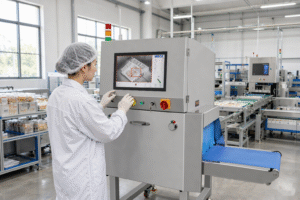
Some foreign materials are easy to distinguish because their appearance contrasts strongly with the product. Others may look almost identical under visible light, remain transparent, or contain an internal difference that a surface image does not reveal. In those applications, near-infrared, X-ray, metal detection, density separation, or another complementary technology may be more appropriate. A responsible supplier should define the detection boundary instead of implying that one optical configuration can remove every possible contaminant. JINDUN’s broader food inspection applications can help buyers consider how different inspection and separation technologies fit into the same quality-control plan.
| Sorting requirement | Suitable direction to evaluate | What should be proven in testing |
|---|---|---|
| Visible discoloration | Full-color camera | Stable separation under controlled lighting |
| Broken or misshapen pieces | Camera with shape classification | Minimum relevant size and orientation |
| Weak visible contrast | Spectral sensing may be required | Measurable difference on the real sample |
| Internal or density-related defect | X-ray or another complementary method | Clear detection on the target product |
| Metal contamination | Metal detector or X-ray inspection | Metal type, size, position, and product condition |
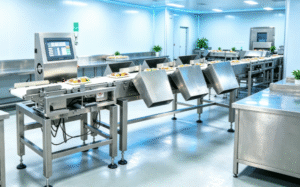
| Weight grading | Weight grader or checkweighing solution | Required range, accuracy, and grading logic |
Treat Sample Testing as the Basis of Selection
Use Representative Production Material
A representative sample test is more valuable than a long list of nominal specifications. It reveals whether the product feeds smoothly, whether the intended defect produces enough contrast, how the settings influence product recovery, and what operating rate can be maintained without sacrificing the required result. A demonstration using a different crop or a carefully prepared handful of obvious defects cannot replace testing with normal production material.
The test batch should reflect the real incoming condition, including the typical mixture of acceptable product, defects, dust, broken pieces, and foreign material. After sorting, the input, accepted stream, and reject stream should be kept separate and evaluated. Looking only at the clean accepted sample gives an incomplete picture. The reject stream may contain a significant amount of sellable material if the sensitivity is too aggressive, and that loss can be more expensive than the defects being removed.
Record a Reproducible Result
Every result needs a defined calculation. Terms such as sorting accuracy, purity, carryover, defect-removal rate, and good-in-reject are sometimes used differently by different suppliers. The buyer and supplier should agree on the sampling method, formula, sample size, target, tolerance, number of passes, and test conditions before treating a percentage as meaningful. Feed rate, recipe, sensor configuration, air condition, material condition, and output weights should also be recorded so the result can be reviewed and reproduced.
Actual-product testing is especially important when the material has high moisture, high oil, heavy dust, variable size, subtle discoloration, or an uncertain defect boundary. In these situations, a catalogue statement cannot predict the final effect reliably. The approved machine configuration should be tied to the tested sample and operating conditions rather than to a general promise.
Match Color Sorter Capacity to Real Production Conditions
Color sorter capacity is conditional. A machine may process one granular material smoothly but require a lower feed rate for another material that is lighter, more irregular, more fragile, or more contaminated. Defect concentration also matters because frequent ejection increases air demand and can raise the chance of acceptable neighboring pieces being diverted with a reject. For this reason, a tonnes-per-hour figure is useful only when the material, contamination level, sorting target, number of passes, and required final quality are known.
The buyer should provide both normal and peak input rates and explain how long peak production normally lasts. A machine selected only for average flow may restrict the line during harvest or seasonal demand. At the same time, choosing an oversized configuration solely around a theoretical peak can increase purchase cost, air consumption, footprint, and maintenance without improving everyday production. The most useful design point is a tested operating rate that meets the quality target and leaves enough headroom for normal variation in incoming material.
Capacity must also be considered together with the equipment around the sorter. Elevators, hoppers, feeders, platforms, discharge chutes, reject collection, and downstream conveyors all affect usable throughput. Uneven upstream feeding may overload one section while leaving another underused. A stable buffer hopper and controlled feed are often more valuable than pushing the sorter at its catalogue maximum.
Choose a Feeding Platform That Presents the Material Clearly
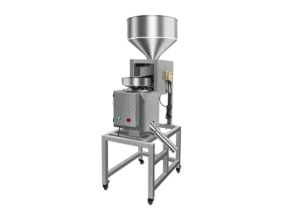
Chute-type color sorters are widely used for dry, free-flowing grains, seeds, beans, coffee, and similar granular materials. The feeder distributes the product, the chute creates a consistent path, and the pieces enter the inspection zone in controlled free fall. Chute surface, width, angle, and geometry should suit the product’s size, friction, fragility, and flow behavior. A design that works well for smooth grain may not present flat, sticky, or easily damaged material with the same consistency.
Belt-type optical sorting may be considered for products that are delicate, irregular, flat, sticky, or difficult to stabilize in free fall. A belt can provide controlled presentation and additional inspection time, but it also introduces a larger footprint and its own cleaning and maintenance requirements. The decision should be based on the material and the defect, not on the assumption that one platform is universally more advanced.
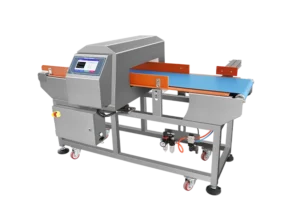
Pre-cleaning deserves attention as well. Screens, aspiration, destoners, magnets, and other equipment can remove dust, oversized debris, lightweight material, stones, or magnetic metal before precision optical sorting. This reduces unnecessary load and allows the color sorter to focus on the targets it handles best. Where the risk assessment requires dedicated metal control, a metal separator can form part of the wider line rather than being treated as a substitute for optical sorting.
Evaluate the Complete Sorting Chain
Camera resolution is only one part of performance. Stable LED illumination, a suitable background, clean optical windows, correct lens positioning, dependable classification software, accurate timing, fast ejector valves, and properly conditioned compressed air must work together. Buyers should ask the supplier to explain which part of the system recognized each target during the sample test and how the chosen setting affected both defect removal and product loss.
The control interface should make validated recipes easy to save, retrieve, and adjust. This is useful for factories processing different crops, grades, or suppliers, but a stored recipe should not be treated as permanent proof. A significant change in variety, moisture, surface condition, defect pattern, or upstream processing may require a fresh check and revised settings. Automation can shorten setup; it does not remove the need for process knowledge.
Ejector performance should be judged by timing precision, repeatability, service life, access, and spare-parts support. A valve must release a short air pulse at the correct moment without disturbing too much surrounding product. Unstable pressure, wet or dirty air, worn valves, or excessive overlap can increase both missed defects and false rejection. Maintenance staff should be able to inspect and replace the relevant parts without prolonged downtime.
Plan Utilities and Installation Before Approving the Quotation
Compressed Air and Electrical Supply
A color sorter depends on more than an electrical connection. Most air-ejection systems require a stable supply of clean, dry compressed air at the correct pressure and flow. Pressure alone is not a complete specification; the project should also confirm air consumption at the intended operating load, compressor capacity, receiver volume, filtration, dryer requirements, pipe diameter, and expected pressure loss. Air demand can change with product condition, defect concentration, machine configuration, and ejection activity.
Electrical details should be confirmed for the destination factory and the final model. Voltage, frequency, phase, protective devices, plugs, and allowable supply range should appear in the approved technical configuration. A nominal voltage in a general brochure should not be assumed to fit every market or every installation.
Line Layout and Communication
The layout needs space for the machine, feeding equipment, platforms, accepted and rejected outlets, compressor and air treatment, service doors, cleaning access, and safe operator movement. Inlet and outlet height can be as important as overall dimensions because they determine how the sorter connects with elevators and conveyors. Where the sorter must communicate with the wider line, the technical agreement should define run permission, alarms, emergency-stop logic, production signals, and any required data interface.
Protect Yield, Cleanability, and Long-Term Operation
A clean accepted stream is not automatically an efficient result. Sensitivity can often be increased until most visible defects disappear, but aggressive settings may divert too much acceptable product. The economic goal is to achieve the required accepted quality while controlling good product in the reject stream. Depending on the process, the reject fraction may be sorted again to recover sellable material, but the benefit should be demonstrated with actual output weights and quality checks.
Total operating cost includes compressed air, electricity, cleaning, wear parts, labor, spare-parts inventory, product loss, training, and downtime. These costs are often more important over the life of the machine than a small difference in purchase price. Buyers should review routine access to chutes, lenses, backgrounds, filters, valves, hoppers, and product-contact surfaces. The supplier should explain daily inspection, regular cleaning, periodic maintenance, common alarms, and the recommended spare-parts package.
Operator training should cover safe startup and shutdown, recipe selection, sensitivity adjustment, sample checking, cleaning, air-system inspection, and basic fault diagnosis. Remote support is useful when it is backed by clear response channels, capable technicians, and locally replaceable parts. Warranty scope, exclusions, support hours, documentation language, and expected lead time for critical components should be agreed before shipment.
Information That Makes a Quotation More Accurate
A supplier can recommend a color sorter more responsibly when the enquiry contains enough process information. The most useful request describes the exact material and process stage, normal and peak input rate, defect examples, approximate contamination level, target accepted quality, allowed product loss, moisture and dust condition, available electrical supply, compressed-air system, installation height and floor space, destination country, required documents, line-control needs, and trade terms.
Photos and video help the supplier understand material appearance and factory layout, but a representative sample remains the strongest basis for final confirmation. When a sample test is arranged, acceptable and rejected pieces should be labeled clearly, and the buyer should state which defects are critical, which are desirable to remove, and which may remain within tolerance. This prevents the supplier from optimizing the test around the easiest visible target while overlooking the buyer’s real concern.
JINDUN can use this information to compare an appropriate primary configuration with an upgrade option where the material, tested capacity, sensing requirement, or line arrangement justifies it. Exact capacity, air demand, electrical range, purity, and final machine dimensions should be confirmed for the selected model and actual application rather than copied from a general product summary.
Choose a Verified Production Result
The best color sorter is not necessarily the machine with the largest channel count, the highest camera specification, or the longest feature list. It is the configuration that presents the real product consistently, recognizes the agreed defect boundary, maintains the required operating rate, protects sellable yield, fits the utilities and line layout, and can be cleaned and supported throughout its working life.
Begin with representative material and a clear acceptance standard. Use sample testing to connect sensor capability with throughput and product recovery. Review compressed air, power, feeding, discharge, space, cleaning, maintenance, training, and spare parts as parts of the same system. This approach produces a quotation that is easier to evaluate and a machine selection that is much more likely to remain reliable after installation.
To discuss a suitable JINDUN color sorter configuration, prepare photos or samples of the incoming product, examples of acceptable and rejected pieces, the required hourly input, the target final quality, available power, compressed-air details, and installation constraints. The final recommendation can then be based on the production result the line needs instead of an isolated brochure number.
Discuss Your Color Sorting Application With JINDUN
Send us your material photos or samples, target defects, required hourly capacity, available power, compressed-air details, and installation limits. We will help you evaluate a suitable color sorter configuration around your actual production needs.
Email: sales08@jindunmachinery.com | Phone: +86 137 1200 7104
FAQs
What materials can a color sorter process?
Color sorters are commonly used for rice, wheat, corn, coffee beans, seeds, nuts, sesame, quinoa, and other free-flowing granular products. The final feeding platform and configuration should be confirmed against the material’s size, shape, moisture, dust level, fragility, and flow behavior.
Can one color sorter handle different products?
A suitable platform may store recipes for several products, but each material should be tested separately. Changes in crop variety, moisture, defect type, surface condition, and required throughput can affect the recipe and practical capacity.
Can a color sorter remove stones, glass, or plastic?
It may separate these materials when they create a clear optical or spectral difference from the accepted product. Similar-color, transparent, or internally different contaminants may require another sensor or complementary inspection technology. The real target should be confirmed through sample testing.
Why is a sample test important before ordering?
A sample test connects the machine specification with the buyer’s real material. It shows whether the defect can be recognized, whether feeding is stable, what throughput can be maintained, and how much acceptable product enters the reject stream.
Does a color sorter require an air compressor?
Most air-ejection color sorters require clean, dry, and stable compressed air. The required pressure, flow, filtration, dryer, receiver, and pipe size must be confirmed for the selected machine and expected sorting load.
Share With
Related Articles



Hot Products