
Table of Contents
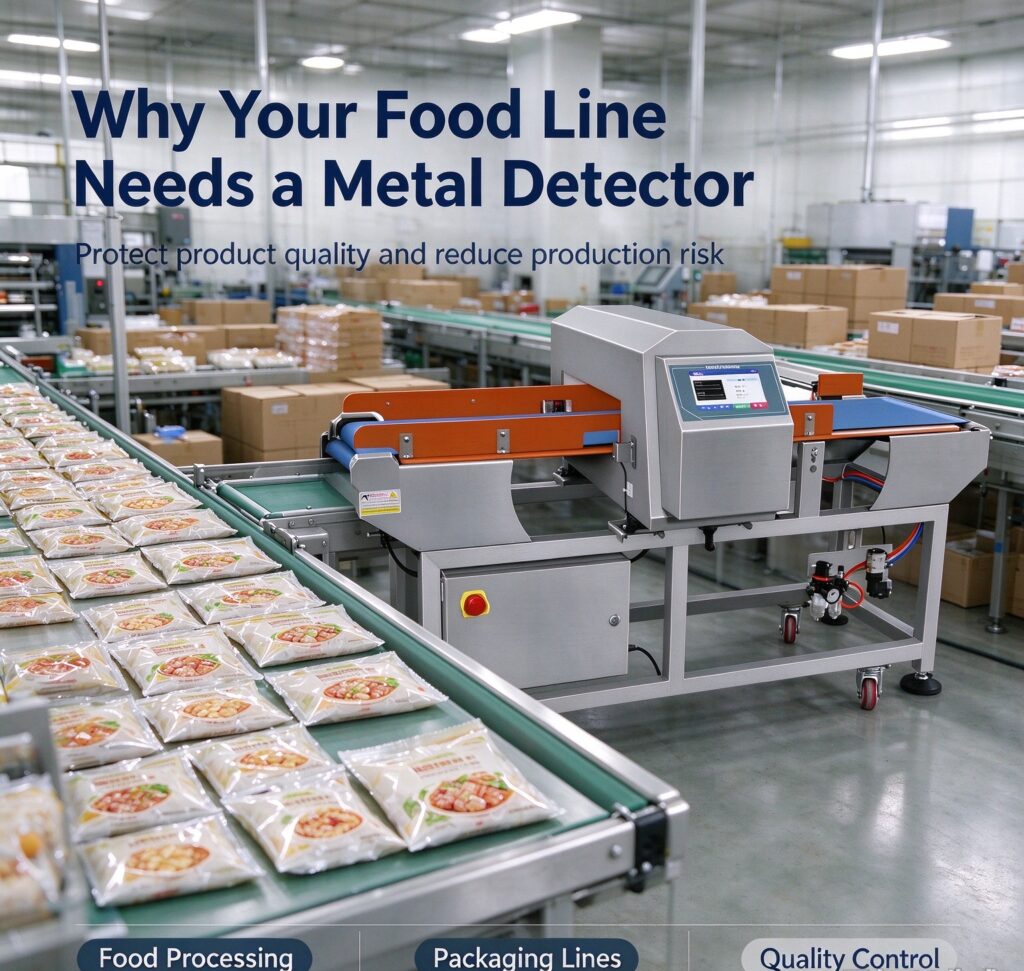
Food Line Metal Detector: 5 Ultimate Benefits
Introduction
In food manufacturing, product safety is non-negotiable. A single metal fragment—whether from machinery wear, raw materials, or packaging—can lead to consumer injury, costly recalls, and irreversible brand damage. That’s why a food line metal detector is no longer a luxury; it’s an essential component of any modern production line.
But what exactly does a food line metal detector do, and why should your facility invest in one? In this article, we’ll explore the 5 ultimate benefits of installing a food line metal detector and how it can transform your quality control process.
What Is a Food Line Metal Detector?
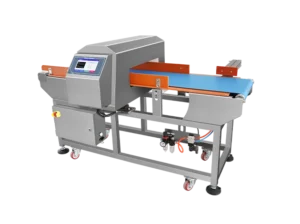
A food line metal detector is a specialized inspection system designed to identify and reject products contaminated with ferrous, non-ferrous, and stainless steel metals. It is typically installed at critical control points along the production line—such as after packaging or before final shipment—and operates continuously to inspect 100% of your products.
Using advanced electromagnetic technology, the detector senses disturbances in a magnetic field caused by metal contaminants. When metal is detected, a reject mechanism (air blast, pusher, or flap) automatically removes the affected product from the line.
Unlike manual spot-checking, a food line metal detector provides consistent, reliable inspection at production speeds, ensuring no contaminated product reaches the consumer.
The 5 Ultimate Benefits of a Food Line Metal Detector
1. Enhanced Food Safety and Consumer Protection
The primary benefit of a food line metal detector is obvious: it protects consumers from physical hazards. Metal fragments can cause serious injury—chipped teeth, internal cuts, or even choking. By detecting and removing these contaminants before they leave your facility, you drastically reduce the risk of harm.
For food manufacturers, this is not just a moral obligation; it’s a legal requirement. Regulatory bodies such as the FDA, EU, and local health authorities mandate that food products be free from foreign objects. A food line metal detector helps you meet these requirements consistently.
2. Regulatory Compliance and HACCP Support
Food safety standards like HACCP, BRC, IFS, and SQF require documented control of physical hazards. Metal detection is a critical control point (CCP) in many food safety plans. Installing a food line metal detector provides verifiable evidence that you are actively managing metal contamination risks.
During audits, inspectors look for validation records, calibration logs, and reject verification. A modern metal detector with data logging and connectivity simplifies compliance and gives you peace of mind.
3. Brand Protection and Recall Prevention
A product recall can cost millions in direct expenses—logistics, disposal, refunds—and even more in lost consumer trust. One recall can undo years of brand building. A food line metal detector acts as your first line of defense, preventing contaminated products from reaching the market.
By catching metal contaminants early, you avoid the need for expensive recalls and protect your reputation as a reliable, safety-focused manufacturer.
4. Operational Efficiency and Reduced Waste
Contrary to the belief that inspection slows down production, a well-integrated food line metal detector actually improves efficiency. Modern systems operate at high speeds (up to 200+ products per minute) without compromising accuracy. They also reduce false rejects through advanced signal processing.
When metal is detected, the system rejects only the affected product, minimizing waste. And by identifying the source of contamination—such as a worn machine part—you can address the root cause and prevent future incidents, reducing downtime and scrap.
5. Cost Savings and ROI
While there is an upfront investment, a food line metal detector delivers significant long-term savings:
Avoid recall costs: A single recall can cost millions; prevention is far cheaper.
Reduce product giveaway: By ensuring accurate detection, you avoid unnecessary rejection of good products.
Protect equipment: Metal contaminants can damage downstream machinery like extruders and fillers. Early detection prevents costly repairs.
Lower insurance premiums: Some insurers offer reduced rates for facilities with verified metal detection systems.
Most manufacturers achieve a positive ROI within the first year simply by avoiding one major recall or equipment failure.
Key Features to Look for in a Food Line Metal Detector
When selecting a food line metal detector, consider these features:
| Feature | Why It Matters |
|---|---|
| High sensitivity | Detects small fragments (e.g., 0.8 mm Fe, 1.0 mm non-Fe, 1.2 mm SS) |
| Multi-frequency operation | Adapts to different products and packaging |
| Auto-balance | Maintains stable performance despite product effect |
| Reject system | Air blast, pusher, or flap—matched to your product |
| IP65/IP69K rating | Withstands washdown and harsh environments |
| Data logging & connectivity | Supports HACCP documentation and Industry 4.0 integration |
| Easy calibration | Reduces downtime and operator error |
JINDUN’s food line metal detectors are engineered with these features and more, ensuring reliable performance in the most demanding food production environments.
Applications Across the Food Industry
A food line metal detector is versatile and can be used in a wide range of food applications:
Meat and poultry: Detecting metal from blades, hooks, and machinery.
Bakery: Inspecting bread, biscuits, and pastries for metal fragments from mixers and ovens.
Seafood: Ensuring fish fillets and shellfish are free from hooks and wires.
Packaged food: Checking bags, pouches, and cartons before case packing.
Confectionery: Inspecting candies and chocolates for metal contaminants.
No matter your product, a food line metal detector can be tailored to your specific needs.
How to Choose the Right Food Line Metal Detector
Selecting the right system involves several factors:
Product characteristics: Wet, dry, frozen, hot, or packaged? Each affects detection sensitivity.
Line speed: Ensure the detector matches or exceeds your production rate.
Packaging material: Metalized film requires special frequency selection.
Environment: Washdown, dust, or extreme temperatures?
Reject requirements: How should contaminated products be removed?
Compliance needs: Do you need data logging, audit trails, or remote monitoring?
JINDUN offers a range of food line metal detectors to suit different applications and budgets. Our team can help you select the ideal model for your production line.
FAQ
Q: Can a food line metal detector detect stainless steel?
A: Yes, modern metal detectors can detect stainless steel, including difficult grades like 316. However, sensitivity may vary depending on the product and packaging.
Q: Will a metal detector work with metalized film packaging?
A: Yes, but you need a detector with the correct frequency and phase discrimination. JINDUN offers models optimized for metalized film.
Q: How often should I calibrate my food line metal detector?
A: Daily calibration checks are recommended for high-risk products. Weekly calibration is sufficient for general applications. Always recalibrate after maintenance or product changeover.
Q: Can a metal detector also check weight?
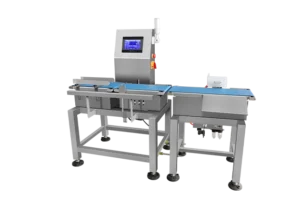
A: No. Metal detectors only detect metal. For weight verification, you need a checkweigher. Many manufacturers combine both for complete quality control.
Q: What is the typical sensitivity of a food line metal detector?
A: Sensitivity depends on the product and aperture size. Typical values: 0.8–1.5 mm for ferrous, 1.0–2.0 mm for non-ferrous, and 1.2–2.5 mm for stainless steel.
Q: Does JINDUN provide installation and training?
A: Yes. JINDUN offers full support including installation, calibration, and operator training to ensure your system performs optimally from day one.
Conclusion
A food line metal detector is more than just a piece of equipment—it’s a strategic investment in food safety, brand protection, and operational efficiency. With the 5 ultimate benefits outlined above, it’s clear that every food production line can benefit from reliable metal detection.
Whether you’re processing meat, bakery, seafood, or packaged foods, JINDUN has a food line metal detector to meet your needs. Our systems are designed for high sensitivity, durability, and ease of use, helping you achieve compliance and peace of mind.
Key takeaways:
Protects consumers from metal hazards
Ensures HACCP and regulatory compliance
Prevents costly recalls and brand damage
Improves efficiency and reduces waste
Delivers strong ROI
Ready to Protect Your Food Line?
Don’t leave food safety to chance. Contact JINDUN today to discuss your metal detection requirements. Our experts will help you choose the right food line metal detector, integrate it seamlessly, and train your team for optimal performance.
JINDUN – Precision Detection for Safer Food.
Share With
Related Articles


Hot Products