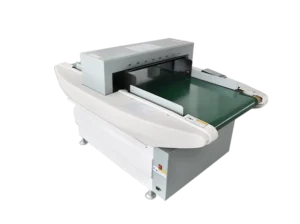
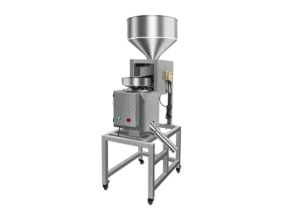
Detecting broken or stray needles is one of the most important safety measures in industries such as textiles, garments, toys, and food processing. Even the smallest needle fragment can cause product recalls, customer injuries, and severe compliance issues. This guide explains whether metal detectors can detect needles, how detection works, and what equipment delivers the highest accuracy in real production environments.
Understanding Needle Detection in Industrial Environments
Before examining the technical performance of metal detectors, it’s important to understand why needle detection is so critical in manufacturing.
Why Detecting Needles Matters
Broken sewing needles, machine needles, or steel fragments can hide inside textiles, food products, or packaged goods. Detecting these contaminants protects consumer safety, prevents product recalls, reduces brand risk, and ensures compliance with industry safety standards.
Can Metal Detectors Detect Needles?
With the reasons established, we can now focus on the main question: yes, industrial metal detectors can detect needles, but effectiveness depends on several technical factors.
How Standard Metal Detectors Respond to Small Metal Mass
Metal detectors identify metal by detecting disturbances in an electromagnetic field. Needles, especially thin or short ones, have very low metal mass, meaning detectors must operate at high sensitivity to identify them reliably. Sensitivity increases as aperture size decreases and frequency increases.
Factors That Influence Needle Detectability
Because needles vary in size, material, and orientation, several conditions determine whether they will trigger a detection signal:
- Needle composition (iron, steel, alloy)
- Orientation relative to the detector’s field
- Aperture size
- Conveyor speed
- Interference caused by the product effect in food items
These variables explain why some detectors perform better with needles than others.
Types of Metal Detectors Best Suited for Needle Detection
Now that detectability factors are clear, the next step is choosing the right equipment. Different industries use different types of detectors depending on the needle’s origin and product characteristics.
Needle Detectors for Textiles and Garments
Specialised Needle Detector systems are commonly used in apparel production, plush toys, and textile finishing. They offer extremely high sensitivity for ferrous needles and are designed specifically for detecting broken sewing machine needles inside fabrics.
Food-Grade Metal Detectors for Needle Fragments
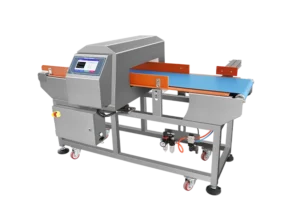
In food processing, fragments from equipment, wire brushes, or tools may enter the product stream. Modern Food Metal Detectors use multi-frequency technology to improve the detection of very small ferrous contaminants, including needle-like metal fragments.
X-Ray Systems for Difficult-to-Detect Needles
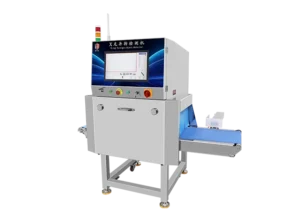
Some needles, such as low-density stainless-steel types, can be challenging for electromagnetic detectors. In these cases, X-ray inspection Equipment provides an alternative method, detecting contaminants based on density differences rather than conductivity or magnetic properties.
How Industrial Metal Detectors Detect Needles: Step-by-Step
Before optimising accuracy, it’s useful to understand how the detection mechanism actually works during production.
Electromagnetic Field Generation
The detector’s transmit coil generates a stable electromagnetic field. Any metal passing through disrupts this field.
Needle Interaction With the Signal
When a needle enters the field, its ferrous nature causes a measurable signal disturbance. The size of the disturbance depends on the needle’s length, mass, and orientation.
Signal Processing and Alarm Activation
The detector’s control system interprets the disturbance and triggers an alarm or automatic rejection system if it identifies the signature of metal contamination.
Improving Needle Detection Accuracy in Your Production Line
Now that the detection process is clear, manufacturers can use several best practices to increase reliability and reduce missed contaminants.
Optimise Sensitivity Settings and Frequency
Higher frequency settings improve detection of thin metal objects, but must be balanced to avoid false rejects, especially in food products.
Calibrate Regularly for Consistent Accuracy
Routine testing using certified ferrous test needles ensures stable performance and regulatory compliance, particularly in export-oriented production.
Reduce Product Effect Interference
For food products, reducing temperature variation, moisture levels, or salt content can greatly improve needle detection accuracy.
Choose the Correct Aperture Size
Smaller apertures create stronger fields and significantly increase sensitivity to small contaminants like needles.
Best Industries and Use Cases for Needle Detection Equipment
Before concluding, it’s helpful to understand where needle detection plays the most essential role.
Textile and Garment Manufacturing
Broken sewing needles are a common hazard in stitching, embroidery, and finishing operations. Needle detection prevents contaminated garments from reaching consumers.
Toy and Plush Manufacturing
Stuffed toys, baby items, and plush products must be needle-free to meet strict safety standards and avoid risk to children.
Food Processing Facilities
Needles or needle fragments from machinery, tools, or maintenance processes pose serious safety concerns and must be detected before packaging.
Consumer Goods and Packaging
Needles or metal splinters can enter packaged items during handling or manufacturing, making detection essential for consumer protection.
Enhancing Production Safety Through Reliable Needle Detection
Reliable needle detection is a crucial component of modern safety and quality systems. Industries that require high precision benefit greatly from advanced inspection technologies and proper sensitivity optimisation. To explore solutions tailored to your production line, you can learn more through Jindunelec or reach out directly via Contact Us for expert assistance.
FAQs