Selecting the right metal detector is critical for maintaining product safety, regulatory compliance, and production efficiency. The wrong choice can lead to missed contaminants, false rejects, and costly production downtime.
Jindun Elec Industrial Metal Detectors and Food Metal Detectors are designed to meet the needs of diverse production lines, from high-speed food processing to sensitive pharmaceutical manufacturing. Understanding the different detector types and key selection criteria ensures your line operates safely and efficiently.
Types of Metal Detectors for Industrial Production Lines
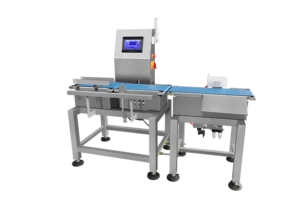
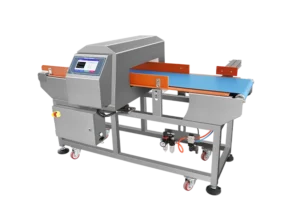
Food Metal Detectors
These detectors are optimized for packaged and unpackaged food products. They handle the product effect caused by moisture, density, and temperature variations while maintaining high sensitivity. Ideal for HACCP-compliant production lines.
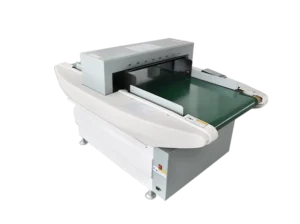
Needle Detectors
Specialized for textiles, garments, and toys, Needle Detectors identify small sewing needles or broken pins, preventing costly product recalls or customer complaints.
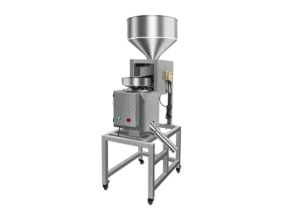
Industrial Metal Detectors
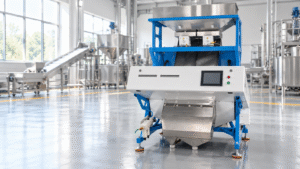
Designed for bulk materials, powders, and raw ingredients, Industrial Metal Detectors operate reliably at high speeds, ensuring accurate detection across large-scale production lines.
X-Ray Inspection Equipment
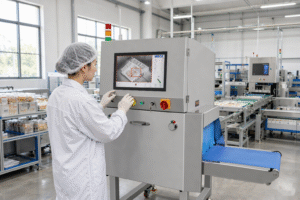
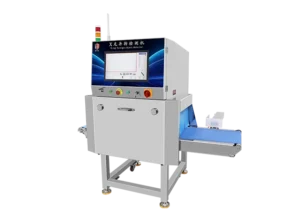
Complementing metal detection, X-Ray Inspection Equipment detects dense materials or complex packaging. They are particularly useful for layered products or when additional contaminant detection is needed.
Key Factors to Consider When Choosing a Metal Detector
Product Characteristics
- Product shape, size, density, moisture, and conductivity directly impact detection accuracy.
- Understanding the product effect is essential for proper sensitivity adjustments.
Packaging and Line Requirements
- Single-layer versus multi-layer packaging, foil, or plastic films.
- Conveyor speed, product spacing, and alignment are critical for reliable detection.
Detection Sensitivity
- Determine the minimum metal particle size your line must detect.
- Balance sensitivity with the potential for false rejects.
Compliance and Industry Standards
- Ensure detectors meet HACCP, BRCGS, FDA, and ISO standards.
- Support audit readiness with proper record-keeping and calibration logs.
Comparison Table of Metal Detector Options
Best Practices for Selecting the Right Metal Detector
Evaluate Production Line Needs
- Conduct a full audit of your production line, including product types, packaging, and line speed.
Test with Sample Products
- Use representative product samples to verify detector performance and sensitivity.
Choose a Reliable Supplier
Plan for Maintenance and Calibration
- Regular testing and calibration ensure consistent detection and long-term system performance.
Optimizing Production Safety with Jindun Elec Solutions
Proper detector selection reduces false rejects, maintains compliance, and improves efficiency. Jindun Elec detectors feature advanced product effect compensation, modular design, and high-speed reliability, making them ideal for diverse production environments.
Contact Jindun Elec to discuss the best metal detection solution for your production line.
FAQs about Choosing the Right Metal Detector