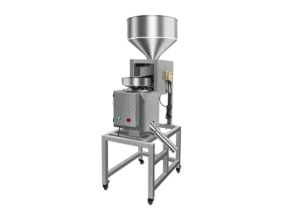


Dual-Energy X-Ray Inspection for Food: 7 Powerful Benefits for Safer Production
Dual-energy X-ray inspection for food can strengthen contaminant control when conventional grayscale inspection struggles with dense, overlapping or highly variable products. A food X-ray inspection system is often the final opportunity to prevent a hazardous foreign object from reaching a customer. Metal detectors are highly effective for many metallic contaminants, but they cannot reliably identify glass, stones, calcified bone or other dense non-metallic materials. X-ray technology expands the inspection range by measuring how products and contaminants attenuate X-ray energy as they pass through the machine.
The difficult question is no longer simply whether a factory needs X-ray inspection. Buyers must decide whether a conventional single-energy system is sufficient or whether dual-energy X-ray inspection for food will deliver more stable separation between the product and the contaminant. That decision affects detection sensitivity, false rejects, validation effort, maintenance and total cost of ownership.
This guide explains seven practical benefits of dual-energy X-ray inspection for food and provides a structured method for selecting equipment for packaged foods, bulk products, meat, seafood, dried fruit, nuts, bakery items and similar applications.
7 powerful benefits of dual-energy X-ray inspection for food
1. Stronger separation of food and dense contaminants
Dual-energy X-ray inspection for food compares two energy responses instead of depending on one grayscale value. That additional material information can help separate organic product from inorganic hazards such as glass and stone when density or thickness alone creates an ambiguous image.
2. Better performance in variable products
Dried fruit, nuts, meat, seafood and frozen products can vary in moisture, thickness and overlap. Dual-energy X-ray inspection for food gives the classification software another basis for distinguishing normal product variation from a foreign object, subject to correct recipe training and validation.
3. Greater control of glass, stone and bone risks
Metal remains an important target, but many processors also face mineral, glass or calcified-bone hazards. Dual-energy X-ray inspection for food can improve the visibility or classification of these high-density materials in difficult applications. Minimum detectable sizes must still be proven with representative test samples.
4. Fewer avoidable false rejects
When normal dense areas resemble contaminants, simply raising sensitivity can reject good product. Properly configured dual-energy X-ray inspection for food can improve separation and reduce avoidable waste, reinspection labor and line interruptions without weakening the agreed detection target.
5. More stable recipes across normal variation
A well-trained recipe should represent normal pack-to-pack variation. Dual-energy X-ray inspection for food can provide a more stable classification basis for products that change in thickness, distribution or moisture, although separate recipes may still be needed for materially different formats.
6. Stronger production evidence and traceability
Modern systems can retain reject images, counts, faults, user actions and recipe records. When dual-energy X-ray inspection for food is connected to a disciplined verification procedure, these records help quality teams investigate events and demonstrate that the control operated as intended.
7. A scalable platform for quality inspection
Beyond foreign bodies, suitable software may support count, mass estimation, missing-item or shape checks. Dual-energy X-ray inspection for food can therefore become a broader quality-control platform, provided every function is separately tested and does not compromise the primary safety objective.
Why food manufacturers use X-ray foreign body detection
Foreign objects may enter food from raw materials, worn processing equipment, broken packaging components or human handling. The contaminant can be extremely small, irregularly shaped and hidden inside an opaque package. Dual-energy X-ray inspection for food provides a non-destructive image of every product and can automatically reject packs that contain a detectable high-density anomaly.
Contaminants commonly detectable by X-ray
- Ferrous, non-ferrous and stainless-steel fragments
- Glass pieces, depending on glass composition, thickness and orientation
- Stones, mineral fragments and some dense ceramics
- Calcified bone in meat and poultry applications
- Some dense rubber or plastic compounds
- Product defects such as missing pieces, incorrect counts or damaged shapes when suitable algorithms are configured
Important limitations
X-ray does not detect every material. Low-density plastics, wood, hair, paper, insects and soft bone may have attenuation characteristics too similar to the food or packaging. Even for detectable materials, performance changes with contaminant size, shape, orientation, product thickness, moisture, density, packaging and position in the inspection tunnel.
|
Key principle A published test-piece size is not a universal guarantee. The only meaningful sensitivity is the smallest contaminant that the complete system repeatedly detects in the actual product, package and line configuration. |
How a single-energy X-ray inspection system works
A single-energy system uses one X-ray spectrum. The generator sends X-rays through the product, and a detector converts the transmitted energy into a grayscale image. Denser or thicker areas absorb more energy and normally appear darker. Software evaluates grayscale, contrast, gradients, area, line width and other features to identify regions that differ from the learned product pattern.
This approach is effective when there is a clear density difference between the normal product and the target contaminant. It is widely used for relatively uniform packs, thin products, low product depth and applications dominated by metal detection. Modern systems can also compensate for product edges, desiccant packets, can rims and other predictable high-density regions using masking or region-of-interest tools.
How dual-energy X-ray inspection for food improves material separation
A dual-energy system analyzes the product using two energy responses rather than relying on one grayscale value alone. By comparing how materials behave at the two energy ranges, the software gains additional information related to material composition as well as density and thickness. This can help distinguish organic food from inorganic contaminants such as stones or glass when their single-energy grayscale values overlap.
The benefit is especially relevant for products with strong product effect: dried fruit, nuts, meat, frozen blocks and overlapping or irregular products. In these applications, normal variation in thickness or moisture may look similar to a contaminant in a conventional image. Dual-energy X-ray inspection for food provides an extra basis for classification, which can improve separation and reduce unnecessary rejects when the system is properly trained and validated.
Dual-energy analysis provides an additional basis for separating food from high-density contaminants.
Single-energy vs. dual-energy X-ray: practical comparison
|
Decision factor |
Single-energy X-ray |
Dual-energy X-ray |
|
Best fit |
Uniform products with clear density contrast |
Dense, variable or overlapping foods with difficult stone/glass risks |
|
Image information |
One attenuation response |
Two energy responses used for enhanced material discrimination |
|
Strength |
Proven, simpler and usually lower cost |
Better separation when product and contaminant grayscale values overlap |
|
Typical targets |
Metal, glass, stone, calcified bone where contrast is sufficient |
The same targets, with potential improvement for inorganic contaminants in difficult products |
|
Product effect |
More dependent on thickness, shape and density variation |
Can reduce product-effect interference after correct recipe training |
|
False rejects |
Can rise in irregular or dense products |
May be reduced when material classification is stable |
|
Setup |
Product learning and threshold optimization |
Product learning plus dual-energy material classification and validation |
|
Cost and complexity |
Lower initial complexity |
Higher detector and processing complexity; justify with application trials |
When dual-energy technology is worth considering
Dual-energy X-ray inspection for food is not automatically better for every line. It creates the most value when the contaminant risk is real, the product effect is difficult and a standard system cannot reach the required detection performance without an unacceptable reject rate.
- Dried figs, dates, apricots, raisins and other dense dried fruits where small stones can resemble the product
- Nuts, seeds and spices with natural density variation or mineral contamination risks
- Meat, poultry and seafood where bone detection is an important control objective
- Frozen, clustered, overlapping or multi-component products
- Large pouches, jars or bulk bags where product depth varies across the inspection window
- Lines where false rejects create significant product loss, reinspection labor or downtime
A standard single-energy machine may still be the right choice for thin, uniform products or straightforward metal detection. The correct decision should come from a documented application test, not from the technology name alone.
Product effect: the hidden variable in X-ray performance
Product effect describes the way normal product characteristics influence the inspection image. A thick fold in a pouch, a dense cluster of fruit, a can edge or a desiccant packet can create a dark region that resembles a foreign object. If sensitivity is increased without controlling these normal variations, the machine may reject good products. If thresholds are relaxed to avoid false rejects, genuine contaminants may be missed.
Ways to control product effect
- Present the product consistently. Use stable belt speed, spacing, side guides and package orientation.
- Create separate recipes for products or pack formats with materially different thickness, moisture or packaging.
- Collect enough normal-product images during learning mode to represent real variation.
- Use masking carefully for predictable high-density features such as clips, desiccants, can rims and sealed edges.
- Review process data and historical reject images before changing thresholds.
- Confirm every adjustment with known contaminants at challenging positions in the product.
Choosing the right inspection point on the production line
Equipment placement defines which risks the machine can control. For finished packaged food, the preferred position is usually after the last process that could introduce a contaminant and before case packing or dispatch. This allows the system to inspect the complete product, including hazards introduced during filling and sealing.
|
Inspection point |
Advantages |
Considerations |
|
Incoming bulk material |
Removes contaminants before further processing; protects downstream equipment |
Product should be presented in a controlled, preferably single layer |
|
Before packaging |
Good access to loose or unpackaged product; can support high throughput |
Does not control hazards introduced by packaging equipment |
|
After primary packaging |
Inspects the finished unit and controls late-stage contamination |
Packaging and product depth affect sensitivity; reject mechanism must suit the pack |
|
After case packing |
Checks complete shipper configuration |
Large depth and multiple products can reduce sensitivity; individual reject traceability is harder |
Key equipment specifications buyers should evaluate
A good specification connects the hazard analysis, product format and production requirements. It should define measurable acceptance criteria instead of listing only component features.
1. Detection performance in real product
Specify target contaminants by material, geometry and size, then identify test positions and orientations. Spheres are convenient for validation because orientation does not change, but real contaminants may be wires, flakes or irregular fragments. Performance should be confirmed across the inspection width and at the least favorable product locations.
2. Tunnel and conveyor dimensions
The tunnel must accommodate the largest package without allowing uncontrolled position changes. Confirm usable aperture width and height, belt width, conveyor height, maximum product weight, belt speed and line direction. Larger apertures and deeper products may require a different generator, detector or validation target.
3. X-ray source and detector
Generator voltage influences penetration, while current contributes to image signal. The selected combination must remain within the generator power limit. Detector resolution, scanning method and dual-energy capability influence image detail and material discrimination. More power is not a substitute for correct product presentation and algorithm setup.
4. Software and recipe management
- Separate operator, administrator and engineer permissions
- Product learning and repeatable recipe changeover
- Historical reject images, statistics, logs and exportable data
- Masking for edges, desiccants, clips, cans or custom regions
- Defect functions such as counting, missing-item detection or shape analysis where required
- Controlled backup, storage-capacity alarms and change records
5. Hygienic and environmental design
Food-contact and product-zone components should use suitable materials and support the plant cleaning method. Evaluate belt removal, tool-free access, sloped surfaces, drainability, cable routing, hollow sections, ingress protection and the risk of product accumulation. Environmental temperature, humidity, condensation, washdown and dust must be confirmed for the actual installation area.
6. Reject system and reject confirmation
The reject device must remove the contaminated product without damaging adjacent packs or allowing a rejected item to rejoin the good-product stream. Push rods often suit rigid or stable packs; air blast can suit light packages; flap, drop-belt or retracting systems may be better for loose, fragile or variable products. The correct choice depends on pack weight, speed, spacing and direction.
A controlled reject system should remove suspect product and secure it for investigation.
Reject-system features to specify
- Lockable, removable reject bin with adequate capacity
- Reject confirmation sensor and alarm for failed rejection
- Bin-full monitoring where continuous production could overfill the container
- Air-pressure monitoring for pneumatic devices
- Product tracking that remains accurate during speed changes or line stops
- Fail-safe action when the reject device, sensor, controller or X-ray system faults
How to validate dual-energy X-ray inspection for food
A factory acceptance test for dual-energy X-ray inspection for food should reproduce the actual application as closely as possible. Provide normal product samples that cover expected variation, all package sizes, the intended belt speed and representative contaminants. Agree in advance how many consecutive passes are required and what constitutes a successful detection and rejection.
Recommended validation sequence
- Document the target hazards and test pieces before testing begins.
- Create the product recipe using clean, representative samples.
- Challenge the detector at the left, center and right of the belt.
- Place test pieces at easy and difficult product positions, including dense regions and package edges.
- Repeat tests in different orientations for wires, fragments or non-spherical contaminants.
- Confirm that every detected product is physically rejected and retained in the secure bin.
- Measure false rejects during a meaningful run of normal production samples.
- Save settings, reports, images and acceptance results as the approved baseline.
|
Acceptance rule Do not accept detection-only demonstrations. The complete control includes detection, tracking, rejection, confirmation, alarm handling, record retention and a defined response to failure. |
Daily performance verification and record control
Routine checks demonstrate that the installed machine continues to work as intended. The frequency should be risk-based and defined in the site procedure. Many plants perform checks at startup, product changeover, defined intervals, shift end and after maintenance or a critical stoppage.
|
Verification item |
What to confirm |
Record |
|
Certified test pieces |
Correct material and size; intact and identifiable |
Test-piece ID and condition |
|
Detection |
Test piece is detected at the defined product position |
Pass/fail by material and location |
|
Reject action |
Affected product enters the reject bin |
Reject confirmation result |
|
Alarms and interlocks |
Door, emergency stop and relevant fail-safe alarms operate |
Function-check result |
|
Recipe |
Correct approved recipe and belt speed are selected |
Recipe/version/operator |
|
Records |
Images, counts, faults and interventions are retained |
Date, time, signature and action |
Calibration, learning and recipe changeover
Detector calibration should be performed with a clean, unobstructed belt and according to the manufacturer procedure. A typical sequence captures dark-field and bright-field references before calculation and storage of correction parameters. Product learning should use multiple clean samples so the algorithm sees normal variation rather than one ideal pack.
When switching recipes, verify that the correct parameters load and complete any required calibration or reference check before releasing production. Access control should prevent unauthorized users from changing sensitivity, shielding regions, generator settings or reject timing.
Radiation and machine safety
Food X-ray inspection equipment is designed as a shielded cabinet system. Door switches, emergency stops and generator interlocks should prevent X-ray emission when protective conditions are not satisfied. Operators must never bypass an interlock, reach into the inspection tunnel during operation or open protected enclosures. Installation, leakage surveys, maintenance and local registration requirements should be handled according to the equipment documentation and applicable jurisdiction.
A supplier document that shows a company or facility is registered with an authority should not be presented as proof that a specific X-ray machine is approved, certified or endorsed by that authority. Buyers should request the exact declarations, test reports and machine-specific documents needed for their market and application.
Common buying mistakes
- Selecting the machine from an empty-belt sensitivity claim without testing real product
- Assuming dual-energy automatically guarantees smaller detection sizes
- Ignoring package thickness, product overlap and contaminant orientation
- Specifying tunnel dimensions without accounting for guides, curtains and usable aperture
- Choosing a reject method before confirming product spacing, weight and speed
- Treating the detector as complete without reject confirmation and fault monitoring
- Failing to define cleaning access, belt replacement and spare-parts requirements
- Using registration or general company certificates as machine-specific compliance evidence
Procurement checklist for a food X-ray inspection system
|
Requirement |
Questions to answer before purchase |
|
Product |
What products, pack types, dimensions, weights, temperatures and moisture ranges will be inspected? |
|
Hazard |
Which contaminant materials, sizes, shapes and locations must be controlled? |
|
Technology |
Has a single-energy and dual-energy comparison been tested with the same samples? |
|
Performance |
What detection and false-reject criteria will apply during FAT and SAT? |
|
Line |
What are the belt height, speed, direction, spacing, upstream/downstream signals and available footprint? |
|
Reject |
Which method fits the product, and how will rejection, bin status and failures be confirmed? |
|
Hygiene |
What cleaning chemicals, washdown level and access requirements apply? |
|
Safety |
Which interlocks, leakage documentation, emergency stops and local requirements apply? |
|
Data |
Which users, recipes, images, logs, exports and network functions are required? |
|
Lifecycle |
What training, preventive maintenance, spare parts, remote support and response times are required? |
Frequently asked questions
Can X-ray inspection detect stainless steel?
Yes. X-ray inspection can detect stainless steel when the fragment creates sufficient contrast in the product image. Actual sensitivity depends on fragment size, shape, orientation, alloy, product thickness, density and position.
Can a dual-energy system detect glass and stones in dried fruit?
Dual-energy technology can improve the separation of inorganic contaminants from dense organic products such as dried fruit, particularly when a conventional grayscale image has overlapping values. The required glass and stone sizes must still be verified in real product across all relevant positions.
Does an X-ray machine replace a metal detector?
Not always. X-ray provides broader contaminant coverage, while a metal detector may achieve excellent sensitivity for metal in products with suitable electrical characteristics. Some hazard analyses justify X-ray alone; others use both technologies at different control points.
Is dual-energy X-ray inspection for food suitable for every product?
No. Dual-energy X-ray inspection for food is most valuable when material discrimination addresses a demonstrated application challenge. Thin, uniform products with clear density contrast may achieve the required result with a simpler single-energy system. A comparative product trial should guide the decision.
Will X-ray inspection damage food?
Industrial food inspection uses controlled exposure for a very short time inside a shielded system. The machine should be installed, maintained and operated according to its safety documentation and applicable local requirements.
What causes false rejects?
Common causes include inconsistent product presentation, dense clusters, folds, trapped air, package edges, desiccants, clips, recipe errors, belt contamination and thresholds that do not represent normal product variation. Historical images and process data should be reviewed before changing sensitivity.
How often should performance checks be completed?
The site should set a risk-based frequency in its documented procedure. Checks are commonly performed at startup, changeover, scheduled intervals, shift end and after maintenance, recipe changes or significant stoppages.
Conclusion: choose performance, not a technology label
The best X-ray inspection system is the one that repeatedly controls the defined hazards under real production conditions. Single-energy systems remain effective and economical for many applications. Dual-energy X-ray inspection for food becomes especially valuable when dense, variable products make glass, stones, bone or other inorganic contaminants difficult to distinguish from the product itself.
Before purchasing, run a documented trial with representative product, packaging, contaminants, belt speeds and reject conditions. Compare detection stability and false rejects, verify the complete reject chain, and retain the approved recipe and test results as the baseline for installation. A disciplined application test will reveal more than any brochure specification.
Continue your evaluation with our food X-ray inspection systems and food safety inspection equipment resources, or request an application test using representative products and contaminants.
|
Suggested call to action Planning a new X-ray inspection point? Prepare representative products, packaging formats and target contaminants before requesting a machine trial. A structured sample test makes it easier to select the correct energy technology, aperture, reject method and validation criteria. |
Source and publication notes
Prepared from the supplied standard X-ray foreign body detector manual, dual-energy application specification, foreign object detection brochure and accompanying registration document. Technical values from supplier materials were used as background only and were not presented as universal guarantees.
Editorial disclaimer: This article provides general technical and procurement information. It is not legal, radiation-safety or regulatory advice. Buyers and operators should confirm applicable requirements with qualified specialists and the relevant authorities in the installation jurisdiction.
Suggested supporting resources for the published page: FDA — Food Safety Modernization Act | Codex Alimentarius — Codes of Practice