How to Use Checkweigher to Maximize Production Line Efficiency
Introduction
In modern manufacturing, product weight accuracy directly impacts profitability, regulatory compliance, and brand reputation. A checkweigher—an automatic or manual machine for checking the weight of packaged commodities—is one of the most effective tools for maintaining quality control while maximizing production line efficiency.
But simply installing a checkweigher isn’t enough. To truly maximize efficiency, you need to understand how to use it correctly, integrate it properly into your production line, and maintain it for consistent performance.
This guide will walk you through everything you need to know about using a checkweigher to boost your production line efficiency—from basic setup to advanced optimization strategies.

What Is a Checkweigher and Why Does It Matter?
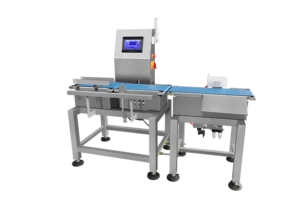
A checkweigher is a dynamic weighing system installed on production lines that automatically weighs products as they move along the conveyor. It measures each item’s weight in real-time, compares it against preset acceptable limits, and automatically rejects any products that are too light or too heavy.
Why Checkweighers Are Essential for Production Efficiency
| Benefit | Impact |
|---|---|
| Prevent product giveaway | Eliminates overfilling waste, saving thousands of kilograms of raw material annually |
| Ensure regulatory compliance | Meets HACCP, FDA, and GMP requirements for weight accuracy |
| Reduce customer complaints | Prevents underfilled packages from reaching consumers |
| 100% inspection rate | Every product is checked, unlike manual spot-checking |
| Real-time feedback | Immediate data allows for upstream process adjustments |
A well-utilized checkweigher doesn’t just catch errors—it prevents them from happening in the first place.
Step 1: Understand Your Checkweigher Before Operation
Before you start using a checkweigher on your production line, proper preparation is essential.
Read the Manual Thoroughly
Each brand and model of automatic checkweigher comes with a corresponding instruction manual. Before operating the equipment, operators must read it carefully and become familiar with all product buttons and functions. While equipment manufacturers typically send professional technical personnel to provide on-site training and guidance, operators should not overlook the importance of the manual.
Ensure Proper Operator Training
Operators of automatic checkweighers need to undergo professional training and be familiar with all equipment functions before they can operate it effectively. Additionally, operators should understand basic troubleshooting skills so that when issues arise, they can identify problems quickly and report them to technicians for repair, minimizing production losses.
Understand the Correct Usage Principles
Checkweighers are designed by integrating mechanical and electrical technology with safety principles in mind. Improper use can cause harm to personnel or damage the equipment itself. The equipment should only operate under good technical and safety conditions, and any potential imbalances or problems—especially safety issues—must be addressed immediately.
Step 2: Set Up Your Checkweigher Correctly
Proper setup is the foundation of accurate weighing and maximum efficiency.
Level the Scale
Before starting, adjust the leveling feet of the scale. Place a spirit level on the weighing platform to ensure it is perfectly horizontal. Even slight tilting can affect weight readings.
Configure Basic Weighing Parameters
The first step in configuration is to define the basic weighing parameters, including the definition of the scale and its measurement range. Key parameters to set include:
-
Weighing range: Minimum and maximum weight limits for your products
-
Tolerance limits: Acceptable deviation范围 (e.g., ±0.5g for food packaging)
-
Scale interval: The smallest weight increment the system can detect
Perform Initial Calibration
Calibration ensures the checkweigher provides accurate readings. A calibration should be done whenever the machine is first installed, after relocation, or after maintenance. Use certified test weights during calibration to ensure traceability.
Step 3: Optimize Product Settings for Maximum Accuracy
Modern checkweighers allow you to store multiple product profiles, making changeovers quick and efficient.
Create Product-Specific Profiles
In real applications with multiple products to check, formula settings improve on-site efficiency. Each product should have its own profile containing:
-
Product name and ID
-
Target weight
-
Upper and lower tolerance limits
-
Conveyor speed
-
Reject timing
Set Appropriate Weighing Speed
Production speed directly affects accuracy. Standard checkweighers typically handle 50–150 products per minute, while high-speed models can process 200–400 products per minute. Ultra-high-speed pharmaceutical checkweighers can reach 600–1,000 products per minute.
Key principle: The checkweigher must match or exceed your production speed without sacrificing accuracy. Running a checkweigher too fast for its capability will result in inaccurate readings and increased false rejects.
Adjust for Product Characteristics
Product size affects conveyor width, weighing platform length, and product spacing. Consider:
-
Product length, width, and height
-
Package stability
-
Product fragility—fragile items require gentler handling speeds
Step 4: Prevent and Address Double Product Errors
One of the most common efficiency killers in checkweighing is the double product error—when two products are on the weigh table at the same time. When this happens, the system cannot determine individual weights and rejects both products.
Why Double Product Errors Are Costly
When a double product error occurs, the pack is evaluated as “unmeasurable” and rejected, even when the weight is within specifications. The rejected pack must be fed through the checkweigher again, causing:
-
Reduced production throughput
-
Wasted product (especially problematic for chilled or frozen goods)
-
Increased labor for reprocessing
Solutions to Double Product Errors
Option 1: Adjust conveyor speed — Increase the speed of the checkweigher’s conveyor to separate packs. However, be cautious: faster belt speed means products spend less time on the scale, which can reduce weighing accuracy.
Option 2: Install a feeder controller — A feeder controller holds up closely-spaced packs and feeds them at a fixed interval.
Option 3: Use advanced signal processing — Some modern checkweighers feature Smart Measurement Function (SMF) that processes weight signals during stable phases only, allowing accurate measurement even when two packs are on the scale simultaneously.
Step 5: Integrate with Upstream and Downstream Equipment
A checkweigher works best when it’s part of an integrated production system.
Feedback Control to Fillers
Modern checkweighers can provide immediate feedback to upstream filling systems when weight deviations are detected. This real-time adjustment capability:
-
Reduces product giveaway by keeping fill weights closer to target
-
Prevents underfilling before it becomes a widespread problem
-
Saves raw materials—one manufacturer achieved savings of approximately 1.8 kilograms per minute
Combine with Other Inspection Equipment
Many manufacturers combine checkweighers with:
-
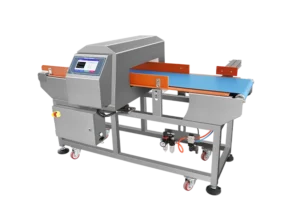
Metal detectors
-
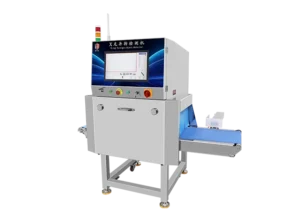
X-ray inspection systems
-
Vision inspection systems
An integrated solution saves space and improves overall quality control efficiency. For example, a combination unit where the metal detector is mounted on the same conveyor as the checkweigher can have up to 50% smaller footprint than two standalone systems.
Step 6: Choose the Right Reject System
The reject system removes non-conforming products from the line. Choosing the wrong type can damage products or fail to remove them reliably.
Common Reject Mechanism Types
| Type | Best For | How It Works |
|---|---|---|
| Air blast | Lightweight packs | Short burst of compressed air removes products |
| Pusher/Arm | Heavier, rigid packaging | Pneumatic arm pushes products sideways |
| Drop flap | Stable items | Products fall through a flap |
| Diverter | Various | Diverts products to a separate lane |
Factors to Consider
The right choice depends on:
-
Product weight and packaging type
-
Product fragility (avoid damaging delicate items)
-
Line speed
-
Available space around the inspection point
Step 7: Maintain Your Checkweigher for Consistent Performance
Regular maintenance is essential for stable operation and long-term performance. Neglecting maintenance can lead to inaccurate weighing, false rejects, and unexpected downtime.
Daily Maintenance Checklist
| Task | Why It Matters |
|---|---|
| Clean conveyor and weighing platform | Dust, powder, oil, or product residue can interfere with load cell readings |
| Check load cell stability | Load cell is the core component—any vibration or impact affects accuracy |
| Verify calibration | Incorrect calibration is one of the most common causes of inaccurate weighing |
| Inspect conveyor belt alignment | Worn or misaligned belts cause unstable product movement |
Recommended Calibration Schedule
-
Daily for high-precision pharmaceutical lines
-
Weekly for general packaging applications
-
After machine relocation or maintenance
-
Before every shift or product changeover—run a grey zone check to ensure optimum accuracy
Common Problems and Solutions
| Problem | Possible Causes | Solutions |
|---|---|---|
| Inaccurate weight readings | Incorrect calibration, conveyor vibration, dirty platform, load cell damage | Recalibrate, clean, reduce vibration, replace damaged load cells |
| Frequent false rejects | Incorrect product spacing, conveyor speed mismatch, sensor misalignment | Adjust spacing, synchronize speed, re-align sensors |
| Unstable weight values | Environmental factors (vibration, airflow, temperature) | Install vibration isolation, wind protection |
Step 8: Leverage Data for Continuous Improvement
Modern checkweighers are not just weighing devices—they’re data collection tools.
Key Data to Monitor
-
Reject rates by product and by shift
-
Weight distribution histograms
-
Product giveaway calculations
-
Trends over time that may indicate upstream issues
Connectivity Options
Look for checkweighers with:
-
Ethernet connectivity
-
OPC UA communication
-
Modbus integration
-
MES and ERP connectivity
-
USB data export for reporting
Data integration allows you to identify patterns, optimize filling processes, and make data-driven decisions that improve overall line efficiency.
Step 9: Train Your Team
Even the best checkweigher is only as effective as the people operating it.
Training Should Cover
-
Basic operation — Starting, stopping, and monitoring the system
-
Product changeover procedures — Switching between different product profiles
-
Calibration — When and how to calibrate
-
Troubleshooting — Identifying and resolving common issues
-
Data interpretation — Understanding reject reports and what they indicate
Emphasizing collaboration, training, and ongoing support is key to maximizing the benefits of this technology.
Common Mistakes to Avoid
| Mistake | Consequence | Solution |
|---|---|---|
| Skipping daily calibration | Inaccurate weights, increased false rejects | Implement a mandatory daily calibration check |
| Running too fast for accuracy | Reduced weighing precision, more double product errors | Match speed to product and accuracy requirements |
| Ignoring environmental factors | Unstable readings from vibration or airflow | Address environmental issues before they affect performance |
| Neglecting cleaning | Product buildup affecting load cell readings | Establish regular cleaning schedule |
| Not using product profiles | Time wasted on manual setup for each changeover | Create and save profiles for all products |
Conclusion
A checkweigher is far more than a simple weighing device—it’s a strategic tool for maximizing production line efficiency, reducing waste, and ensuring product quality. By following the steps outlined in this guide—from proper setup and configuration to regular maintenance and data analysis—you can transform your checkweigher from a basic inspection tool into a powerful efficiency driver.
If You Are Interested, Please Feel Free To Contact Me:
Phone / WhatsApp: Cathy +8613662905005
WeChat: Cathy 13662905005
Email: sales05@jindunmachinery.com
Key takeaways:
-
Proper operator training and setup are essential foundations
-
Prevent double product errors to maintain throughput
-
Integrate with upstream fillers for real-time feedback control
-
Choose the right reject system for your products
-
Maintain regularly to prevent unexpected downtime
-
Use data to continuously improve your process
FAQ
Q: How often should I calibrate my checkweigher?
A: For high-precision pharmaceutical lines, calibrate daily. For general packaging applications, weekly calibration is sufficient. Always calibrate after machine relocation or maintenance.
Q: What’s the difference between static and dynamic checkweighing?
A: Static checkweighers require manual placement of products and are used for spot-checking a small percentage of items. Dynamic (in-motion) checkweighers automatically weigh products as they move through the production line, achieving 100% inspection rates.
Q: Can a checkweigher detect metal contaminants?
A: No. A checkweigher verifies product weight, while metal detectors identify metallic contaminants. Many manufacturers use both systems in combination for comprehensive quality control.
Q: Why are my checkweigher readings unstable?
A: Common causes include conveyor vibration, airflow interference, dirty weighing platform, or load cell damage. Check environmental factors first, then inspect the equipment.
Q: What reject system should I choose?
A: Air blast systems work well for lightweight packs. Pusher systems are better for heavier, rigid packaging. The right choice depends on product weight, fragility, line speed, and available space.
Ready to Optimize Your Production Line?
Contact JINDUN for expert guidance on selecting and integrating the right checkweigher for your specific production needs. Our team can help you choose equipment that matches your product specifications, line speed, and accuracy requirements.
How do audits evaluate needle detection effectiveness?
Audits typically check compliance with safety standards, verification test logs, and documented maintenance. Consistent testing and proper documentation are key to passing inspections.
How do audits evaluate needle detection effectiveness?
Audits typically check compliance with safety standards, verification test logs, and documented maintenance. Consistent testing and proper documentation are key to passing inspections.
Share With
Related Articles



Hot Products