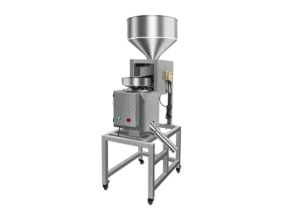
Food safety is non-negotiable in the food industry. One of the most effective tools for ensuring product quality and consumer protection is a food metal detector. These systems identify and remove ferrous, non-ferrous, and stainless-steel contaminants that may enter products during harvesting, processing, or packaging.
But choosing the right metal detector for your production line can feel overwhelming, especially with so many options, configurations, and technical specifications to consider. This guide will walk you through everything you need to know—from understanding how metal detectors work to evaluating key features, calculating ROI, and making a confident purchasing decision.
What Is a Food Metal Detector and How Does It Work?
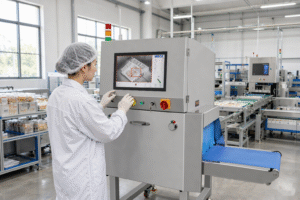
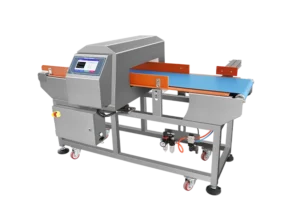
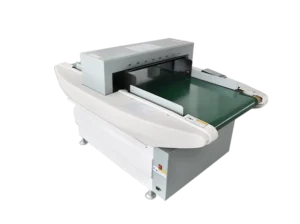
A food metal detector is an industrial inspection device designed to identify metallic contaminants in food products as they move along a production line . The system creates an electromagnetic field; when a metal particle passes through, it disrupts the field, triggering an alarm or automatic rejection mechanism.
Types of Metal Contaminants Detected
-
There are three main categories of metallic contaminants :
-
Ferrous metals: Magnetic and conductive—the easiest to detect.
-
Non-ferrous metals (e.g., aluminum, copper): Non-magnetic but good conductors—relatively easy to detect.
-
Stainless steel: Usually non-magnetic and a poor conductor—the most difficult to detect. Grades like 304 and 316 are common in food processing.
-
Common Metal Detector Configurations for Food Production
-
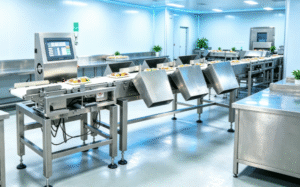
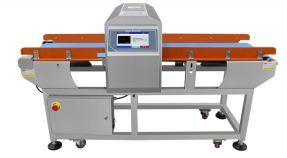
Configuration Best For Conveyor metal detectors Packaged goods, baked items, processed foods moving at high speed Gravity feed metal detectors Free-flowing products like grains, powders, and nuts Pipeline metal detectors Liquids, pastes, slurries (soups, sauces, meat blends) Head-only detectors Retrofitting existing conveyor systems to reduce costs
This gap creates the need for deeper, internal inspection.
Why Is Metal Detection Essential in Food Processing?
Metal contamination is a serious risk that can lead to :
-
Costly product recalls that damage brand reputation
-
Consumer injuries such as choking or internal harm
-
Legal liabilities and regulatory fines for non-compliance with standards like HACCP, BRCGS, IFS, and FSSC 22000
Key Factors to Consider When Choosing a Food Metal Detector
-
1. Product Type and Composition
Product effect is one of the most important variables affecting detection sensitivity. Wet, salty, or frozen products generate a stronger signal that can mask metal contaminants, reducing sensitivity .
-
Multi-frequency detectors can adjust to different product effects, improving performance across diverse SKUs .
-
For challenging products (e.g., red meat with high iron content), advanced systems with AI-driven signal processing can reduce false rejects .
2. Detection Sensitivity
Sensitivity is measured at the geometric center of the aperture—the larger the aperture, the lower the sensitivity . Typical practical sensitivity ranges :
Metal Type Typical Detectable Size Ferrous 0.8–2.0 mm Non-ferrous 1.5–3.0 mm Stainless Steel 2.0–5.0 mm Tip: Always request sensitivity tests on your actual products at intended line speeds before purchasing .
-
3. Aperture Size
A smaller aperture improves sensitivity, so choose the smallest size that accommodates your product . Consider:
-
Product dimensions and shape
-
Packaging type and size
-
Future product variations
4. Hygiene Design and Ingress Protection (IP) Rating
In food production, equipment must withstand regular washdowns. Look for :
-
Food-grade stainless steel (304 or 316)
-
Quick-release belts for easy cleaning
-
Sloped surfaces to prevent debris accumulation
-
IP65, IP66, or IP69K ratings—higher numbers indicate better washdown and dust resistance
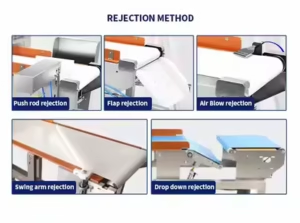
5. Rejection System
Choose a reject mechanism suited to your product type :
-
Pneumatic pusher: Stable, packaged products (up to 6 kg)
-
Air blast: Lightweight items (up to 400–600 g)
-
Swing arm / flap: Medium-weight products
-
Drop-down / retracting belt: Free-falling or fragile items
6. Integration and Connectivity
Modern metal detectors support Industry 4.0 readiness. Look for :
-
Ethernet/IP, Modbus, RS232, USB
-
PLC and SCADA integration
-
Centralized HMI for multiple inspection systems
-
Data logging for HACCP and traceability
-
Real-time monitoring and reporting
Real-Time Decision Making
At full line speed, the system analyses every unit and triggers precise reject mechanisms without interrupting production.
7. Operating Environment
Consider :
-
Line speed: Can the detector keep up with your production throughput?
-
Space constraints: Multi-lane or compact systems can reduce footprint by over 50% .
-
Temperature and humidity: Ensure the detector is rated for your facility conditions .
-
Mobility: Some pipeline units are not fixed, allowing movement between lines .
8. Total Cost of Ownership
Don’t just look at the upfront price. Evaluate :
-
Expected service life and maintenance costs
-
Spare parts availability and lead times
-
Warranty terms and after-sales support
-
Training requirements
-
Potential savings from reduced false rejects and recalls
JINDUN Food Metal Detector: A Reliable Choice for Your Production Line
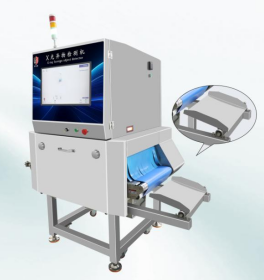
JINDUN Food Metal Detectors are engineered for high-precision detection and automatic rejection of ferrous, non-ferrous, and stainless-steel contaminants . With a focus on the food industry, these systems combine reliable performance with user-friendly design.
Key Features of JINDUN Food Metal Detectors:
-
High Sensitivity: Detects contaminants as small as Fe:0.8mm, Cu:1.0mm, SUS:1.8mm in a 400×80mm aperture
-
100-Level Sensitivity Adjustment: Fine-tune detection to your specific product
-
Multiple Rejection Options: Push rod, flap, air blow, swing arm, drop-down
-
Food-Grade Construction: 304 stainless steel with IP55 rating
-
User-Friendly Interface: 7″ touchscreen with intuitive controls
-
Product Memory: Stores up to 110 product profiles
-
Global Compliance: EU CE and ISO 9001 certified
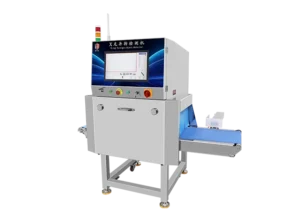
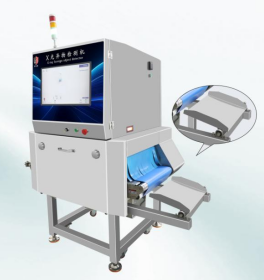
Metal Detection vs. X-Ray Inspection: Which One Do You Need?
| Factor | Metal Detector | X-Ray Inspection |
|---|---|---|
| Cost | Lower upfront and operating cost | Higher investment |
| Detectable contaminants | Only metallic | Metal, glass, stone, bone, some plastics |
| Line speed | Can handle very high speeds | Generally slower |
| Product effect | Affected by wet/salty products | Less affected by product composition |
| Additional capabilities | Detection only | Can check fill levels, packaging integrity |
Many food processors use both: metal detectors for primary metal control and X-ray where mixed foreign body detection is required.
FAQ: Common Questions About Food Metal Detectors
What size of metal will a food metal detector find?
Detection depends on metal type, product effect, and aperture size. Typical practical ranges: ferrous 0.8–2.0 mm, non-ferrous 1.5–3.0 mm, stainless 2.0–5.0 mm. Always validate sensitivity on your actual product .
How often should I test and calibrate a metal detector?
Daily quick tests at shift start with approved test pieces, and annual vendor calibration are standard recommendations. Record all tests for audits and traceability .
Can a metal detector inspect frozen or wet products?
Yes, but wet, salty, or frozen products increase the product effect and reduce sensitivity. Multi-frequency detectors or smaller apertures can improve performance .
What is the difference between single-frequency and multi-frequency detectors?
Single-frequency detectors are effective for stable product types. Multi-frequency systems operate at several frequencies, improving detection across wet, salty, or dense products and reducing false rejects.
How do I validate that a metal detector is suitable for my products?
Request Factory Acceptance Tests (FAT) and Site Acceptance Tests (SAT) using your actual products and packaging at intended line speeds. Validate sensitivity, false reject rates, and reject verification .
Do I need a metal detector or a metal separator?
A metal detector inspects finished or packaged products passing on a conveyor. A metal separator is designed for bulk materials (powders, grains, pellets) in free-fall or pipeline systems .
Conclusion
Choosing the right food metal detector is a critical decision that impacts product safety, brand reputation, and operational efficiency. By understanding your product characteristics, required sensitivity, hygiene needs, integration requirements, and total cost of ownership, you can select a system that delivers reliable performance for years to come.
JINDUN Food Metal Detectors offer a robust, cost-effective solution with proven reliability, global compliance, and a range of configurations to suit diverse food production lines.
Not sure which metal detection system fits your production line?
Contact JINDUN for expert equipment selection support and a tailored solution for your application.