Introduction
If your products are packaged in aluminum foil, metallized film, or foil-lined pouches, you may have already discovered a frustrating reality: your standard metal detector doesn’t work properly.
Aluminum foil packaging is everywhere in the food industry—foil trays for ready meals, foil wraps for chocolate, metallized snack bags, retort pouches, and yogurt cups with foil seals. While this packaging offers excellent barrier properties and extends shelf life, it presents a serious challenge for conventional metal detection technology.
So what’s the solution? Do you need a specialized aluminum foil metal detector, or can your standard machine be adjusted? This guide explains the key differences, compares both technologies, and helps you choose the right system for your production line.
Why Standard Metal Detectors Struggle with Foil Packaging
To understand the problem, you first need to know how a metal detector works.
How Standard Metal Detectors Work
A standard metal detector generates an electromagnetic field. When a conductive metal contaminant (ferrous, non-ferrous, or stainless steel) passes through this field, it creates a disturbance that the detector identifies as a contaminant .
The Foil Interference Problem
Aluminum foil and metallized films are highly conductive materials. When these packaging materials pass through a metal detector, they generate signals very similar to those produced by actual metal contaminants .
The detector cannot easily distinguish between:
-
The packaging material itself
-
Actual metal contamination inside the package
As a result, manufacturers face an impossible choice :
-
Increase sensitivity → constant false rejects, line stoppages, wasted product
-
Decrease sensitivity → smaller metal contaminants pass through undetected
In many cases, standard metal detectors become impractical because the packaging signal overwhelms the contaminant signal .
Specialized Aluminum Foil Metal Detectors: How They Solve the Problem
 Aluminum foil metal detectors are specifically engineered to overcome the limitations of standard detectors when inspecting foil-packaged products.
How Foil Detectors Work
Foil metal detectors use advanced technologies to separate the “noise” of the packaging from the “signal” of real contaminants:
1. Digital Signal Processing & Smart Algorithms
These detectors use digital signal processors that can “learn” and memorize the interference baseline created by aluminum foil packaging. By establishing a dedicated background model, the system can distinguish between packaging signals and real metal contaminants .
2. Phase Suppression Technology
This technology can “filter out” the fixed signal generated by the packaging material itself, remaining sensitive only to sudden metal contaminants . The result is detection sensitivity with product effect suppression rates exceeding 95% .
3. Multi-Frequency Adaptive Technology
Advanced foil detectors can automatically switch operating frequencies based on foil thickness, material composition, and packaging area, avoiding fixed-frequency resonance interference .
Key Differences at a Glance
| Factor | Standard Metal Detector | Aluminum Foil Metal Detector |
|---|---|---|
| Foil packaging compatibility | ❌ Struggles or fails | ✅ Designed for it |
| False reject rate on foil | Very high | Low |
| Detection sensitivity on foil | Reduced or impractical | Maintained |
| Signal processing | Standard | Digital + algorithm compensation |
| Phase suppression | No | Yes |
| Multi-frequency capabilities | Sometimes | Typically yes |
| Product effect compensation | Limited | Advanced |
| Cost | Lower | Higher (but justified) |
| Typical applications | Non-foil products, raw materials | Foil trays, metallized films, foil seals |
Which Technology Should You Choose?
Choose a Standard Metal Detector If:
-
Your products are NOT packaged in aluminum foil or metallized film
-
You are inspecting raw materials (bulk powders, granules) before packaging
-
Your packaging is plastic, paper, or non-metallic
-
You have limited budget and no foil packaging on your lines
Choose an Aluminum Foil Metal Detector If:
-
Your products are packaged in foil trays, foil wraps, or metallized film
-
You use aluminum foil seals on cups or bottles (yogurt, sauces)
-
You produce confectionery, chocolate, or snacks in foil packaging
-
You manufacture pharmaceuticals in alu-alu or blister packaging
-
You need to detect both ferrous AND non-ferrous metals in foil-packaged products
The Smart Approach: Use Both
Many manufacturers use a combination approach:
-
Standard metal detectors upstream for raw material inspection
-
Foil detectors downstream for finished foil-packaged products
This provides comprehensive protection across the entire production line without compromising sensitivity at any stage.
JINDUN Solutions: Standard and Foil Metal Detectors
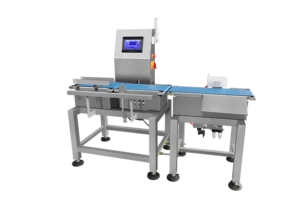
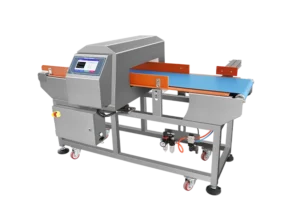
JINDUN Standard Metal Detector (JD-605)
The JD-605 Intelligent Food Metal Detector is designed for general food applications:
-
Detection method: Electromagnetic wave detection with analog+digital circuit combination
-
Display: 7-inch full-color LCD touchscreen
-
Sensitivity: Fe ≥ 0.8mm, Cu ≥ 1.0mm, SUS ≥ 1.8mm
-
Sensitivity adjustment: 100 levels
-
Memory: 110 product profiles
-
Speed: 20 m/min
-
Construction: 304 stainless steel, corrosion-resistant
-
Applications: Food, beverages, confectionery, dairy, seafood, meat, pharmaceuticals, toys
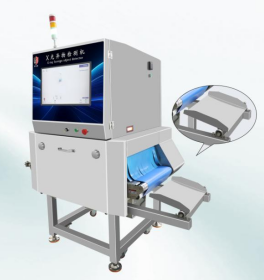
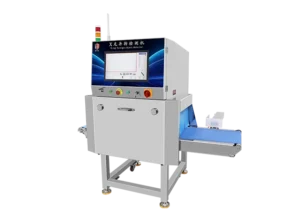
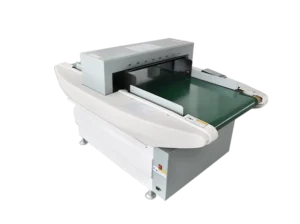
JINDUN Aluminum Foil Metal Detector (JD-606)
The JD-606 Metal Detector for Aluminum Foil Packaging is specifically engineered for foil applications:
-
Detection method: Magnetic induction with smart software slice technology—breaking through the technical barrier that most detectors are only sensitive to magnetic substances
-
Display: 9-inch touchscreen
-
Metals detected: Iron, magnetic metals (with ability to detect ferrous metals in foil)
-
Sensitivity adjustment: 1–10 degrees
-
Anti-interference: 1–10 grades
-
Memory: 100 product profiles
-
Speed: 28 m/min (adjustable)
-
Alarm: Audible/visual alarm, stop, rewind
-
Construction: Industrial stainless steel, waterproof, rust-proof, hygienic, easy to clean
-
Conveyor belt: Food-grade, imported (temperature range -20°C to 65°C)
-
Features: Earth leakage protection (100% insured), automatic counting, self-test function
-
Applications: Aluminum foil packaging, tin foil packaging, food, pharmaceuticals, confectionery, chocolate, dairy, beverages, additives, health products, chemicals, plastics, wood mining, aquaculture, poultry, meat, frozen and chilled products
FAQ
Can a standard metal detector inspect aluminum foil packaging?
No. Standard metal detectors struggle with aluminum foil because the conductive packaging material generates signals similar to metal contaminants, causing false rejects or reduced sensitivity .
Can aluminum foil detectors detect all metal types?
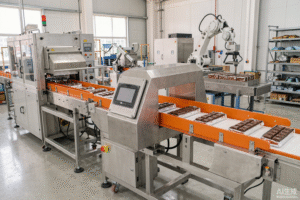
It depends on the model. Some basic foil detectors can only detect ferrous metals, while advanced models like the JINDUN JD-606 use smart slice technology to detect ferrous, non-ferrous, and stainless steel contaminants in foil packaging .
What is the difference between a foil detector and a standard detector?
Foil detectors use advanced digital signal processing, phase suppression, and sometimes multi-frequency technology to “filter out” the packaging signal and focus on real contaminants. Standard detectors lack these capabilities and cannot effectively inspect foil-packaged products .
How much product is wasted with standard detectors on foil?
False reject rates can be very high, leading to significant product waste and line stoppages. Foil detectors dramatically reduce false rejects by accurately distinguishing packaging signals from real contaminants .
Can I just reduce sensitivity on my standard detector?
You can, but this is dangerous—reducing sensitivity means smaller metal contaminants may pass through undetected, compromising food safety .
What industries need aluminum foil detectors?
Food (confectionery, chocolate, dairy, ready meals), pharmaceuticals (blister packs), and any industry using aluminum foil or metallized film packaging .
Conclusion
Choosing between a standard metal detector and an aluminum foil metal detector comes down to one simple question: Do you use aluminum foil or metallized film packaging?
If the answer is yes, a standard detector will likely frustrate you with false rejects or compromise your food safety by forcing you to reduce sensitivity. The specialized aluminum foil detector—while requiring a higher investment—delivers reliable detection, minimal false rejects, and peace of mind.
JINDUN offers both solutions, allowing you to select the right technology for your specific application. For manufacturers with foil-packaged products, the JD-606 aluminum foil detector provides the sensitivity and reliability your production line needs.