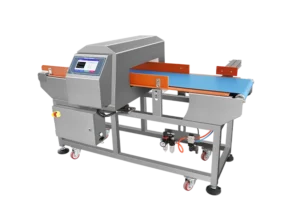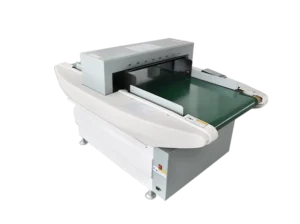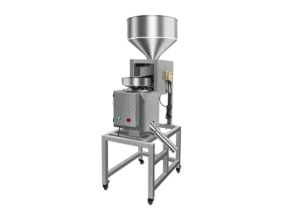
Weight sorting machines are essential tools in food production, where weight is more than just a number—it’s a direct driver of profitability, regulatory compliance, and customer trust. Overfilled packages give away product and eat into margins, while underfilled packages can trigger costly fines, retailer penalties, or even product recalls. Manual weight checks are slow, inconsistent, and increasingly insufficient for modern production lines that run hundreds of packages per minute.
This is where automatic weight sorting machines (also known as checkweighers) come in. These intelligent in-line systems weigh every single product as it moves down the conveyor—without slowing production—and automatically reject items that fall outside your target weight range. The result? Reduced giveaway, fewer customer complaints, full traceability, and seamless compliance with food safety and legal metrology standards.
This article explores the key applications of weight sorting machines across the food industry and why JINDUN’s solutions are trusted by food manufacturers worldwide.
What Is a Weight Sorting Machine (Checkweigher)?
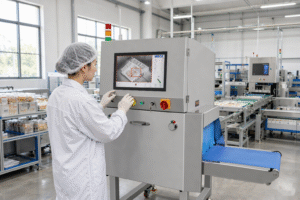
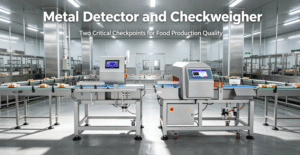
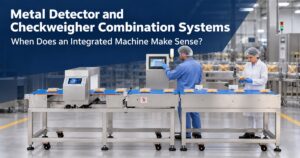
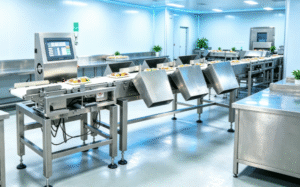
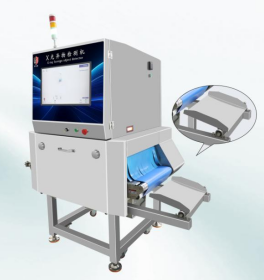
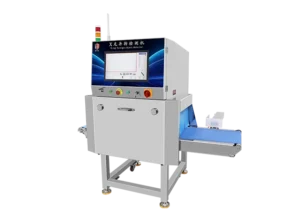
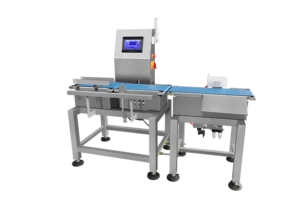
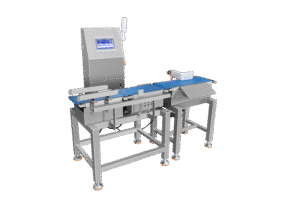
A weight sorting machine is an automated inspection device installed on a production line to weigh products in motion and separate them by weight category or reject non-conforming items . The system typically consists of:
-
Infeed conveyor: Transports products to the weighing section
-
Weighing section: High-precision load cell captures the weight of each item
-
PLC controller: Processes weight data and makes accept/reject decisions
-
Rejection mechanism: Removes underweight, overweight, or off-spec products
-
HMI touchscreen: Allows operators to set parameters, store product profiles, and monitor performance
Modern checkweighers can process up to 250 products per minute with accuracy down to ±0.1g, depending on the model and product type .
Why Weight Control Matters in the Food Industry
-
1. Reduce Product Giveaway
Overfilled packages may seem like a minor issue, but across thousands of units per day, the cost adds up dramatically. Dynamic checkweighing systems with feedback control can communicate with upstream filling equipment to automatically adjust fill volumes in real time, minimizing overfill and saving material costs .
2. Ensure Regulatory Compliance
Legal metrology standards in most countries enforce strict weight tolerances for packaged foods. Non-compliance can result in fines, product seizures, and reputational damage. A checkweigher provides documented proof that every product meets weight specifications—essential for audits and retailer compliance .
3. Protect Brand Reputation
Consumers expect consistent portion sizes and package weights. An underfilled package leads to complaints and lost trust; an overfilled package is a silent profit drain. Weight sorting machines ensure every customer gets exactly what they paid for .
4. Enable Full Traceability
Today’s intelligent checkweighers collect and store weight data for every product. This data can be exported for analysis, helping manufacturers track production trends, identify inefficiencies, and provide complete traceability from raw material to finished good .
5. Catch Problems Early
Installing a checkweigher early in the production line—before baking, cooking, or packaging—allows manufacturers to rework off-spec products rather than scrapping finished goods. This reduces waste and saves energy, packaging, and labor costs .
Key Applications of Weight Sorting Machines Across the Food Industry
Weight sorting machines are incredibly versatile. They can be configured to handle everything from fresh meat and seafood to baked goods and packaged snacks. Here are the most common food industry applications:
Meat, Poultry & Seafood
Fresh meat, poultry, and seafood are high-value products where precise portion control is critical. Weight sorters are used after cutting or portioning to:
-
Ensure each cut meets target weight specifications
-
Automatically reject over- or under-weight portions
-
Provide feedback to portioning equipment for real-time adjustment
Products: Fresh meat cuts, ground meat, poultry breasts, sausages, fish fillets, shrim.
Bakery & Pastry
In high-speed bakeries, weight consistency ensures product uniformity and reduces waste. In-line checkweighers can weigh dough portions before baking, allowing underweight pieces to be reworked and preventing costly scrap after baking .
Products: Bread dough, cake batter portions, pastries, cookies, pizza bases
Seafood & Aquatic Products
Seafood processing often involves sorting products by weight grade for different markets or pricing tiers. Multi-grade weight sorters can classify shrimp, fish fillets, and other seafood into up to 12 or more weight categories automatically .
Products: Shrimp, whole fish, fish fillets, crab legs, scallops
Fresh Produce & Agriculture
Fruits and vegetables are frequently graded by size and weight for retail packaging. Weight sorting systems can classify produce into multiple weight bands at speeds exceeding 100 items per minute .
Products: Apples, potatoes, tomatoes, avocados, citrus fruits, eggs
Dairy Products
Dairy production demands exceptional hygiene and consistent weight control. Checkweighers with IP69 washdown ratings and hygienic design are used to weigh cheese blocks, butter portions, yogurt cups, and milk cartons .
Products: Cheese blocks, butter, yogurt, milk cartons, cream portions
Packaged Foods & Snacks
For finished packaged goods, checkweighers provide final weight verification before products are shipped. Integrated rejection systems remove any packages that don’t meet weight specifications .
Products: Snack bags, canned goods, ready meals, cereal boxes, bottled beverages
JINDUN Weight Sorting Machines: Built for Food Industry Demands
JINDUN offers a comprehensive range of automatic weight sorting machines designed specifically for food production environments. With a focus on high accuracy, hygienic construction, and reliable 24/7 operation, JINDUN’s systems are trusted by food manufacturers across Europe, North America, and Asia .
Key Features of JINDUN Weight Sorting Machines
| Feature | Benefit |
|---|---|
| High-precision load cells | Accuracy from ±0.05g to ±30g depending on model, ensuring tight weight control |
| 304 stainless steel construction | Food-grade material with polished finish, compliant with hygiene standards |
| Multiple rejection options | Pneumatic blow, swing arm, push rod, flap, and drop-down—choose the right method for your product |
| 7-inch color touchscreen | Intuitive interface with multi-language support for easy setup and monitoring |
| 110 product memory profiles | Quick changeover between different products with stored parameters |
| Speeds up to 180 pcs/min | Handles high-volume production without slowing the line |
| Omron photoelectric sensors | Reliable detection of product position for accurate weighing |
| Mettler-Toledo load cell option | Premium weighing component for maximum accuracy |
Available Models
| Model | Weight Range | Accuracy | Speed | Ideal Application |
|---|---|---|---|---|
| JD-2512 | ≤200g | ±0.05–0.1g | 180 pcs/min | Small snacks, seafood portions |
| JD-4020 | ≤1000g | ±0.3–1g | 150 pcs/min | Bakery items, meat cuts |
| JD-5030 | ≤3000g | ±0.5–2g | 80 pcs/min | Cheese blocks, packaged goods |
| JD-6040 | ≤3kg | ±1–5g | 50 pcs/min | Large meat portions, produce |
| JD-9050 | ≤40kg | ±5–30g | 30 pcs/min | Bulk items, large packaged goods |
All models are EU CE and ISO 9001 certified, offering global compliance and reliability .
How to Choose the Right Weight Sorting Machine for Your Food Production Line
1. Product Weight and Size
Select a model with a weight range and weighing section size that matches your product. For small, lightweight items like shrimp or snack portions, the JD-2512 or JD-4020 is ideal. For larger products like meat cuts or cheese blocks, the JD-5030 or JD-6040 provides the necessary capacity .
2. Production Speed
Match the machine’s sorting speed to your line throughput. JINDUN models range from 30 to 180 pieces per minute, accommodating both moderate and high-speed lines .
3. Hygiene Requirements
For food applications involving moisture, washdown, or raw products, choose a 304 stainless steel construction with smooth surfaces for easy cleaning. Optional IP-rated designs are available for high-hygiene environments .
4. Rejection Method
Select a rejection mechanism compatible with your product type:
-
Air blast: Lightweight items (snacks, small portions)
-
Push rod: Stable, packaged products
-
Swing arm: Medium-weight items
-
Drop-down: Fragile or free-falling products
5. Integration Requirements
Ensure the machine supports connectivity options (USB, RS232) for data logging and integration with your production management system .
Conclusion
Automatic weight sorting machines are no longer optional for food manufacturers serious about cost control, quality assurance, and regulatory compliance. By inspecting every single product in motion, these systems eliminate the guesswork and labor of manual weight checks while delivering real-time data for continuous improvement.
JINDUN Weight Sorting Machines combine high-precision weighing, hygienic stainless steel construction, user-friendly operation, and competitive pricing—making them a smart investment for food producers ranging from small processors to large-scale manufacturers.
Need help selecting the right weight sorting solution for your food production line?
Contact JINDUN today for expert consultation and a tailored equipment recommendation.