Many manufacturers wonder whether industrial metal detectors can accurately detect stainless steel or aluminum contaminants. These metals are commonly used in production equipment and packaging, yet their detection can be surprisingly challenging. Understanding why this happens—and how to optimize detection—helps ensure consistent product safety and compliance across industries.
Understanding How Metal Detectors Identify Metals
Metal detectors work by generating electromagnetic fields that respond differently to various types of metal. The signal’s strength depends on the material’s conductivity and magnetic permeability—two physical properties that influence how easily the detector can sense contamination.
Before diving deeper, let’s take a closer look at how different metal types affect detection results.
Ferrous, Non-Ferrous, and Stainless Metals Explained
Ferrous metals like iron and carbon steel are both magnetic and conductive, which makes them easy to detect. Non-ferrous metals such as copper, brass, and aluminum, while still conductive, are non-magnetic and generate weaker signals. Stainless steel—especially austenitic grades—presents the greatest challenge because of its low conductivity and weak magnetic response.
How Detection Sensitivity Varies
Detection sensitivity isn’t determined by metal type alone. Factors such as aperture size, product characteristics, and environmental noise play a major role. Advanced detectors often use multi-frequency technology to optimize performance across different materials.
Challenges in Detecting Stainless Steel and Aluminum
Detecting stainless steel and aluminum requires more than just high sensitivity—it demands a system that can handle their unique properties and interference factors.
Low Conductivity of Stainless Steel
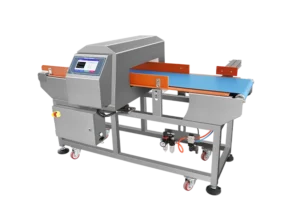
Austenitic stainless steel (such as 304 and 316) has extremely low conductivity. This means it produces only weak signals in Food Metal Detectors, making detection more difficult—especially when the metal fragment is small or embedded in a wet product.
Aluminum Packaging Interference
Aluminum foil, trays, or laminated film can shield or distort electromagnetic signals. Standard detectors often struggle to distinguish between the packaging and an actual contaminant, leading to false rejects or missed detections.
Product Effect and Moisture Content
Moist or salty products conduct electricity, creating background noise that mimics metal signals. If not properly compensated, this “product effect” can reduce sensitivity and increase false alarms.
Technologies That Improve Detection Accuracy
Fortunately, modern inspection technologies have evolved to overcome these material challenges and maintain accuracy even under difficult conditions.
Multi-Frequency Metal Detectors
Multi-frequency or dual-frequency systems analyze multiple electromagnetic wavelengths simultaneously. This allows them to differentiate between conductive products and real metal contaminants, enhancing accuracy for stainless steel and aluminum detection.
Metal Separator Systems
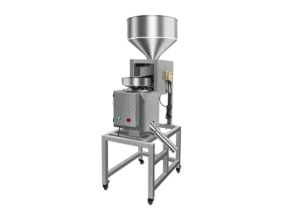
For bulk materials or pipeline applications, Metal Separator units provide extremely high sensitivity. They can remove ferrous, non-ferrous, and stainless contaminants automatically, ensuring process continuity and protecting downstream equipment.
X-Ray Inspection Equipment
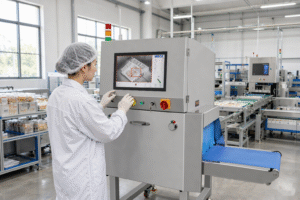
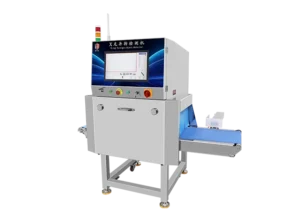
When working with aluminum packaging or very low-conductivity metals, X-Ray Inspection Equipment becomes the best option. Instead of relying on conductivity, it detects contaminants based on density differences—making it ideal for packaged food, pharmaceuticals, and sealed products.
Practical Applications Across Industries
The need for reliable stainless steel and aluminum detection extends across multiple sectors. Let’s explore how different industries benefit from advanced inspection systems.
Food and Beverage
In food processing, stainless steel tools and aluminum packaging are frequent sources of contamination. Multi-frequency detection ensures compliance with safety standards and protects consumer trust.
Pharmaceuticals
Precision inspection is critical in pharmaceutical production. X-Ray Inspection Equipment helps detect stainless steel fragments or foreign materials in tablets and capsules, ensuring compliance with GMP standards.
Plastics and Recycling
In the plastics industry, Metal Separator systems remove fine stainless or aluminum particles from granules and regrind materials, preventing damage to molds and extrusion machinery.
Enhancing Detection with Jindun Elec Solutions
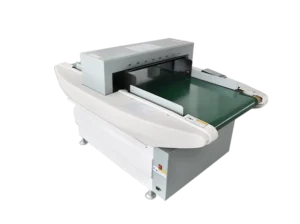
Accurately detecting stainless steel and aluminum requires not only advanced technology but also engineering experience. Jindun Elec provides a full range of industrial inspection systems—including Food Metal Detectors, Metal Separators, and X-ray inspection equipment—designed to deliver precise results even in complex environments.
For customized detection solutions or technical advice, you can contact us or explore more solutions from Jindun Elec to find out how our technology supports industrial quality assurance worldwide.
FAQs about Detecting Stainless Steel and Aluminum