In garment and textile factories, broken needles are not just an operational nuisance—they are a serious quality and safety risk. A tiny metal fragment left inside clothing, bedding, or plush products can cause injuries, trigger recalls, and permanently damage brand reputation.
This is why a Needle Detector has become a standard piece of equipment in modern garment manufacturing. It is not simply a “metal detector,” but a specialised system designed to locate fine needle fragments inside finished or semi-finished textile products before they reach the customer.
Understanding what a needle detector is and why it matters helps manufacturers build safer, more compliant, and more competitive production lines.
What Is a Needle Detector?
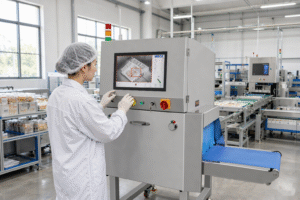
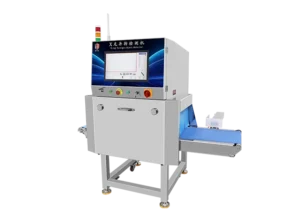
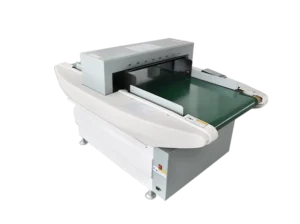
A needle detector is an industrial inspection machine specifically designed to detect broken sewing needles and fine ferrous metal fragments inside textile products. Unlike general-purpose metal detectors, needle detectors are optimised for:
- Ultra-thin metal fragments
- Soft and dense textile materials
- Finished garments, quilts, toys, and fabrics
- Conveyor-based high-throughput inspection
In practice, products pass through a detection tunnel. When a metal fragment is identified, the system alerts operators or automatically stops the line, allowing the contaminated item to be removed immediately.
For apparel factories supplying international brands, needle detection is often a mandatory quality control step.
Why Broken Needles Are a Serious Risk in Garment Production
Sewing machines operate at high speed and under constant mechanical stress. Needles can snap due to:
- Fabric thickness variations
- Improper machine settings
- Operator error
- Material defects
When a needle breaks, fragments may remain inside garments, cushions, or stuffed toys. If undetected, these fragments can:
- Injure end users
- Lead to costly product recalls
- Violate brand compliance requirements
- Damage long-term business relationships
Major retailers and brands frequently audit suppliers for needle control systems. Without reliable detection, factories risk losing contracts.
How a Needle Detector Works in Apparel Factories
Needle detectors use high-sensitivity electromagnetic fields to identify small ferrous particles embedded in soft materials.
The basic workflow is:
- Finished or semi-finished products are placed on a conveyor.
- Items pass through the detection tunnel.
- The system scans for needle-sized metal fragments.
- When metal is detected, the machine alarms or stops.
- The contaminated item is isolated for inspection.
This process allows factories to inspect every piece without slowing production. In high-volume garment plants, this is the only practical way to guarantee needle-free products at scale.
Where Needle Detectors Are Used in Garment Manufacturing
Needle detectors are typically installed at critical control points:
- After the sewing operations
- Before packing
- Before final shipment
They are widely used in:
- Clothing factories
- Bedding and mattress plants
- Plush toy manufacturing
- Upholstery and home textile production
- Nonwoven and fabric processing lines
In these environments, needle detection becomes part of the factory’s quality culture, not just a final inspection step.
Why Needle Detection Is Now an Industry Standard
Global supply chains drive modern garment production. Brands expect:
- Zero-defect deliveries
- Full traceability
- Risk prevention, not reaction
A needle detector provides:
- Objective inspection
- Documented quality control
- Protection against human error
- Compliance with buyer requirements
This is why many brands require suppliers to prove they have functioning needle detection systems before approving production.
At Jindun Elec, industrial inspection systems are designed around real factory conditions—high throughput, variable materials, and long operating hours—ensuring that needle detection fits seamlessly into daily production.
Conclusion: Needle Detection Is Not Optional Anymore
A needle detector is not just a machine—it is a safeguard for product safety, brand trust, and factory credibility. In modern garment manufacturing, broken needles are an unavoidable reality. What matters is how effectively a factory controls that risk.
By integrating professional needle detection into production lines, manufacturers prevent hidden hazards, meet international standards, and protect long-term business value.
If your factory or production line needs a reliable solution for broken needle control, Contact Jindun Elec to explore needle detection systems designed for real industrial environments.
FAQs