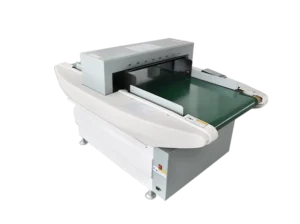
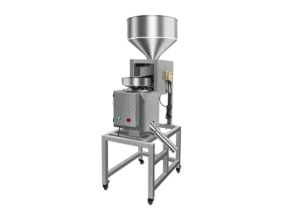
Food safety is a critical priority in modern production. Industrial metal detectors not only ensure regulatory compliance but also protect equipment, maintain product quality, and safeguard brand reputation. Understanding the basics of metal detection in food production helps manufacturers implement effective strategies for contamination control and operational efficiency.
Why industrial metal detectors are essential in food production
Metal contamination can pose serious health risks and disrupt manufacturing processes. Engineers and quality managers prioritise metal detection as part of a comprehensive safety strategy.
Ensuring food safety and regulatory compliance
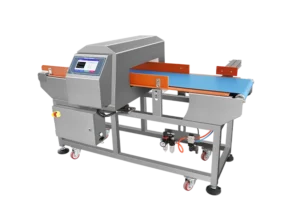
Industrial regulations, such as FDA, HACCP, and ISO standards, require manufacturers to detect and prevent metal contamination. Installing Food Metal Detectors ensures products meet safety and labelling requirements, protecting consumers and brands alike.
Protecting production equipment and reducing downtime
Metal fragments in raw materials or semi-processed food can damage grinders, mixers, conveyors, and packaging machinery. Metal Separators and detectors work together to prevent equipment failure, reducing unplanned downtime and repair costs.
Preventing financial losses and recalls
Rejected batches, recalls, and customer complaints can be extremely costly. Early metal detection minimises these risks by intercepting contaminants before they reach downstream processes, safeguarding both profits and reputation.
Key locations to install metal detectors in the food production line
Correct placement of metal detectors maximises detection efficiency and prevents contamination from spreading through the production process.
Raw material intake and bulk handling
The first point of inspection is usually at raw material intake. Detecting metal at this stage prevents contamination from entering the entire production line, protecting both machinery and product quality.
Pre-processing and intermediate stages
Installing detectors before high-impact processes—such as crushing, mixing, or extrusion—reduces the risk of equipment damage. This ensures the smooth operation of sensitive machinery and consistent product quality.
End-of-line quality control
Final inspection points catch any contaminants that may have bypassed earlier checks. Combining end-of-line Food Metal Detectors with upstream Needle Detectors ensures comprehensive safety verification.
Integration with Food Metal Detectors and other inspection equipment
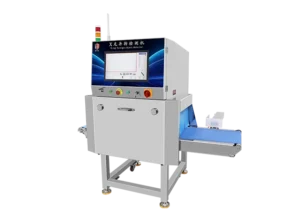
Layered protection, including both separation and detection, is the most effective strategy. Integrating Food Metal Detectors with X Ray Inspection Equipment or inline Needle Detectors creates a robust contamination control system.
How industrial metal detectors work
Understanding the principles of metal detection allows operators to optimise performance, maintain equipment, and ensure reliable results.
Detection principles: electromagnetic fields and signal processing
Metal detectors generate an electromagnetic field that interacts with conductive objects. When a metal fragment passes through, it disturbs the field, triggering a detection signal. Sensitivity adjustments are critical for distinguishing contaminants from product noise.
Types of detectors: Food Metal Detectors, needle detectors, and multi-frequency systems
Different applications require different technologies:
- Food Metal Detectors for general contamination control
- Needle Detectors for small, sharp fragments
- Multi-frequency systems for complex or high-moisture products
Calibration and sensitivity adjustment for different product types
Product characteristics—size, moisture content, and conductivity—affect detection. Engineers calibrate detectors to optimise sensitivity while minimising false alarms, ensuring accurate results across varying product lines.
Common operational tips and best practices
Regular testing, proper grounding, product separation, and scheduled maintenance maintain high detection efficiency. Following manufacturer guidelines from providers like Jindun Elec ensures consistent and reliable operation.
Conclusion: Integrating metal detection for reliable food production
Implementing metal detection at multiple stages of the food production line is essential for protecting consumers, machinery, and brand reputation. Early detection prevents contamination, reduces downtime, and supports regulatory compliance. Detection works best when integrated with upstream Metal Separators and other inline inspection solutions.
For industrial operations aiming to enhance contamination control and process reliability, Contact Jindun Elec to explore tailored metal detection solutions for your production line.
FAQs