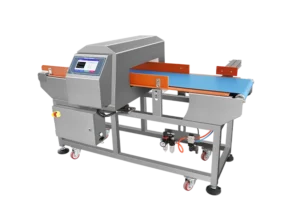
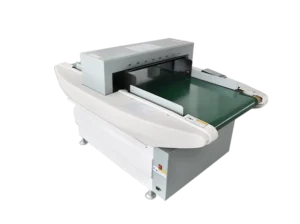
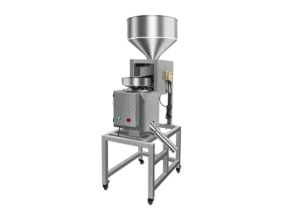
Selecting a food metal detection system is not about buying “the most sensitive machine.” In food production, every product behaves differently in an electromagnetic field. Moisture, salt, temperature, and physical form all influence detection performance. A system that works perfectly on dry biscuits may fail on cheese or frozen meat.
That is why choosing a Food Metal Detector must start with understanding your product. The right match prevents false rejects, protects compliance, and ensures long-term stability on the production line.
Why Product Characteristics Determine Detection Performance
Before comparing machines, it is essential to understand why food products themselves control detection outcomes.
Every food creates a “product effect” inside the detector. Water, salt, fat content, and temperature can mimic metal signals and reduce usable sensitivity. Two products of the same size can behave entirely differently.
This is why “one-size-fits-all” solutions rarely work in real factories. The detector must be engineered around the product, not the other way around.
Choosing Food Metal Detectors for Dry Products
Dry products are the easiest to inspect, making them a good starting point.
Powders, grains, snacks, flour, and nuts have low conductivity. This allows higher sensitivity and stable operation. Smaller aperture sizes can be used, improving detection of fine contaminants.
In these lines, compact conveyor systems or gravity-fed detectors often provide excellent results. High-speed throughput is possible with minimal false rejects, making dry product applications ideal for achieving maximum performance.
Choosing Food Metal Detectors for Wet or Conductive Products
Moving from dry to wet foods introduces real complexity.
Meat, dairy, sauces, and ready meals contain water and salt, which strongly affect electromagnetic fields. These products generate background signals that can mask small metal fragments.
To handle this, systems must use advanced multi-frequency processing and adaptive filtering. The goal is not simply “higher sensitivity,” but stable discrimination between product signal and metal contamination.
For wet products, selection must focus on long-term stability under real production conditions—not just laboratory test results.
Detection in Frozen and Chilled Food Lines
Temperature adds another layer of challenge.
Frozen foods change electrical properties as they thaw, while chilled environments create condensation. These shifts can cause drift and false alarms if the system is not designed for cold-chain operation.
Industrial-grade enclosures, thermal compensation, and moisture-resistant designs are essential. In continuous frozen lines, reliability matters more than headline sensitivity.
Choosing a detector without considering temperature behaviour often leads to unstable operation once production begins.
Metal Detection for Packaged vs Bulk Products
Beyond the product itself, physical form matters.
Bulk materials flow continuously and demand a stable aperture geometry. Packaged products vary in size and orientation, affecting signal consistency.
Small changes in pack height can alter sensitivity by several millimetres. This is why packaged lines often require wider apertures and more sophisticated signal processing to maintain consistent performance.
Understanding whether your line handles bulk flow or individual packs directly influences system design.
Matching Detector Design with Production Conditions
After evaluating the product type, the system must be matched to the production environment.
Aperture size determines achievable sensitivity. Line speed defines signal resolution. Reject systems must match product shape and weight. Upstream protection—often provided by a Metal Separator—reduces mechanical risk before inspection.
At this level, metal detection becomes a system engineering task, not a catalogue selection.
This is where manufacturers benefit from working with partners like Jindun Elec, who approach detection as part of a complete production solution rather than a standalone device.
How Industrial Buyers Avoid Costly Selection Mistakes
Most failures in food metal detection come from predictable mistakes:
- Choosing based only on advertised sensitivity
- Ignoring product-effect testing
- Failing to consider future product changes
- Designing off-site, away from real production conditions
- Treating detection as a “plug-and-play” component
Successful projects begin with product trials, line analysis, and engineering alignment—not just equipment comparison.
Conclusion
Choosing the right food metal detection system is fundamentally an engineering decision. Every food behaves differently. Moisture, salt, temperature, and form all reshape how metal is detected.
The wrong selection does not merely reduce performance—it creates instability, false rejects, downtime, and compliance risk. The right system integrates seamlessly with your product, your line, and your long-term production goals.
If you want a solution designed around your real products and operating conditions, Contact Jindun Elec to discuss a food metal detection system built for your production environment.
FAQs