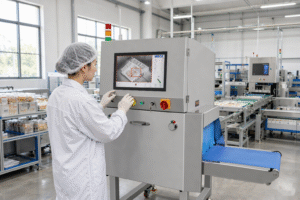
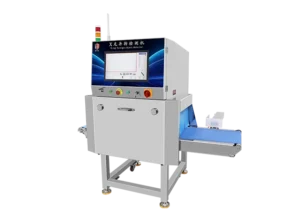
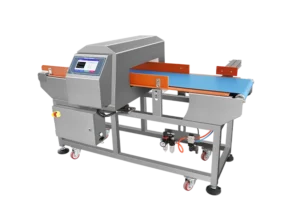
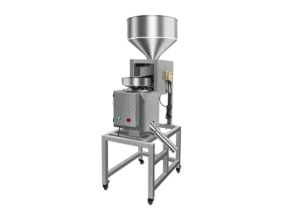
In real-world food production, metal detection is rarely “plug and play.”
Many factories install a detector, expecting instant and flawless performance—only to discover frequent false rejects, unstable sensitivity, or audit failures. These issues are not signs of bad equipment; they are natural results of complex products, harsh environments, and human operation. Understanding these challenges is the first step toward building a stable and reliable detection process.
Why Food Metal Detection Is Not “Plug and Play”
Before looking at specific problems, it is important to recognise why metal detection in food lines is inherently complex. Every product behaves differently inside a detector, and production environments are far from ideal.
Every product behaves differently inside the detector
Moisture content, salt levels, temperature, density, and packaging materials all influence how a product interacts with electromagnetic fields. A dry biscuit and a frozen meat block may run on the same line, yet require very different detector settings. This “product effect” is one of the main reasons food metal detection demands careful configuration.
Production environments are rarely ideal.
Vibration from conveyors, electrical noise from nearby machines, temperature fluctuations, and variable line speeds all affect detector stability. In such conditions, even high-performance Food Metal Detectors need proper installation and tuning to perform consistently.
Challenge 1: High False Reject Rates
False rejects are the most visible and frustrating problem on food lines. When good products are repeatedly ejected, throughput drops and operators lose confidence in the system.
Why wet or salty foods trigger false alarms
High-moisture or high-salt products generate strong product signals that can resemble metal. Items such as cheese, fresh meat, or marinated foods are especially prone to this effect, leading to unnecessary rejections.
How to reduce false rejects without losing sensitivity
The solution is not simply lowering sensitivity. Modern Food Metal Detectors use multi-frequency and digital filtering technologies to distinguish product signals from real contaminants. Proper product learning, stable conveyor mechanics, and shielding from electrical noise can dramatically reduce false alarms while maintaining detection performance.
Challenge 2: Inconsistent Detection Performance
Some lines detect well in the morning but become unstable by afternoon. This inconsistency undermines trust in the system.
The impact of vibration, temperature, and line speed
Loose frames, vibrating conveyors, or fluctuating speeds create signal noise. Temperature changes can also shift electronic behaviour, especially in cold rooms or near ovens.
How proper installation and calibration improve consistency
Rigid mounting, controlled belt tension, and routine calibration stabilise detection conditions. When detectors are installed as part of a system—often in coordination with upstream Metal Separators—performance becomes far more predictable.
Challenge 3: Product Effect Masking Real Contamination
Product effect does not only cause false rejects; it can also hide real metal fragments.
What “product effect” really means in food applications
Product effect is the electrical response of the food itself. In extreme cases, it can partially mask small stainless-steel contaminants, especially in high-moisture or conductive products.
How modern Food Metal Detectors compensate for product signals
Advanced signal processing allows today’s detectors to “subtract” product characteristics. This enables reliable detection of small metal pieces even in challenging foods, without sacrificing line speed.
Challenge 4: Failing Audits and Compliance Checks
Even when detection seems to work, many factories struggle during HACCP or third-party audits.
Why metal detection records often fail inspections
Missing test logs, inconsistent challenge tests, and unclear procedures are common reasons for non-compliance. Auditors focus not only on equipment, but on documented control.
How to build a compliant testing and documentation routine
Standardised test intervals, clear pass/fail criteria, and digital logging turn metal detection into a verifiable control point. Consistency matters more than complexity.
Challenge 5: Operator Errors and Misuse
A well-configured detector can still fail if operators do not use it correctly.
Common mistakes made on the factory floor
Skipping daily tests, changing settings to stop alarms, or ignoring ejected products are frequent issues. These actions compromise the entire safety system.
How training and standard procedures reduce risk
Clear SOPs and operator training transform metal detection from “just another machine” into a critical safety tool. When staff understand why each step matters, compliance improves naturally.
From Problems to Control: Building a Stable Detection Process
Metal detection challenges are not random—they are predictable outcomes of complex products, dynamic environments, and human interaction. When these factors are addressed systematically, metal detection becomes stable and reliable rather than reactive.
Manufacturers who work with Jindun Elec often move from “constant firefighting” to controlled, auditable processes by treating detection as a system, not a single device. Equipment selection, installation design, calibration routines, and operator behaviour all play a role.
The goal is not perfection—it is control. A controlled process detects contamination consistently, documents performance clearly, and integrates smoothly into daily production.
For food producers seeking that level of reliability, Contact Jindun Elec to explore solutions aligned with real industrial operating conditions.
FAQs about Food Metal Detector Challenges