What Types of Needles Are Most Commonly Detected?
Needles appear in many industrial environments, often as accidental contaminants. Understanding the types first helps explain how detection works.
- Sewing needles from broken machine parts in garment factories
- Hypodermic needles that may enter packaging waste streams
- Tiny metal shards less than 1 mm
- Stainless-steel fragments that break off production tools
These variations make detection challenging because needle size, orientation, and material can significantly affect sensitivity. With these differences in mind, it becomes easier to understand how various detectors perform.
Can Standard Metal Detectors Detect Needles?
Basic metal detectors used for general screening can detect some needle types, but their performance depends heavily on sensitivity settings and the environment they operate in.
Sensitivity Limitations of Conventional Detectors
Most general-purpose detectors struggle with very small metal contaminants. Needles and fine fragments produce weak electromagnetic signals, especially if they are made of stainless steel or oriented horizontally, which reduces the detectable surface area.
Challenges With Very Small Metal Contaminants
Needles often measure less than a millimeter in diameter. Their thin profile, combined with surrounding product noise (moisture, salt, or packaging materials), can cause false signals or missed detections. Because of these limitations, industries requiring stricter quality control often need more advanced systems.
With these challenges in mind, the next step is to examine how industrial detection equipment improves accuracy.
Industrial Metal Detectors and Needle Detection
Industrial-grade systems are engineered for applications where reliability and high sensitivity are mandatory. Specialized equipment can detect much smaller metal contaminants than standard devices.
High-Sensitivity Food-Grade Metal Detectors
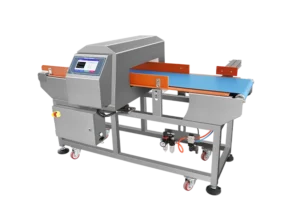
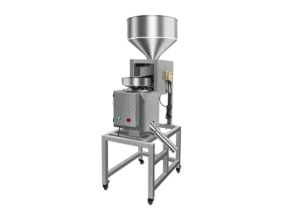
A Food Metal Detector uses advanced signal processing to identify tiny stainless-steel fragments, even those less than 1 mm. These detectors also compensate for product effects—handling high-moisture, high-salt, or temperature-variant food items while maintaining sensitivity.
Specialized Needle Detectors for Textiles
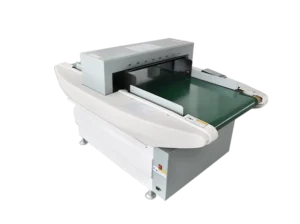
A Needle Detector is specifically designed to detect broken sewing needles in apparel and textile products. These systems scan garments and accessories to ensure no sharp metal remains inside, preventing safety hazards and reducing product returns.
Once we understand the strengths of metal detection systems, it becomes clear that some scenarios demand even more precision—leading us to X-ray solutions.
X-ray Inspection vs. Metal Detection for Needles
While metal detectors are effective, some contamination challenges require a different approach.
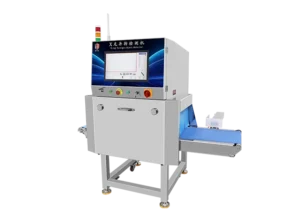
- X-ray Inspection Equipment excels at detecting very small or low-density metal fragments, even when orientation reduces metal detector sensitivity.
- X-ray is also effective for products inside aluminum packaging, where metal detectors cannot function properly.
- The combination of X-ray and metal detection offers the highest reliability in high-risk industries.
With this comparison in mind, it becomes easier to match the technology to industry requirements.
Industries Where Needle Detection Is Critical
Needle contamination poses serious safety risks, so certain sectors require strict inspection controls:
- Food processing and meat production
- Apparel and garment manufacturing
- Pharmaceutical and medical packaging
- Electronics assembly lines
- Toy and accessory production
Each of these industries faces unique challenges, making the selection of the right detection system essential.
How to Choose the Right Detector for Needle Contamination
Selecting the correct detection equipment depends on product characteristics, risk level, and regulatory expectations.
Sensitivity Requirements
Industries with higher contamination risks often require equipment capable of detecting metal fragments below 1 mm.
Product Type Considerations
Moisture level, packaging material, and product density determine whether a Food Metal Detector or X-ray Inspection Equipment is more suitable.
Compliance and Safety Standards
Food and textile manufacturers must follow HACCP, BRCGS, and ISO guidelines—each requiring reliable contaminant detection systems.
With these points evaluated, businesses can confidently choose the technology best suited for their contamination risks.
Conclusion
Metal detectors are capable of detecting needles, but the actual performance depends on factors such as detector sensitivity, product characteristics, and the inspection technology used. Industrial solutions—whether a Needle Detector, Food Metal Detector, or X-ray Inspection Equipment—provide far greater precision when identifying small, thin, or low-conductivity metal contaminants.
For manufacturers dealing with needle-related risks, choosing a system that matches the specific production environment and compliance requirements is essential for maintaining consistent safety standards. If you need guidance on selecting or optimizing the right inspection solution, feel free to reach out to Contact Jindun Elec for professional support.
FAQs