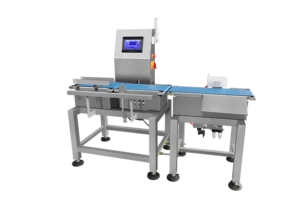
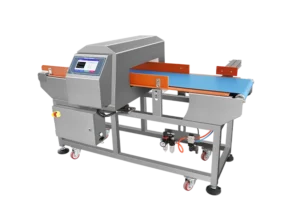
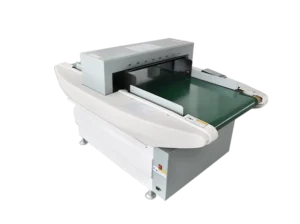
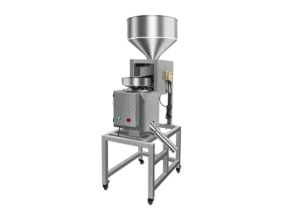
In many food factories, purchasing a Food Metal Detector is treated as a one-time capital expense. Buyers compare quotations, choose a model that meets basic sensitivity requirements, and move forward.
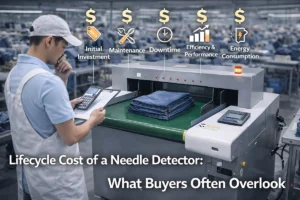
What often gets overlooked is that the purchase price represents only a fraction of the total cost over the machine’s lifetime. Installation, calibration, operator training, false rejects, downtime, spare parts, and compliance maintenance all accumulate over years of operation.
For food manufacturers running high-volume or continuous lines, these “invisible” costs can far exceed the original equipment price.
Why “Price” Is Not the Real Cost in Industrial Food Inspection
Before examining specific cost components, it is important to understand why focusing solely on price leads to poor long-term decisions.
Many buyers equate “cheaper” with “more economical.” In reality, industrial inspection equipment behaves more like infrastructure than a commodity.
The difference between the purchase price and the ownership cost
The purchase price is what you pay on day one. Ownership cost includes everything that follows:
- Installation and commissioning
- Ongoing calibration and validation
- Operator training
- Service interventions
- Production losses caused by instability or downtime
Over five to ten years, these factors shape the true financial impact of the system.
Why do food manufacturers underestimate long-term expenses?
Food plants are optimised for throughput and consistency. Even small inefficiencies—such as frequent false rejects or short stoppages—translate into measurable losses. These are rarely included in procurement calculations, yet they directly affect margins.
What Makes Up the Lifecycle Cost of a Food Metal Detector
To evaluate real cost, buyers must break the equipment’s life into stages rather than viewing it as a single purchase.
Each stage introduces both direct and indirect expenses.
Initial equipment and installation
Beyond the detector itself, installation may require:
- Conveyor modifications
- Electrical integration
- Line layout changes
- Acceptance testing
Poor installation planning can delay production start-up and create permanent inefficiencies.
Calibration, validation, and compliance maintenance
Food safety standards demand regular performance checks.
Over time, this involves:
- Test pieces and validation routines
- Documentation for audits
- Technician labor
Systems that drift easily or require frequent recalibration quietly increase operational workload.
Operator training and workflow adaptation
A detector that is difficult to understand leads to:
- Incorrect parameter changes
- Missed alarms
- Inconsistent test routines
Training time and human error both translate into cost.
Spare parts, service, and downtime risks
Unplanned failures are the most expensive part of ownership.
Each stoppage may cause:
- Production delays
- Product loss
- Emergency service charges
Reliability is not just a quality metric—it is a financial one.
How Performance Directly Impacts Operating Cost
Performance characteristics shape how much a detector costs to run, not just how well it detects metal.
The better the stability, the lower the hidden expenses.
False rejects and product waste
Excessive false rejects create:
- Scrap
- Rework
- Line slowdowns
Over time, wasted product often outweighs the machine’s original cost.
Sensitivity stability over time
A detector that requires frequent retuning:
- Interrupts production
- Increases labor
- Introduces compliance risk
Stable sensitivity reduces operational friction.
Throughput limits and production bottlenecks
If a detector becomes the slowest point in the line, it quietly caps output.
Lost capacity is a cost few buyers calculate upfront.
The Hidden Cost of Poor System Integration
A Food Metal Detector does not operate in isolation. It is part of a broader production ecosystem.
When integration is weak, the detector compensates for problems it was never designed to solve.
Misaligned installation points
Placing detection too late in the process increases:
- Product loss
- Energy waste
- Rework cost
Earlier intervention often saves far more than it costs.
Lack of coordination with upstream protection
Without upstream protection, detectors face a higher contamination load, increasing reject rates and wear.
When detection compensates for missing prevention
Using detection as a substitute for prevention shifts cost from equipment to operations—usually invisibly.
How to Evaluate True ROI Before You Buy
A mature purchasing strategy looks beyond specifications.
It asks how the system behaves over years, not weeks.
Questions engineers should ask vendors.
- How stable is sensitivity over time?
- What is the typical recalibration interval?
- What causes most service calls?
- How is the false reject rate controlled in real factories?
Indicators of long-term reliability
- Industrial-grade construction
- Consistent detection performance across product types
- Proven performance in continuous production
Comparing solutions beyond brochure specs
Spec sheets describe capability.
Lifecycle cost reveals value.
Building a Smarter Investment Strategy for Food Safety
A Food Metal Detector should be evaluated as a long-term production asset, not a short-term purchase.
The most cost-effective system is not the cheapest—it is the one that:
- Maintains stable performance
- Minimises waste
- Reduces operator intervention
- Protects production continuity
Manufacturers who think in lifecycle terms build safer, more resilient, and more profitable operations.
To discuss inspection solutions designed for long-term industrial performance, Contact Jindun Elec.
FAQ