How to Choose the Right Food Metal Detector for Your Product?
Choosing a Food Metal Detector is not simply a purchasing decision—it is an engineering choice that directly affects food safety, compliance, and production efficiency. Different food products create very different detection challenges, and a “one-size-fits-all” solution rarely performs well in real-world environments.
From dry snacks to high-moisture meats, from loose bulk materials to sealed packages, each product demands a tailored approach. Selecting the wrong system can result in excessive false rejects, missed contaminants, and unstable production. The goal is not just to detect metal—but to do so reliably, continuously, and in harmony with your production line.
Why Choosing the Right Food Metal Detector Matters
Before diving into technical details, it is important to understand why correct selection is critical.
Different food products interact with detection systems in very different ways. Moisture, salt content, temperature, shape, and packaging all influence how metal contaminants appear to a detector. When these variables are ignored, manufacturers often experience:
- Frequent false alarms and product waste
- Reduced line speed due to unstable performance
- Missed contaminants caused by poor sensitivity
- Difficulty passing audits and inspections
A Food Metal Detector should be chosen as part of a system design, not as a generic add-on. The right choice balances product characteristics, line structure, and risk level.
Start with Your Product Characteristics
Every effective selection process begins with understanding what you are actually inspecting.
Moisture Content and Product Effect
Dry products such as grains or snacks are relatively easy to inspect. High-moisture foods—meat, cheese, sauces, or frozen items—create what is known as the product effect. Their natural conductivity can mimic metal signals and reduce sensitivity.
A properly engineered Food Metal Detector compensates for this effect through advanced signal processing and optimised coil design. Without this adaptation, detection becomes unreliable.
Product Form and Stability
Is your product:
- Free-flowing powder?
- Liquid or slurry?
- Irregular solid pieces?
- Individually wrapped items?
Unstable or shifting products can create inconsistent signals. Systems must be mechanically and electronically matched to product behaviour to avoid drift and false triggers.
Packaging Type
Packaging dramatically affects detector design:
- Unpacked or bulk products allow maximum sensitivity
- Plastic or paper packaging is easy to accommodate
- Metalised films and aluminium foil require specialised technologies
Understanding packaging early prevents costly redesigns later.
Match the Detector Type to Your Production Line
Once product behaviour is clear, the next step is aligning the detector with your line structure.
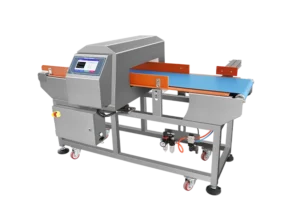
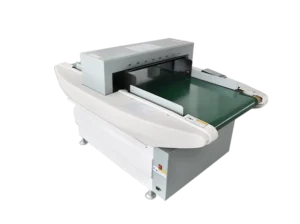
Conveyor Food Metal Detectors
These are ideal for packaged or discrete products. They integrate directly into conveyor systems and are widely used in:
- Snack foods
- Bakery products
- Frozen meals
- Pharmaceutical-style food packaging
They offer high accuracy, automatic rejection, and easy integration.
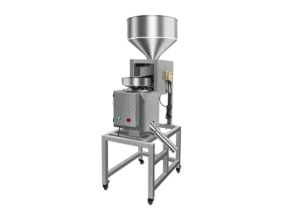
Pipeline and Gravity-Fed Systems
Liquids, pastes, and powders require in-line detection. These systems inspect materials as they flow through pipes or chutes, ensuring continuous protection without interrupting production.
They are common in:
- Sauces and soups
- Dairy products
- Flour and sugar processing
Integrated Systems for High-Speed Lines
High-throughput plants require rapid response and exceptional stability. In these environments, the detector must synchronise with line speed, reject mechanisms, and data systems.
Modern Food Metal Detector solutions are engineered for continuous, high-speed operation without sensitivity loss.
Sensitivity vs Throughput – Finding the Right Balance
Higher sensitivity sounds better—but in practice, it is only valuable if it remains stable.
Excessively aggressive settings can cause:
- Frequent false rejects
- Production interruptions
- Operator distrust in the system
Engineering-grade systems balance:
- Detection threshold
- Line speed
- Product variability
- Environmental noise
The objective is consistent, predictable detection—not theoretical maximum sensitivity.
Environmental and Operational Factors Engineers Consider
Beyond the product itself, real-world operating conditions play a decisive role.
Temperature and Humidity
Cold rooms, steam-filled processing areas, and high-temperature zones demand hardware designed for thermal stability and condensation resistance.
Cleaning and Hygiene Requirements
Food plants require frequent washdown. Systems must feature:
- Food-grade construction
- Sealed electronics
- Appropriate IP ratings
This ensures longevity and compliance with hygiene standards.
Installation Space and Line Layout
Whether you are upgrading an existing line or designing a new one, space and geometry matter. Modular, compact designs reduce installation complexity and downtime.
From Equipment to System – Thinking Beyond a Single Machine
Metal control should not rely on a single checkpoint. A resilient strategy combines:
- Preventive protection at raw material intake
- In-process monitoring
- Final-stage verification
This layered approach reduces both mechanical risk and product recalls. In many plants, Food Metal Detector systems work alongside upstream protective equipment to form a complete contamination control framework.
This system-level thinking defines how Jindun Elec approaches industrial food inspection—engineering solutions around real production behaviour, not abstract specifications.
How Jindun Elec Helps You Choose the Right Solution
Effective selection begins with understanding your product, not pushing a catalogue model.
The process typically includes:
- Product testing under real conditions
- Analysis of line speed and layout
- Evaluation of environmental challenges
- Matching detector type to process stage
Rather than offering “standard” machines, Jindun Elec focuses on building solutions that align with your product behaviour, risk profile, and operational goals.
Conclusion
Choosing the right Food Metal Detector is about more than buying equipment. It is about aligning product characteristics, production structure, and risk management into a reliable inspection system.
Every food product behaves differently. Every production line has unique constraints. The correct solution emerges only when these factors are evaluated together.
If you want a detection system that truly fits your product and production environment, Contact Jindun Elec for professional guidance based on real industrial operating conditions.
FAQS
What is the most important factor when choosing a food metal detector?
Product characteristics—especially moisture content and packaging—are the most critical factors influencing performance.
Can one food metal detector handle multiple product types?
Some systems can be configured for multiple products, but wide variations often require dedicated settings or separate units.
How does product moisture affect metal detection performance?
High moisture increases the product effect, which can mask metal signals if the system is not properly engineered.
Should metal detection happen before or after packaging?
Both are used in modern plants. Pre-packaging protects equipment; post-packaging ensures final product safety.
How do I know if my current detector is underperforming?
Frequent false rejects, missed test pieces, or unstable calibration are strong indicators that optimisation or replacement is needed.
Share With
Related Articles



Hot Products