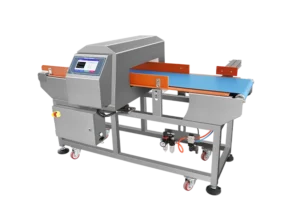
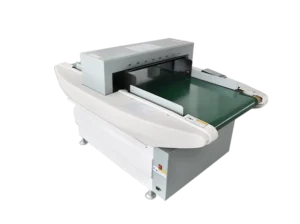
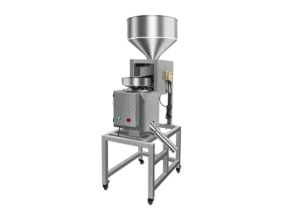
In continuous production environments, stopping is not an option. Whether in food processing, plastics extrusion, recycling, or building materials, production lines often operate 24 hours a day, seven days a week. Under these conditions, even a brief interruption can lead to massive losses.
Metal contamination in such systems is not a minor defect—it is a threat to uptime, equipment integrity, and operational stability. This raises a critical question for manufacturers: can a Metal Separator truly withstand the demands of nonstop production?
Why Continuous Production Lines Demand More from Metal Separation
In batch or intermittent operations, equipment has room for error. In 24/7 environments, every weakness is amplified.
Downtime Multiplies Cost in Non-Stop Operations
When a continuous line stops, the cost is not measured in minutes—it is measured in lost output, wasted energy, and disrupted logistics. A single metal fragment entering a grinder or extruder can halt an entire system. The longer the line, the greater the ripple effect.
False Triggers Disrupt Process Flow
Overly sensitive or unstable systems may trigger frequent false rejects. In continuous production, these interruptions accumulate, reducing throughput and forcing operators to intervene repeatedly—undermining the very efficiency automation is meant to deliver.
Metal Contamination Becomes a Systemic Risk
In nonstop operations, contamination is not isolated. A single metal fragment can travel through multiple stages, damaging equipment and affecting product quality across the entire line. Prevention must occur before the risk propagates.
Key Performance Challenges for Metal Separators in 24/7 Lines
To perform reliably over months and years of nonstop operation, separation systems must overcome challenges that only emerge over time.
Signal Drift and Sensitivity Degradation
Long-term operation can cause electronic drift. Without compensation mechanisms, detection accuracy may degrade, leading to missed contaminants or excessive false alarms.
Mechanical Fatigue and Wear Accumulation
Bearings, conveyors, and ejection mechanisms endure constant stress. In 24/7 lines, even minor mechanical weaknesses can evolve into failure points.
Environmental Interference Over Time
Temperature fluctuations, humidity, dust, and vibration gradually affect performance. A system that works well on day one may struggle after months in harsh industrial conditions.
How Industrial-Grade Metal Separator Systems Stay Stable Over Time
True industrial solutions are not defined by initial performance, but by how well they perform after years of continuous use.
Thermal Compensation and Auto-Balancing Design
Advanced systems incorporate dynamic compensation to counteract temperature-induced drift and environmental noise, maintaining stable sensitivity without frequent recalibration.
Heavy-Duty Structures for Continuous Load
Reinforced frames, industrial bearings, and abrasion-resistant components allow a Metal Separator to operate continuously without structural fatigue.
Low-Failure Ejection and Control Systems
In nonstop production, ejection mechanisms may activate thousands of times per day. Industrial-grade actuators and control logic ensure precise, repeatable action under extreme duty cycles.
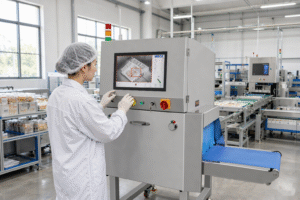
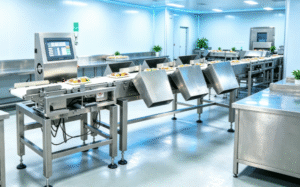
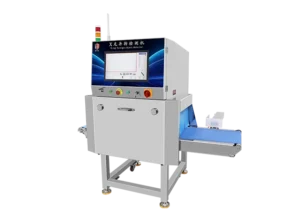
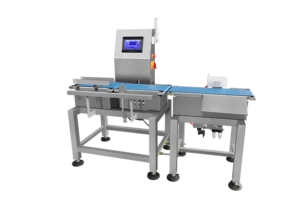
In modern production lines, separators often work in tandem with downstream Food Metal Detectors or X Ray Inspection Equipment, forming a layered protection system: prevention at the front, verification at the end.
Real-World Applications in 24/7 Production Environments
Continuous operation is the norm in many industries:
Food and Beverage Processing Lines
High-speed packaging and cooking systems run without interruption. Early separation prevents metal from damaging mixers and pumps.
Plastic Extrusion and Compounding
Molten polymers cannot tolerate foreign objects. Stable separation protects screws and dies during long production cycles.
Recycling and Bulk Material Handling
Irregular materials and heavy loads demand robust, fatigue-resistant systems.
Building Materials and Cement Plants
Dust, vibration, and constant throughput require separation equipment designed for extreme environments.
Designing a Separation Strategy for Non-Stop Production
Performance is not only about the machine—it is about system design.
Positioning for Zero-Interruption Flow
Separators should be installed where contaminants can be removed without stopping material flow, preserving continuous throughput.
Balancing Sensitivity and Stability
Excessive sensitivity may cause frequent interruptions. In 24/7 lines, stability and consistency often outweigh marginal gains in detection limits.
Planning Maintenance Without Stopping the Line
Bypass channels, modular components, and redundant paths allow servicing without shutting down production—an essential principle in nonstop environments.
Keeping Production Moving Without Compromise
In continuous production, the priorities are clear: stability over momentary precision, long-term reliability over short-term performance, and system thinking over standalone equipment. This is the philosophy that guides Jindun Elec when designing industrial contamination control solutions.
A Metal Separator in a 24/7 line is not merely a detection device—it is part of the production backbone. It protects equipment, preserves rhythm, and ensures that manufacturing never stops.
For manufacturers seeking to build truly resilient production lines, Contact Jindun Elec to explore separation systems engineered for real-world, nonstop industrial conditions.
FAQs