Modern manufacturing no longer relies on a single inspection point to manage metal contamination. As production lines become faster, more automated, and more interconnected, the risks associated with metal fragments increase—not only to product quality, but also to equipment integrity and operational continuity.
For this reason, leading plants now adopt a two-layer strategy: early-stage prevention through metal separation and end-of-line verification through metal detection. These technologies are not alternatives. They are complementary components of a complete contamination control system.
Why Modern Plants Need a Two-Layer Metal Control Strategy
As production environments shift toward continuous and high-speed operation, any single-point defence becomes a vulnerability. Relying solely on final inspection means that metal may already have passed through crushers, mixers, extruders, or conveyors—causing hidden damage long before it is discovered.
This evolution has pushed manufacturers to rethink their approach. Instead of only asking, “Did contamination occur?” modern plants focus on, “How do we prevent it from entering the process at all?” The answer lies in combining separation and detection into a unified strategy.
Understanding the Different Roles of Separation and Detection
Although both technologies deal with metal contamination, their purposes and timing are fundamentally different.
Metal Separation: Preventing Damage Before It Happens
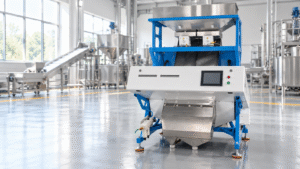
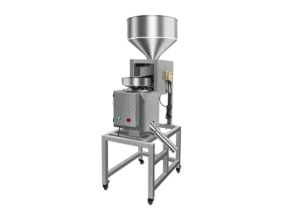
Metal separation is designed to remove unwanted metal from raw materials or bulk flows at the earliest possible stage. A Metal Separator acts as a protective barrier, intercepting ferrous or non-ferrous particles before they reach sensitive machinery.
By stopping contaminants upstream, separation:
- Protects crushers, grinders, and extruders
- Reduces mechanical wear and sudden failures
- Stabilises material flow
- Extends equipment service life
It is a preventive measure—focused on avoiding problems rather than reacting to them.
Metal Detection: Ensuring Product Safety at the Final Stage
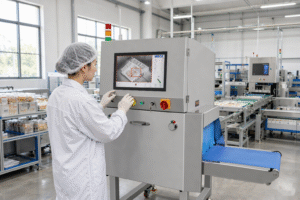
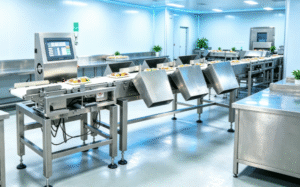
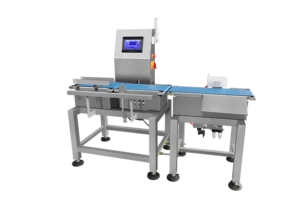
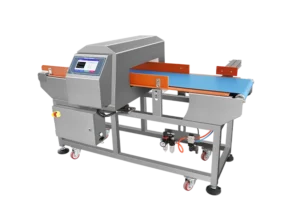
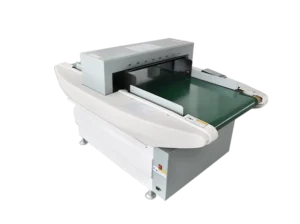
Metal detection serves a different mission. Systems such as Food Metal Detector units or Needle Detector machines are typically installed near the end of the line to verify that finished products meet safety and regulatory standards.
Detection:
- Identifies metal already present in the product
- Triggers rejection of contaminated items
- Supports compliance and brand protection
While essential, detection alone cannot reverse damage that occurred earlier in the process. It confirms product integrity, but it does not protect machinery.
Where Each System Belongs in a Production Line
Understanding the roles of each technology naturally leads to a placement strategy.
At the front of the process—raw material intake, bulk handling, and feeding systems—metal separation is most effective. Removing contaminants here prevents them from spreading throughout the line.
Before high-risk operations such as crushing, grinding, or extrusion, separation acts as a mechanical safeguard. These stages are particularly vulnerable to metal damage.
Near packaging or final processing, metal detection becomes the primary tool. Here, the goal is not equipment protection, but product safety and compliance.
This layered positioning ensures that risks are addressed at both the mechanical and product levels.
How Separation and Detection Work Together in Practice
The true strength of modern contamination control lies in coordination. Separation handles prevention; detection verifies.
When a Metal Separator removes contaminants upstream, it reduces the burden on downstream detectors. Fewer metal events mean fewer false alarms, less product waste, and more stable throughput.
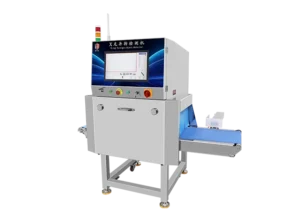
At the same time, systems such as Food Metal Detector units and X Ray Inspection Equipment confirm that no residual contamination reaches the market. This combination creates a closed-loop defence:
- Early interception protects the equipment
- Final inspection protects consumers
- The entire line becomes more predictable and efficient
Rather than overlapping, the two systems reinforce each other.
Industry Examples of Coordinated Metal Control
Different industries apply this coordination in distinct ways.
In food processing, separation protects mixers and grinders from hard fragments, while detection ensures regulatory compliance before packaging.
In plastics and rubber manufacturing, upstream separation prevents screw and die damage, and downstream detection safeguards product integrity for automotive or medical applications.
In recycling and bulk material handling, separation removes tramp metal from streams, while detection verifies output purity.
Across sectors, the principle remains the same: prevention first, verification last.
Designing an Integrated Metal Control System
Effective implementation requires system-level thinking. Equipment cannot simply be “added” to a line; it must be planned around material behaviour, risk points, and production goals.
Key considerations include:
- Identifying where metal is most likely to enter
- Understanding which machines are most vulnerable
- Balancing sensitivity with operational stability
- Avoiding redundant or misaligned installations
This is where experienced solution providers add value. Companies such as Jindun Elec approach metal control not as isolated devices, but as an integrated architecture that aligns with real industrial workflows.
Conclusion
Modern plants do not choose between separation and detection—they combine them. Metal separation prevents contaminants from damaging equipment and disrupting processes. Metal detection verifies that finished products meet safety standards.
Together, they form a complete, resilient defence against metal contamination, reducing risk, waste, and downtime across the entire production line.
For manufacturers looking to build a more reliable and cost-efficient contamination control system, Contact Jindun Elec to explore solutions designed for real industrial conditions.
FAQs