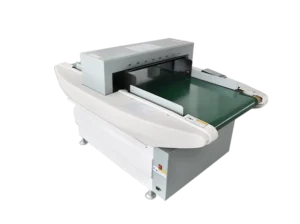
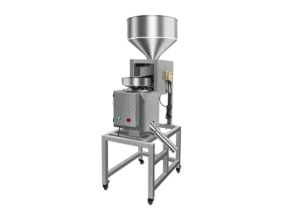
Many food factories invest in metal detection but still struggle with false rejects, missed contaminants, or audit failures. In most cases, the problem is not the detector itself—it is where it has been installed. In food production, the position of a detector often matters more than the model you choose. Correct placement determines signal stability, detection accuracy, and whether your process truly meets regulatory expectations.
Why Installation Position Matters More Than Many Factories Realise
Metal detection is not an isolated device; it is part of a production system. Its performance is shaped by what happens around it.
How placement affects detection accuracy
Conveyor vibration, unstable product presentation, nearby motors, and variable belt speeds all influence detector signals. A detector placed on a vibrating frame or next to heavy electrical equipment will never perform as well as one installed in a mechanically stable, low-noise zone. Consistent product orientation and spacing are just as important as electronics.
The link between detector position and audit compliance
Auditors care less about whether you have a detector and more about where it sits in the process. Most food safety standards require metal detection at a Critical Control Point (CCP)—a location where contamination can no longer be introduced afterwards. If your detector is placed before a high-risk step, it may fail compliance even if it works perfectly.
Common Installation Points in Food Production Lines
Food lines vary widely, but most fall into a few recognisable patterns. Each stage carries different risks.
After packaging, the most critical control point
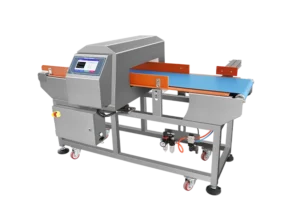
For many products, the optimal position is after final packaging. At this point, no further processing occurs that could introduce contamination. Food Metal Detectors placed here ensure that every unit leaving the factory is verified safe. This position aligns with most regulatory guidance and simplifies audit justification.
Before packaging – protecting downstream processes
In some operations, detection before packaging is also valuable. It reduces waste in the packaging area and prevents contaminated product from consuming film, trays, or cartons. While this position may not replace end-of-line inspection, it can significantly lower operational losses.
In the raw material or pre-processing stages
Upstream protection focuses on equipment safety rather than finished-product compliance. Here, metal control often works in tandem with a Metal Separator, removing large contaminants before they reach grinders, mixers, or extruders. This “preventive” layer reduces mechanical damage, while downstream detection provides final verification.
Choosing the Right Position Based on Product Type
There is no universal answer. Product characteristics define the optimal point.
Wet and high-conductivity foods
Fresh meat, cheese, and marinated products generate strong product signals. These items benefit from stable, vibration-free sections of the line, often after packaging, where product geometry is consistent and environmental interference is lower.
Dry and free-flowing products
Powders, grains, and snacks often use gravity-fed or pipeline systems. In these cases, vertical or pipeline detectors offer better stability than belt systems, keeping material flow uniform through the sensing zone.
Packaged vs. unpackaged products
Packaging materials influence signal behaviour. Foil films, metallised laminates, and thick cartons require different detector configurations and sometimes dictate that detection occur earlier in the process. The goal is always the same: to ensure no contamination can be added after the detection point.
How Poor Placement Creates Hidden Costs
Incorrect positioning rarely causes dramatic failure—it creates continuous inefficiency.
False rejects and wasted production time
Unstable installation leads to random alarms. Operators pause lines, inspect good products, and gradually lose trust in the system.
Missed contamination and recall risks
A detector placed before a contamination-prone step offers a false sense of security. Metal introduced later can reach customers undetected.
Increased operator intervention and error rates
When alarms feel “meaningless,” staff may bypass procedures. Over time, this behaviour becomes normal—and dangerous.
Designing a Line with Detection in Mind
The most reliable food plants design detection into the line from the start rather than adding it as an afterthought.
Integrating detection during line planning
Mechanical stability, conveyor design, and space allocation should all consider metal detection requirements. When detection is planned early, fewer compromises are made later.
Working with system-level solution providers
Factories that partner with Jindun Elec often move beyond device selection to system-level design. By evaluating product flow, environmental factors, and compliance goals together, detection points are chosen for long-term stability—not short-term convenience.
Building a Safer Line from the Right Position
Food metal detection is not about owning a device—it is about controlling risk. The correct installation position delivers stable signals, lower false rejects, and a clear compliance pathway. The wrong position creates ongoing cost, uncertainty, and exposure.
For producers planning new lines or upgrading existing systems, detection placement will shape performance for years. To design a truly controllable and auditable food safety process, Contact Jindun Elec and let experienced engineers help you define the right detection strategy from the system level.
FAQs about Installing Food Metal Detectors